Travel insurance Archives - Safetree

We will contact you as soon as possible, please fill in your details!

Note: We will only use your details to contact you regarding your insurance query.

Blogs & Resources

2 weeks ago · by Ajay Sharma · 0 comments

Common Liability Risks Faced by Tour Operators in India

Running a tour business is quite exciting, although there are lots of responsibilities that you may not even be aware of. It is not just about planning a package, but it also involves managing everything else that needs to be taken care of, including hotels, transportation, guides, etc. The complexity of the business creates many potential problems, even with necessary precautions. Accidents, injuries, property damage, and various disputes related to the services can occur.

This article analyses common liability risks Indian tour operators face, the possible consequences of a customer claim, and the benefits of liability insurance.

Why Are Tour Operators Exposed to Liability Risks?

Travelling consists of many components, such as people, destinations, means of transport, various activities, and also service providers, leading to numerous touchpoints that can go wrong at one time or another. For example, a client may fall at a tourist destination, get hurt while doing an adventure activity, or get into an accident while touring. A client may also complain about damage to his/her property or non-performance of the service by the tour operator.

The situation gets even more complicated when tour operators rely on different hotels, transport services, restaurants, local guides and activity suppliers. Even though the problem involves a third party, the client will most likely contact the tour operator since they booked the package deal through them. This is why implementing appropriate safety measures and relevant insurance is crucial to the tour operation business.

Common Liability Risks Faced by Tour Operators

Some examples of situations where liability claims can arise against travel tour operators include the following:

1. Customer Injuries

Customers could be injured for a number of reasons while on a trip. For instance, a client might accidentally trip and fall on the wet floor or get injured when hiking or participating in any organised event. Consider a customer taking a sightseeing tour who falls on wet stairs at one of the destinations on his package. He can file a claim if he believes he was injured because of the tour operator’s negligence.

2. Transportation Accidents

Transportation forms a vital part of some tours. This can be due to poor road conditions, driver negligence, a malfunctioning mode of transport, or adverse weather conditions. In these cases, the tour operator is liable for claims arising from accidents associated with the transportation process.

3. Property Damage

Liability issues are not only related to physical injuries. Property may be damaged during a trip. A customer may unintentionally damage hotel property or another person’s property. The same thing might happen unintentionally to the tour guide or any employee. This may lead to repair or replacement costs and may cause disputes over who should bear them.

4. Problems with Adventure Activities

Adventure tours may have some special problems. Trekking, rafting, camping, watersports and other activities may have a higher chance of accidents. Tour operators organising these activities must consider whether clients receive enough instruction and supervision. This may lead to a claim for medical costs and other damages.

5. Health or Food-Related Incident

Clients may also fall ill during their trip. Customers can get sick through food poisoning, dehydration, heat-related illnesses, and other illnesses. If customers believe the tour operator’s planning or negligence caused their illness, they can seek compensation from the tour operator.

6. Third-Party Services Issue

Travel operators often deal with third parties, such as hotels, transporters, or other third-party service providers. Hotel services could be below par; transporters could have an accident or other issues due to failure to adhere to safety standards. Even though the third party is responsible for the issue, the tour operator could still face the issue with the customer.

What happens when a customer makes a liability claim?

Liability claims can turn an otherwise routine workday into a stressful affair.

  • At the beginning, the procedure starts with gathering relevant information about the case. The information collected includes, among other things, the date of occurrence, the place where the incident happened, details about the incident, who was involved, pictures, witness accounts, invoices, and other relevant documents.
  • The client can request compensation from the company for medical costs and property damage, among other things. In a lawsuit, there will also be legal matters and professional fees to address.
  • The insurance company can investigate the claim, review the documents, and decide whether it falls within the scope of the insurance policy. This depends on the policy’s terms and conditions, limits, and exclusions, as well as the circumstances of the incident.

That is why a business needs to understand its insurance policy before a claim arises

How can tour operator liability insurance help?

Liability insurance for a tour operator provides financial protection if the business faces third-party claims arising from incidents covered by the policy. Depending on the policy type, cover may include injuries sustained by others, damage to third-party property, and legal fees. If a client sustains an injury during a tour and makes a claim against the business, the insurance policy will cover the costs incurred, subject to the policy terms.

The specific insurance cover depends on the chosen policy. It means that tour operators need to consider:

  • Coverage limits
  • Deductibles
  • Exclusions
  • Business activities covered
  • Legal and claims expenses
  • Other coverage

Which tour operators should consider liability insurance?

Liability protection can be relevant to the following travel operators, including:

  1. Sightseeing and city tour operators
  2. Adventure and outdoor tour operators
  3. Trekking and hiking operators
  4. Wildlife and nature tour operators
  5. Cultural and heritage tour operators
  6. Group and corporate travel planners
  7. Domestic travel operators
  8. Operators offering transportation and activities
  9. Operators dealing with hotels and other travel providers

Each operator may face different risks. A travel operator organising a sightseeing tour faces different risks than an operator organising trekking, rafting, or another adventure tour. That is why travel operators must analyse their operations, number of clients, and other factors to decide what sort of insurance protection they require.

How Can Tour Operators Reduce Liability Risks?

Insurance is more like a safety net, but preventing accidents is key. Here are the ways tour operators can minimise the risk of liability:

1. Safety Guidelines Should Be Clear

Write clear safety guidelines for staff, guides, and tourists. Make important instructions clear before undertaking any activities.

2. Training of the Guides and Other Employees

Train employees to handle emergencies, communicate with customers, and follow safety protocols.

3. Vehicles and Equipment Inspection

Keep vehicles and equipment in good condition. Equipment failure may increase the risk of an accident.

4. Working Only with Reputable Companies

Before working with hotels, drivers, activity providers, and local guides, check their reputation.

5. Keep Correct Records

Maintain customer bookings, contracts, payments, incident reports and other documentation. It might come in handy later.

6. Reviewing Insurance Policies Regularly

Review insurance policies regularly, since the company’s operations may change. The company may start providing some new destinations and activities.

Conclusion

To sum up, operating a profitable travel business is not just about arranging a suitable package for your clients. The tour operator should be prepared for possible accidents that may occur while the client is staying at the hotel, during transportation by various means, or during specific activities. Injuries, property damage, and other liability claims can impose a serious financial and legal burden, even if the accident occurs unexpectedly.You can prevent many issues with common-sense safety measures and liability insurance, which provides additional financial security in case of insured claims. But you need to understand the terms and coverage before choosing.

SafeTree provides tour operator liability insurance to help manage liability risks. The insurance policies help travel companies manage liability risks. We encourage you to review the coverage options before selecting the one that best suits your travel business.

Disclaimer:

This blog is for general informational and educational purposes only. The information related to insurance is provided for general guidance only. Before selecting any insurance policy, readers are advised to consult our insurance experts for detailed advice based on their individual needs.


2 weeks ago · by Ajay Sharma · 0 comments

Tour Operator Liability Insurance vs Travel Insurance: What’s the Difference?

Running a travel company requires more than helping people explore new locations, arranging tours, and transport. A tour operator must be prepared for circumstances that may arise and affect customers and the business. For example, a customer can get hurt, lose luggage, or face a medical crisis.

This is where insurance policies come into play. Tour operator liability insurance and travel insurance both provide financial protection. However, these two kinds of insurance policies protect against different risks. Understanding their differences will help tour operators choose the right protection.

What is tour operator liability insurance?

Tour operators’ liability insurance protects tour operators if claims are made against the firm for injuries, property damage, and other liability issues arising from its business operations.

For example, a customer participates in a trekking trip organised by your company and gets injured during the activity. In such situations, the client may raise a claim against the tour operator. Legal costs, damage payments, and other related expenses can create a huge financial burden for a small or growing travel company. This is where liability insurance for tour operators comes in. Coverage varies by policy terms, but it may cover risks associated with the tour operator’s services. For instance, companies in transportation, adventure tourism, excursions, and other service sectors may face different types of liability.

Some tour operators’ liability insurance policies may even include vehicle insurance and other related services. Each tour operator’s coverage needs depend on destination, business activity, contracts, and regulations.

What is travel insurance?

Travel insurance is generally meant to benefit the traveller and not the tour operator. For example, a traveller could take out travel insurance before a trip, whether within or outside the country. The coverage a policy offers may include financial protection for events like illness, trip cancellation, trip interruption, baggage loss, delays, or other situations covered by the policy.

Let us assume a traveller falls sick while travelling and needs immediate medical attention. In such a situation, a travel insurance policy may cover eligible expenses, subject to the policy’s conditions and limitations. In short, travel insurance can therefore help the traveller to be more financially secure during his travels. However, it is important to know that travel insurance does not guarantee protection against liability claims against the tour operator. This is because the policy belongs to the traveller himself.

Tour Operator Liability Insurance vs Travel Insurance: Key Differences

These two types of insurance may look similar, as both relate to travel, but their main purposes are completely different. Refer to the table below:

Features Tour Operator Liability Insurance  Travel Insurance 
Main Purpose Protects the tour operator against covered liability claims Protects the traveller against covered travel-related risks
Who usually buys it? Tour operators and travel businesses Individual travellers or customers
Main concern Third-party injury, property damage and business liability Medical emergencies, cancellation, baggage and other covered travel issues
Who receives protection? The insured tour operator/business The insured traveller
Business protection Yes, subject to policy terms Generally not designed for this purpose
Policy needs Depends on business activities and risks Depends on destination, trip and traveller’s needs

Note: A tour company cannot consider a client’s travel insurance policy as liability insurance. Nor can a tour operator consider his or her liability insurance policy as a replacement for the client’s travel protection. These policies can complement each other but not replace each other.

Why Do Tour Operators Need Liability Insurance?

As tour operators work with individuals, transport and accommodation providers, guides, activities, and other third parties, there are always many places where things can go wrong. Let us assume. Tour operators organise a sightseeing trip, and one client gets injured during the journey. The operator can be certain that he has not committed any mistake. But the client can still make a claim or take legal action against the organisation.

There may be high costs involved in defending such claims even when no compensation is owed, which can negatively impact the business. Liability insurance helps a tour operator manage eligible liabilities under the policy. It also improves the company’s image when dealing with corporate customers, hoteliers, and other organisations that require proof of insurance. For some companies, liability insurance may also be necessary for contractual or regulatory reasons. In conclusion, the right insurance programme should reflect the business’s operations, not just the less expensive option.

Can a Tour Operator Rely on Travel Insurance?

No. Tour operators should not rely solely on travel insurance to protect their interests. The reason is clear – the two types of insurance cover different parties. If a client buys a travel insurance policy and later sustains an injury during a tour, the travel insurance will help them cover certain expenses. But the client can still file a liability claim against the tour operator if they believe the operator caused the injury.

Travel insurance the client buys does not exempt the operator from liability. That is why tour operator insurance and travel insurance must be regarded separately. A well-prepared tour operator can ensure clients buy the right kind of travel insurance policy while also having proper tour operator liability insurance.

Which Insurance Does a Tour Operator Need?

The choice depends on the nature of the business, its geographic location, its target customer base, and the associated risks.

  • In general, a tour operator needs a protection plan for itself and a travel insurance product for customers. Liability insurance may be needed to cover claims, while travel insurance could protect travellers from unforeseen situations that may arise while travelling.
  • However, these two types of insurance do not replace one another. Tour operators should have appropriate insurance to protect their interests, while travellers should have travel insurance before heading on a journey.
  • Each policy should be carefully examined for its intended purpose. Before buying insurance, tour operators need to check coverage limits, exclusions, deductibles, geographic limits, and other policy details. It should also suit the business activities they offer.

Conclusion

To summarise, the travel business can bring good profits, but running a tour company is risky because clients may get injured, property may be damaged, and unforeseen situations may make you liable for various problems. Tour operators’ liability insurance can be used to handle certain liabilities related to your business operations. Travel insurance covers certain risks, such as medical issues, transportation problems, lost bags, and more. But these two insurances shouldn’t be seen as substitutes but rather as complementary.

Companies looking for tour operator liability insurance can review policies available with SafeTree. People who plan to travel can also check out SafeTree’s travel insurance. But remember, picking the right coverage is the first step towards protecting yourself from potential risks. Always review your policy terms thoroughly and choose the one that fits you.

FAQs

1. Are tour operator liability insurance and travel insurance the same thing?

No. Tour operator liability insurance helps the tour operator with third-party claims, while travel insurance covers the traveller for unforeseen travel costs.

2. Does every tour operator need liability insurance? 

Not necessarily. Whether it is required or not depends on the business specifics, location, activities, etc. Tour operators need to determine what type of coverage they need.

3. Should a tour operator ask customers to buy travel insurance? 

Yes, it is quite reasonable to encourage travellers to do that. However, it does not replace the tour operator’s liability insurance.

Disclaimer:
This blog is for general informational and educational purposes only. The information related to insurance is provided for general guidance only. Before selecting any insurance policy, readers are advised to consult our insurance experts for detailed advice based on their individual needs.

6 months ago · by Ajay Sharma · 0 comments
what is travel insurance

What is Travel Insurance, and How does it work?

Introduction

Travelling is one of the most exciting things you can do in life, whether you’re going on a long-awaited family holiday, a high-stakes business trip, or moving abroad to go to school. But being in a new place, especially a foreign country, comes with its own set of problems. Sudden medical emergencies, lost luggage, cancelled flights, and even the dread of losing your passport can all rapidly transform a wonderful trip into a costly and emotional nightmare.

This is where travel insurance comes in as your most important safety net. It is a type of insurance that is made specifically to cover different risks that come with travelling. It makes sure that an unexpected cost doesn’t hurt your wallet or your peace of mind. In this post, we’ll explain what travel insurance is, how it works in real life, and why it’s now a “must-have” for every tourist.

What is Travel Insurance?

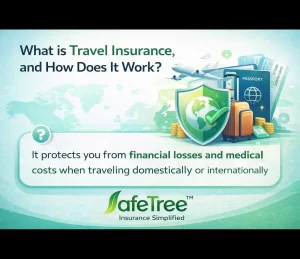
Travel insurance is a unique agreement between a traveller and an insurance company that protects them financially against unexpected hazards that may come up during their journey. It is a full safety net that pays you back for money lost due to travel-related situations, whether you are travelling within India or going abroad.

In basic terms, you pay a little fee before your trip starts to shift the risk of expensive accidents, like medical emergencies or last-minute trip cancellations, to the insurance company. It makes sure that you don’t have to pay for anything that goes wrong out of your own wallet, so you can travel with total peace of mind.

Common Types of Travel Insurance

Travel insurance is not a one-size-fits-all product. Depending on where you are going, how often you travel, and the purpose of your visit, you can choose from various specialised plans:

  1. Domestic Travel Insurance: This policy is for trips within India and covers things like urgent medical emergencies, train or aircraft delays, and lost luggage. It’s a cheap method to make sure your vacations at home are stress-free.
  2. International Travel Insurance: A must-have for trips overseas, especially to places where medical care is expensive. It covers things like needing to go to the hospital in another country, losing your passport, and having to cancel your trip abroad. This is even a required document for getting a visa in certain countries.
  3. Single-Trip Travel Insurance: This is the most frequent option. It covers a specific trip from the time you leave until you get back home. It is perfect for families or people who only travel on vacation once in a while.
  4. Multi-Trip (Annual) Travel Insurance: This coverage is for people who fly a lot or work in business. It covers any number of flights taken in a year. It saves you the trouble of getting a new policy every time you plan a flight, and it’s usually cheaper for people who travel a lot.
  5. Student Travel Insurance: Tailored for students going overseas to study. In addition to medical coverage, it offers student-specific benefits like “Study Interruption” (which pays for fees if the student can’t continue because of illness) and sponsor protection.

What exactly does travel insurance cover?

A good travel insurance policy is your financial safety net when you’re on the move. Though the details might differ, most policies provide some key protections:

  1. Medical Emergencies & Hospitalisation: This means the cost of seeing a doctor, undergoing surgery, or being admitted to a hospital if you get sick or hurt. For trips abroad, many insurers offer cashless hospitalisation, so you won’t have to worry about paying a large sum in a foreign currency right away. This makes it the most important part of a travel insurance policy.
  2. Trip Cancellation or Interruption: If you have to cancel or cut your vacation short because of an emergency, such as a family problem or a medical issue, the insurance company will pay for your non-refundable costs, like hotel and airfare.
  3. Loss or Delay of Checked-in Baggage: If the airline loses your luggage or it takes a long time to get to you, the coverage will pay for the things you need to buy until your bags are found.
  4. Flight Delays & Missed Connections: If your flight is delayed for more than a specified number of hours or if you miss a connecting flight because of an airline delay, the coverage will pay for your extra costs for food and lodging.
  5. Loss of Passport & Travel Documents: If you lose your passport while travelling abroad, it’s a big concern. Travel insurance helps pay for the cost of getting a new or emergency passport and other related costs.
  6. Emergency Medical Evacuation: In severe cases where local medical facilities are insufficient, the policy covers the massive cost of transporting you to the nearest specialised hospital or even back to India.

How does travel insurance work?

The steps are easy to follow, and the procedure is simple. Before you go, you buy a policy. The premium depends on things like your age, where you’re going, how long your vacation will be, and the amount of coverage you want. As soon as you leave, the policy kicks in, and from then on, you’re safe from all insured hazards.

If something goes wrong while you’re travelling, you should call the insurance company’s 24/7 international helpline right away to get aid. If you go to a network hospital, you may get cashless service or have to pay up front and then file for reimbursement later with the right paperwork and proof. After the insurance company checks your claim, they can pay the hospital immediately or put the money back into your account.

Why is travel insurance important?

Travelling without insurance is a big financial risk, and that’s why every traveller needs it.

1. It helps in bringing down the exorbitant cost of healthcare around the world. In places like the US, UK, or UAE, even small injuries can cost thousands of dollars to heal. Insurance means you won’t have to spend all of your cash on an unexpected hospital expense.

2. It protects you from losing money on reservations that can’t be changed. Flights and hotels for international travel cost a lot of money up ahead. Insurance lets you get your money back if you have to cancel because of an emergency, so you don’t have to pay for the whole thing.

3. It keeps you safe from travel problems. Travel insurance gives you the money you need to get your trip back on track without panicking or spending a lot of money on things like lost luggage, stolen passports, or missed flights.

Finally, having support from around the world 24/7 is priceless. In a crisis, a 24/7 helpline that can help you with legal or medical problems in a foreign nation, especially if you don’t know the language, can make all the difference.

Things to Consider Before Buying Travel Insurance

Not all plans for travel are the same. Check out these five things to see whether they are a good fit for your trip:

  • What is covered: Don’t only look at the price. If you plan to go trekking or scuba diving, be sure the policy covers things like cashless hospitalisation and “adventure sports”.
  • Needs that are specific to the destination: Some nations, notably those in the Schengen Area, require insurance with certain minimum coverage amounts. Be sure that your plan meets these legal requirements.
  • The “Right” Amount of Coverage: For journeys within the country, a smaller amount of coverage may be enough. But while travelling abroad, you must have a bigger sum covered to cover the cost of currency conversion and expensive medical care in other countries.
  • Carefully Read the Exclusions: Know what isn’t covered, like pre-existing conditions (unless specifically stated), injuries you caused yourself, or accidents that happen while you’re drunk.
  • Claim Settlement Ratio and Support: Look at how well the insurance company is known for paying claims. A 24/7 international help desk is important for getting help right away when you’re in a foreign time zone.

Conclusion

Travel insurance is far more than just a mandatory document for your visa; it is a critical financial safety net that ensures your hard-earned savings are protected. From sudden medical emergencies and lost baggage to the stress of flight delays or a missing passport, having the right coverage allows you to navigate the uncertainties of travel without the fear of heavy out-of-pocket expenses. Whether you are heading out for a well-deserved vacation, a crucial business meeting, or moving abroad for higher education, a robust policy ensures your journey remains secure and stress-free.

At Safetree, we simplify the complexities of travel insurance for you. Our platform helps you compare and choose the most comprehensive plans tailored to your specific destination and needs. By selecting the right protection before you fly, you can focus on making memories while we ensure you stay financially secure every step of the way.

Frequently Asked Questions

Is travel insurance mandatory?

Travel insurance isn’t always a must, though some destinations do insist on it. Take the Schengen Area, for instance; they often make it a condition of getting a visa. Even if it’s not a hard and fast requirement, it’s still a smart move. Think of it as a safety net, ready to catch you if something goes sideways. This will help you to cover things like medical bills, cancelled plans, lost luggage, or those annoying travel hiccups that seem to happen to everyone.

Is travel insurance worth it?

It often is, because it shields you from unanticipated financial setbacks while you’re away. It can help with costs stemming from medical emergencies, trip cancellations, travel delays, or missing luggage, making it easier for travellers to navigate unexpected problems.

How to buy travel insurance?

Selecting travel insurance involves picking a plan tailored to your destination, how long you’ll be away, and what kind of coverage you want. To get started, compare different policies, carefully read the fine print about what’s included and what’s not, then enter your travel information and pay to make the policy active before you leave. Safetree is another option; they offer a variety of plans to help you find the right fit for your specific travel needs.


Disclaimer –  This content is for informational purposes only.Please consult your insurance provider for personalized guidance.

7 months ago · by Safetree · 0 comments
Travel insurance policy

Stranded abroad because of rising war tensions. Will your travel insurance actually help?

Flights are being rerouted. Airspace is closing without much notice. Travellers across parts of the Middle East are facing sudden disruptions. And in moments like this, one question becomes urgent.

“Will my travel insurance cover the losses?”

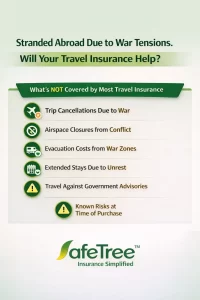
Here is what most travellers do not realise. Standard travel insurance policies usually do not cover losses arising from war or warlike situations.

What is typically excluded in such scenarios?

  • Trip cancellations caused by war or armed conflict
  • Trip interruption/Flight cancellation due to airspace closures linked to military action
  • Any medical assistance as a result of war or armed conflict.
  • Claims arising from travelling against official government advisories.
  • Claims linked to pre-existing conditions at the time of buying the policy. (If not specifically added as cover under the policy)

Travel insurance works within clearly defined boundaries. Medical emergencies, baggage loss or personal accidents are covered if unrelated to the conflict. But expenses directly connected to war or military action are a general exclusion under the travel policy.

Before travelling to your next vacation/business trip, please ensure:

1. Read your policy carefully

2. Check official advisories

3. Understand what is covered and what is not

4. Speak to your advisor if you need clarity

Travelling should be about experiences, not about uncertainty.

At SafeTree, we believe awareness is the first layer of protection. The right time to understand your policy is before you board your flight, not when you are stranded.