
Blocked Fallopian Tube: Symptoms, Causes and Its Impact on Fertility
Facing challenges with conception can be a draining experience emotionally, especially when there are no apparent fertility issues. A lot of women find out quite unexpectedly that blocked fallopian tubes can reduce their fertility potential without associated symptoms. As fallopian tubes are necessary for fertilisation, any blockage could prevent the meeting of egg and sperm.
Knowing the symptoms, causes, and effects of blocked fallopian tubes is essential for women to act quickly toward their diagnosis, treatment, and planning for their families.
What are Fallopian Tubes? Why are they important?
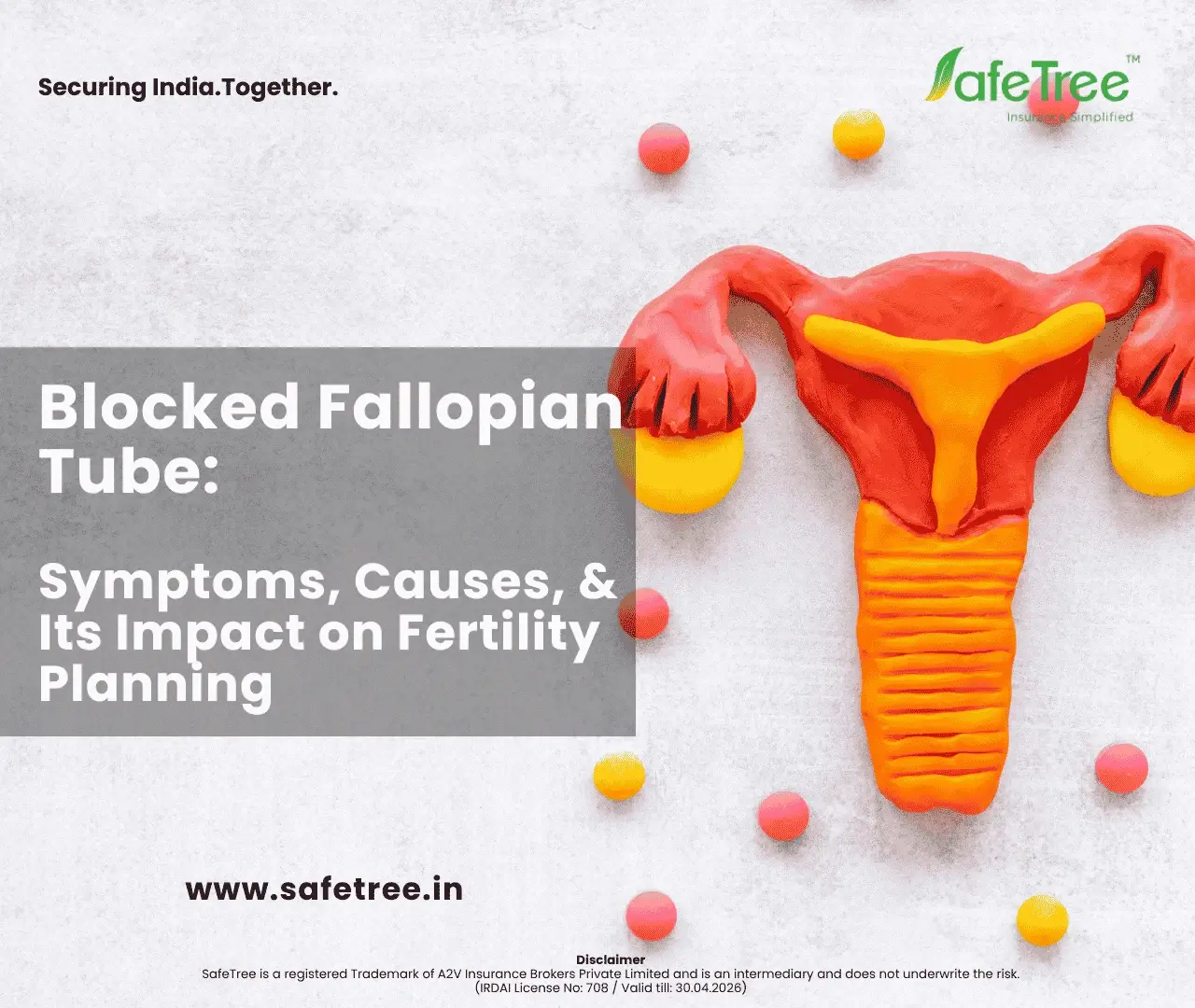
Fallopian tubes are two narrow passages that connect the ovaries to the uterus. Their chief role is to carry the egg released during a woman’s ovulation from the ovary to the uterus. They are also where fertilisation usually happens. An egg released from an ovary is guided along a fallopian tube. There the egg and a sperm cell can meet and fuse together. The fertilized egg will then make its way to the uterus, where it will implant in the uterine lining, and pregnancy will be initiated
Fallopian tubes are basically the highways for the egg, sperm and embryo, so without them, natural conception cannot happen. In case one or both tubes are damaged or blocked, the whole mechanism could fail, and one will find it very hard to conceive.
What is a Blocked Fallopian Tube?
Fallopian tube blockage refers to a condition in which the tube is blocked either completely or partially. Due to the blockage, eggs, sperm, or the fertilised egg cannot follow the normal route through the tube. This obstruction can happen in one or both tubes. In some cases, a woman’s blockage may be located at the uterus, while others could be near the ovary or even the middle part of the tube.
In situations where only one tube is blocked, natural conception is still quite possible, provided the other tube is functioning properly. However, if both tubes are blocked, then the chances of conceiving naturally without fertility treatment will be very low.
Symptoms of a Blocked Fallopian Tube
Blocked fallopian tubes are very often confused with symptoms of other diseases, since in most cases, these tubes, being blocked, show no symptoms. Many women are perfectly healthy and find out about the condition when trying for pregnancy. But for some women, they might have some blocked fallopian tube symptoms, such as the following:
- Difficulty getting pregnant despite regular attempts
- Chronic pelvic pain
- Pain during menstruation
- Dysmenorrhoea, a condition that causes pain during sex
- Lower abdominal discomfort
- In some cases, abnormal vaginal discharge occurs
- Multiple histories of pelvic infection
Sometimes a blockage results from a condition called “hydrosalpinx”, in which a fallopian tube is filled with liquid. Such a situation may bring on a woman’s long-lasting pain or a feeling of heaviness in the pelvis. Sometimes the symptoms are mild or even non-existent, which is why it is important to undergo a medical exam to be properly detected.
Causes of Blocked Fallopian Tubes
The Fallopian is typically blocked due to scarring, inflammation or infection, and this changes the Fallopian’s normal anatomy. Below is a list of some of the most common causes of blockage.
1. Pelvic Inflammatory Disease (PID)
One of the main causes of blocked fallopian tubes is pelvic inflammatory disease (PID). This is because of an infection in the fallopian tubes due to bacteria that are passed through the vagina or cervix. Infection caused by either chlamydia or gonorrhoea is likely to increase your chances of having the disease. The inflammation will result in scarring and adhesions, thus narrowing or totally blocking your tubes. A slight infection may lead to serious complications.
2. Endometriosis
Endometriosis refers to the presence of uterine tissues outside the uterus, on the pelvic wall, or on the ovaries. The growth of such tissues results in the formation of scar tissue or cysts that may disrupt the structure and function of the tubes. The severe form of the disease can lead to distortion or even total obstruction of the tubes, thereby preventing the egg from passing into the uterus.
3. Previous Pelvic or Abdominal Surgery
Sometimes scars from surgeries to the pelvis, ovary, uterus, and appendix can cause adhesions (bands of scar tissue). Adhesions like these may adhere to the fallopian tubes and either stop the motion or block the passage through the fallopian tubes.
4. Sexually Transmitted Infections (STIs)
Certain infections, especially chlamydia and gonorrhoea, if left unaddressed, can cause severe damage to the reproductive organs. A number of women who had the infection, with little pain or discomfort, develop tubal scar tissue many years later.
5. Ectopic Pregnancy
An ectopic pregnancy takes place when a fertilised egg implants itself outside the uterus, often in a fallopian tube. This will cause problems with the affected tube and can lead to more blockages in the future.
6. Tuberculosis and Other Infections
Genital tuberculosis is a significant cause of infertility in some areas. The infection may lead to serious scarring of the reproductive system, including the fallopian tubes.
Types of Fallopian Tube Blockages
Tubal blockages aren’t all the same. Fertility outcomes and treatment options may depend on where the blockage occurs.
1. Proximal Blockage
This blockage is at the site of the fallopian tube’s opening near the uterus. Sometimes it is due to mucus, inflammation or scarring.
2. Mid-Segment Blockage
The blockage occurs in the region of the tube between the sources. Often, contributing factors are previous surgeries or infections.
3. Distal Blockage
A distal blockage is sometimes linked to a hydrosalpinx, which is the accumulation of fluid and results in fertility problems.
4. Hydrosalpinx
Hydrosalpinx is a condition in which a fallopian tube is blocked and filled with fluid, leading to fluid accumulation. Without treatment, besides the fact that the chance of a natural pregnancy would be reduced, fertility treatments like IVF may also have a lower success rate.
How does a Blocked Fallopian Tube Affect Fertility?
The link between blocked fallopian tubes and fertility is quite simple. For a pregnancy to happen, the sperm must travel through the reproductive tract to fertilise the egg in the fallopian tube. However, if a tube is blocked, this whole process will be cut off. In case one fallopian tube is blocked but the other one is in good health, it is still possible to conceive without medical intervention. Nevertheless, fertility levels might be lowered due to such factors as age, ovulatory behaviour, and overall reproductive health.
With both tubes blocked, it will be almost impossible to conceive a child without medical intervention because sperm and egg cannot have a meeting point. In these cases, one may be advised to seek fertility treatments.
Why is Future Fertility Planning Important if You Have Blocked Fallopian Tubes?
Usually, a woman who finds out that she has blocked fallopian tubes will first of all be disturbed and wonder what options are left for her. Surgery, fertility drugs, or even IVF through the assistance of reproductive technologies may be implemented for the blockage, depending on the severity and site of the blockage. These procedures might be quite expensive, especially if more than one cycle or procedure is necessary. That is why having a future fertility plan matters significantly.
With a plan for fertility, individuals and couples will be able to understand the potential treatment pathways, make rough cost estimations, and get themselves ready financially for future reproductive care. Without a doubt, a detailed plan will give you more confidence and peace of mind instead of making rushed decisions in a hard, emotional situation.
Conclusion
Blocked fallopian tubes are one of the major causes of female infertility, yet most of the time, this cause is ignored. Though a few have symptoms, most of the women only get to know about the condition when they undergo fertility check-ups. Understanding the causes of blockage of fallopian tubes, finding out about the signs, and getting the right treatment helps to improve fertility outcomes. But fertility treatments have evolved over the years, and now there are lots of alternatives for women with tubal blockage. Financial planning in combination with medical treatment can also help reduce stress.
SafeTree supports people in managing their fertility-related financial needs and provides resources when fertility treatments become necessary. Access to correct information, treatment, and planning can help keep the hopes alive for women with blocked fallopian tubes to become mothers.
FAQs
1. Can blocked fallopian tubes be treated?
Absolutely, but the treatment will be different depending on the location and the extent of the blockage. Possible options could be surgical methods to get rid of the blockage, repair the tubes that have been damaged or go for assisted reproductive methods like IVF.
2. Can PCOS/PMOS cause blocked fallopian tubes?
PMOS (Polyendocrine Metabolic Ovarian Syndrome) itself will not cause blocked fallopian tubes directly. Since PMOS primarily leads to anovulation and hormonal imbalance, it does not cause blocked fallopian tubes.
3. Can you get pregnant if one fallopian tube is blocked?
Absolutely, if the other fallopian tube is healthy and ovulation happens normally, pregnancy without medical intervention can be achieved. However, fertility may be somewhat reduced depending on other reproductive factors.
Disclaimer:
This blog is for general informational and educational purposes only. The information provided here should not be considered a substitute for professional medical advice, diagnosis, or treatment. Before making any decisions related to health conditions, symptoms, or treatments, readers are advised to consult a qualified healthcare professional.
The information related to insurance is provided for general guidance only. Before choosing any insurance policy, readers should consult our insurance experts to receive detailed advice based on their individual needs and requirements.
Published by: A2V Insurance Brokers Pvt. Ltd. (SafeTree)




Share this post:
Facebook Twitter LinkedIn WhatsApp