
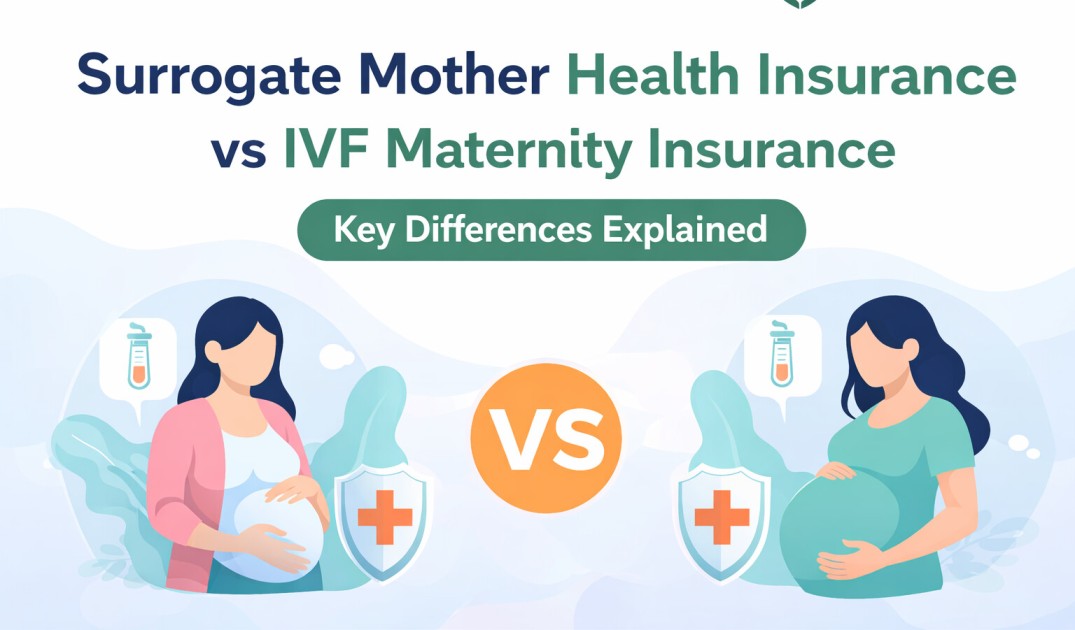
Surrogate Mother Health Insurance vs IVF Maternity Insurance: Key Differences Explained
Introduction
Advancements in assisted reproductive technologies such as IVF (in vitro fertilisation) have made parenthood possible for many individuals and couples. Depending on medical, biological, or personal circumstances, IVF may result in either self-pregnancy or surrogacy.
While both journeys involve IVF, the insurance requirements differ significantly. IVF maternity insurance and surrogate mother health insurance are often confused, yet they are designed for entirely different pregnancy scenarios.
This article explains the key differences between IVF maternity insurance and surrogate mother health insurance, helping intended parents choose the right coverage based on their IVF journey.
What is IVF maternity insurance?
IVF maternity insurance is a specialised form of maternity cover designed for women who conceive through IVF and carry the pregnancy themselves.
Unlike traditional maternity insurance, IVF maternity insurance:
- Includes IVF-conceived pregnancies
- Covers pregnancy and childbirth after assisted conception
- Taken by the intended mother who will deliver the baby
Key features:
- Covers pregnancy-related hospitalisation, delivery, and post-natal care
- May include complications arising from IVF pregnancy
- Usually comes with a waiting period (varies by policy)
- Applicable only when the insured woman is the gestational mother
IVF maternity insurance is suitable when:
- IVF leads to self-pregnancy
- No surrogate is involved in carrying the child
What is Surrogate Mother Health Insurance?
Surrogate mother health insurance is a mandatory medical insurance policy designed specifically for a surrogate mother carrying an IVF-conceived pregnancy on behalf of intended parents.
This policy:
- Insures the surrogate, not the intended mother
- Covers pregnancy-related medical risks during surrogacy
- Purchased by intended parents
- Required under Indian surrogacy regulations
Key features:
- No long waiting period
- Covers pregnancy complications, delivery, and post-delivery care
- Short-term policy aligned with the surrogacy period
- Ensures legal and ethical compliance
Key Differences –
| Parameter | IVF Maternity Insurance | Surrogate Mother Health Insurance |
| IVF involvement | With self-pregnancy | IVF with surrogacy |
| Who is insured | Intended mother | Surrogate mother |
| Who carries pregnancy | Insured woman | Surrogate |
| Waiting period | Usually applicable | Minimal or none |
| Coverage duration | Long-term | Short-term |
| Legal requirement | Not mandatory | Mandatory |
| Policyholder | Intended mother | Intended parents |
| Covers surrogate | No | Yes |
IVF Maternity Insurance Covers –
- Hospitalisation during IVF pregnancy
- Normal or caesarean delivery
- Pregnancy complications linked to IVF
- Post-natal medical care
Surrogate Mother Health Insurance Covers:
- Medical expenses of the surrogate during pregnancy
- Complications arising from IVF pregnancy
- Delivery and post-delivery treatment
- Emergency medical care related to surrogacy
What Does IVF Maternity Insurance NOT Cover?
- Pregnancy carried by another woman
- Medical risks of a surrogate
- Legal insurance obligations in surrogacy
Legal and Ethical Considerations in India
IVF treatments alone do not trigger mandatory insurance requirements. However, once surrogacy is involved, Indian law requires intended parents to provide health insurance & life insurance coverage for the surrogate mother.
Key considerations:
- IVF maternity insurance does not fulfil surrogacy insurance requirements
- Surrogate mother health insurance is legally mandated
- Ethical IVF practices require safeguarding the surrogate’s health
Choosing the correct insurance ensures:
- Legal compliance
- Medical safety
- Financial protection for all parties
Which Insurance Do You Actually Need?
Choose IVF Maternity Insurance if:
- IVF results in self-pregnancy
- The intended mother will carry and deliver the baby
- You want coverage for IVF-related pregnancy risks
Choose Surrogate Mother Health Insurance if:
- IVF embryos are transferred to a surrogate
- The intended mother cannot carry the pregnancy
- You must comply with surrogacy regulations
The deciding factor is who carries the IVF pregnancy.
Myths vs Facts
| Myth | Fact |
| IVF maternity insurance covers surrogates | False |
| IVF always requires surrogate insurance | False |
| One IVF policy works for all scenarios | False |
| Surrogacy insurance replaces maternity cover | False |
Cost and Policy Duration Comparison
IVF Maternity Insurance:
- Moderate premium as part of health or maternity cover
- Long-term policy
- The waiting period impacts claim eligibility
- Designed for personal pregnancy planning
Surrogate Mother Health Insurance:
- One-time premium
- Short-term policy linked to IVF surrogacy duration
- No long waiting period
- Higher upfront cost due to specialised risk coverage
While IVF maternity insurance supports personal pregnancy, surrogate insurance is a mandatory expense in IVF surrogacy cases.
Conclusion
IVF opens multiple pathways to parenthood, and each path comes with distinct insurance requirements. IVF maternity insurance is designed to support women who conceive and carry their IVF pregnancy themselves, while surrogate mother health insurance focuses on protecting the medical well-being and rights of a surrogate carrying an IVF-conceived child.
Understanding this distinction is essential to avoid claim rejections, legal non-compliance, and unexpected financial risk. The right insurance choice depends entirely on how the IVF journey is completed – through self-pregnancy or surrogacy. Insurance providers such as Safetree, which specialise in IVF maternity insurance and surrogate mother health insurance, help address these specific needs by offering coverage aligned with different IVF outcomes.
Disclaimer:
This blog is for general informational and educational purposes only. The information related to insurance is provided for general guidance only. Before selecting any insurance policy, readers are advised to consult our insurance experts for detailed advice based on their individual needs.
Published by: A2V Insurance Brokers Pvt. Ltd. (SafeTree)

Share this post:
Facebook Twitter LinkedIn WhatsApp