Others Archives - Page 4 of 5 - Safetree

We will contact you as soon as possible, please fill in your details!

Blogs & Resources

5 years ago · by · 0 comments
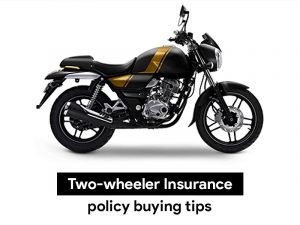
Two Wheeler Insurance: Tips to Choose the Best One

Two Wheeler Insurance: Tips to Choose the Best One

Bertolt Brecht, the famous German poet and theatre personality, once quoted, “When the praying does no good, insurance does help.” ‘Insurance’ is a big term. Insurance is trust. Insurance is hope. You tend to insure your well-being every single second through every single action of ours. You have spent your childhood studying and preparing yourselves for all the challenges of your life because you wanted to ensure our happy life. You lead a disciplined, active life so that you can ensure a healthy life. In short, insurance is one word that is entwined with our lives, just like a climber interweaves the bark of a tree.

What is Insurance?

You tend to insure everything precious to us, including our lives, homes, and even our children. You ensure their safety and happiness in numerous ways. Among them, the most tangible and quantified way of ensuring their safety is when you purchase dedicated insurance to safeguard their well-being. Yes! You are talking about financial insurance plans. Financially, insurance is defined as a legal agreement between two parties – the insurer and the insured. Usually, an insurer is a dedicated insurance company that promises to take care of the losses, if any, in case of any eventuality (as specified in the insurance documents) or contingency (accidental incidents leading to losses) that the insured faces. The insured is an individual who wishes to insure and protect their prized possessions in lieu of the premium’s financial consideration (as decided and defined by the insurer).

What is Two-Wheeler Insurance?

Our lives are important. It is the primary reason you insure our life, the lives of our family members, and even our houses. On the same note, you also need to insure our vehicles. Vehicles have an important role in our lives. While our lives are getting stressful and competitive, speed is one aspect that differentiates us. Vehicles give us speed, though you are not supposed to drive our vehicles at very high speed. Here the word ‘speed’ indicates having wheels under your feet to gain speed in the work you do and how you do it. Vehicles and improved means of transportation have surely enhanced and upgraded how we lead our lives. However, increased use of vehicles has also increased the risk to our lives. You are always at risk whenever you are out of home, given the number of accidents every day. Therefore, motor vehicle insurance becomes mandatory. The Government of India has made it mandatory to carry a valid copy of the motor vehicle insurance certificate while driving on the road. Motor vehicle insurance covers all kinds of motor vehicles, including four-wheelers and two-wheelers.

Two-wheeler insurance is also known as bike insurance. Bikes, or two-wheelers, are a constant companion for a considerably large population in India. In the cities, bikes or two-wheelers are also popular in small towns and rural areas. Bikes are the preferred mode of transportation in these places, given the nature of roads. Cars or four-wheelers usually require pucca roads and require considerably higher investments, thus further increasing the popularity of bikes in these areas. Two-wheeler insurance is an insurance policy (mandatory under the Motor Vehicle Act in India) to protect your two-wheeler against any damages due to accidents, theft, natural disasters, or any other serious incident.

Why is Two-Wheeler Insurance Important?

Your two-wheeler is your constant companion in your journey of life. Therefore, you have the responsibility to protect both – your life and your bike. Some reasons why your two-wheeler insurance is important to include:

  • Your two-wheeler is insured against any accident. Minor accidents and damages to your bike can thus be repaired without taxing your pocket. Cashless repairs at the reputed garages across the towns and cities would not be a problem anymore!
  • Your two-wheeler is insured against any natural disaster. Therefore, any damage or loss of your vehicle during such a natural disaster would thus be covered.
  • Your two-wheeler is insured against theft. Thus, in case your bike is stolen, you have something to bank upon.
  • Your two-wheeler insurance also includes any losses caused to any third party. Therefore, in case of accidents where any third party gets injured, they would also be covered and taken care of under the same insurance policy.
  • In case you don’t claim any insurance for a stipulated time, you are also eligible to earn your No-Claim Bonus!

Therefore, to continue your stress-free journey in life, you need to have the mandatory two-wheeler insurance by your side.

Tips to Choose the Best Two-Wheeler Insurance

Some points that should be understood before choosing the optimum two-wheeler insurance for your bike include:

Type of Coverage Required:

Usually, two-wheeler insurances are of two types:

Comprehensive Coverage 

Comprehensive insurance coverage would include all kinds of insurance, including insurance covering your two-wheeler against the impact of any damage due to accident, damages due to fire, theft of the bike, or damage or loss due to an earthquake. The comprehensive insurance would also cover any third-party liability, including the death of any person/s, physical injury of any person/s, and/or any damage to third-party property.

Insurance policies providing Third-Party Coverage only

As against the comprehensive coverage, insurances involving only third-party coverage restrict the coverage to any damage caused to other vehicles and their passengers due to your two-wheelers only.

While third-party coverage is mandatory, comprehensive insurance coverage gives you overall mental peace. Choose the right type of insurance coverage depending upon your two-wheeler usage pattern. Your overall expenditure (usually, comprehensive coverage premiums are cheaper than the third-party coverage premiums) and other liabilities.

  • Cubic Capacity of your Bike: This is the determining factor for deciding your premium. Yes! Your two-wheeler insurance premium is decided upon the cubic capacity of your bike. The higher the cubic capacity, the higher the premium.
  • Choosing the right insurer: It is important to choose the right partner for your insurance, or else you might face a problem during your claim settlement process. Researching the claim settlement ratio of any insurance company would be a good measure to determine the company’s efficiency.
  • Comparing the insurance policies online: Technology has been a boon. Various websites help us compare two-wheeler insurance policies provided by multiple insurers online. You should not only check the difference in premium (which might not be significant) but also the features such as the claim settlement process, online customer care support, riders available for extension of insurance coverage, process, and ease of coverage renewal periodically, among others.

Insuring your two-wheeler is mandatory under the Motor Vehicles Act. More than that, it is your responsibility to keep yourself stress-free and mentally relaxed while you ride your two-wheeler. Therefore, choosing the right insurance company and the best insurance policy would be the right step towards your stress-free journey ahead!
5 years ago · by · 0 comments
GST – Impact on Motor Insurance

GST – Impact on Motor Insurance

You live in an apartment. The apartment is a part of a gated community called Society. Society needs to complete some basic tasks for every apartment, such as cleaning up the common areas, collecting garbage from each household and the common area, maintaining lights and lifts, and maintaining the building, among other activities. Who should take the responsibility to do all these things? Why should that single individual or group of individuals take that responsibility? How would such people fulfill those responsibilities?

Let us answer these questions one by one.

  1. Who should take the responsibility?

Well! The people who are living in that society should be responsible.

   2. Can every single individual be involved in such an activity?

No! Involvement of such a huge number of people would create chaos, and work would be hampered. It is why a group of people is selected to be the esteemed member of the Resident Welfare Association of society.

3. Who selects the members?

The entire resident population of the society chooses this association or team of people based on the members’ credentials, experience, and capabilities.

4. Why should the group of individuals take the additional responsibility of maintaining the society?

They should take responsibility because they are selected members of the association. They have been assigned to maintain society as the representative body of the people staying in society.

5. How would such people fulfil their responsibilities?

This team of people would appoint personnel to take care of every single activity. Certainly, they are not in a position to perform each task themselves. Therefore, they need to hire professional experts to carry out such work. While they hire professionals, they need to pay them.

6. What will be the source of funds used to pay such hired professionals?

Well! Since these are common society tasks, society needs to create a contributory fund to pay such professionals. Every single flat in society should contribute to this contributory fund to ensure society’s smooth functioning and well-being.

We are thinking of why this lengthy discussion on society and their resident welfare association? Well! Isn’t the situation somewhat similar to the country we live in? Imagine our country as a big residential society and our government to be the Resident Welfare Association. The government is the selected and elected body that performs tasks required for the well-being of the citizens (such as the creation of necessary infrastructure and providing basic amenities to the citizens). The government creates a contributory fund called TAX to perform these well-being tasks on behalf of this country’s citizens. Tax is, therefore, a contribution made by the citizens to facilitate the tasks of well-being. The government is cautious in collecting TAX from only those who can pay such TAX and uses the amount received for all the citizens (including those who do not pay taxes). It is validated by the comment of James Madison, the fourth President of the USA – “The power of taxing people and their property is essential to the very existence of government.”

The Indian Taxation System

The Indian taxation system can be classified under the following two broad headings:

  • Direct Taxes
  • Indirect Taxes

Direct taxes are easy to understand and collect. Direct taxes indicate that people are directly taxed for their income, assets, and properties. Why should they be taxed for their income? Well! People use national property such as roads, electricity, and water, among other infrastructure, to earn their income. Therefore, they should pay such taxes to facilitate the maintenance of these infrastructures. Income Tax and property tax are examples of direct taxes paid by individual residents or households.

Indirect taxes are taxes claimed by the government upon the facilities, goods, and services that the citizens use regularly. Why should people pay indirect taxes? Well! Citizens need to pay such taxes because the creation and transportation of such facilities, goods, and services use public infrastructure. Several indirect taxes were collected by the government until recently, such as the Central Sales Tax, the Central Excise Duty, and many others. At times, the indirect taxes were taxed (since there was a differentiation of taxes collected at the central and state levels). The entire indirect taxation regime was reformed by introducing a common taxation scheme called the Goods and Services Tax (GST).

What is GST?

GST, or Goods and Services Tax, is a comprehensive taxation system covering indirect taxation of the manufacture, sale, and consumption of all goods and services. With the implementation of GST, indirect taxation has become easy to understand, comprehend, and collect from the citizens on a national level (because fixed-rate slabs (0%, 5%, 12%, and 18%) of GST have been defined for all the goods and services depending on the nature of the goods and services and their utility among citizens). GST has replaced all other indirect taxes, especially taxes levied on goods and services by both the Central and State Governments. GST is further classified under the following three heads:

  • CGST: GST collected by the Centre
  • SGST: GST collected by the state
  • IGST: Interstate Goods and Services Transaction Tax

Since July 1, 2017, GST has been implemented on the manufacture, sale, and consumption of all goods and services within India’s territory. Insurance is an essential service availed by Indian citizens. Classified as a service, insurance also falls under the ambit of GST. Thus, all insurance types, including insurance of motor vehicles, attract indirect taxation under the GST. Therefore, customers purchasing insurance from insurance companies require paying the indirect tax called GST that is usually collected as a percentage of the premium paid.

Impact of GST on Motor Insurance

Before implementing GST, Motor Insurance was subjected to service tax, as insurance is a service provided for the benefit of India’s citizens. Implementation of GST has abolished the service tax system. Since insurance, including motor insurance, is a kind of premium service availed by the privileged citizens of India (motor insurance is availed by privileged citizens owning vehicles), the GST rate that is levied on insurance purchasers falls under the higher GST tax rate of 18%. Incidentally, this is around 3% higher than the rate of service tax (motor vehicle insurance charged 15% service tax) that was levied upon the individual insurance purchasers. Therefore, GST’s implementation has made motor insurance a little expensive compared to the pre-GST era. The 18% GST is charged on the individuals’ premium towards insuring their motor vehicles (includes both four-wheelers and two-wheelers) and on any rider premiums paid for availing any insurance rider by the individuals.

5 years ago · by · 0 comments

Want to Save Tax? 5 Best Short Investment options in India

Short-term investments are the preferred bet because the money is not locked in for a long period. These are temporary investments and mostly have a period that is within five years. For a shorter duration, your money is safe and parked to bring in some extra cash.

What are short-term investments by the way?

The characteristic feature of the investment is the period. Plus, you can earn a decent return within a year or some months. Besides helping save money, this type of investment is helpful when you have some immediate expenses shortly.

One of the aspects of the investor is that they do not have the patience to wait for years for their money to get parked and multiply. So, short-term investments are good, but do not expect substantial results, as is the case with long-term investments. 

What are the five top short-term investments in India?

  1. Large-cap Mutual Funds

What are large-cap companies? These are companies that have a market cap of INR 20,000 crores or more. These are plans that involve investing in the equity or the stock of such big companies. The investment bears one of the highest returns in the short-term plans sector. If wisely invested, you can earn between 8% to 13% yearly returns.

Benefits of investing in the Large-Cap Mutual Funds:

  • The period is usually between 3 to 5 years.
  • Returns are high – almost between 8 to 13 percent.
  • The liquidity is high.
  • Short-term Capital Gain Tax, or STCG, is charged on the fund when it is for three years or less.
  • Long-term capital gains tax is charged on the fund when the plan is above three years.
  • Most of the large-cap companies have a sound financial position; therefore, the investment is mostly safe, and there are good chances of generating decent revenues at the end of the term. The effect of market fluctuations on such an investment is not that impactful.

    2. Debt Funds

These funds are a variant of mutual funds and are considered to be one of the lowest risk factors in the MF sector. So, expect decent returns in a very short period. Plus, the risks are quite low, as the money is usually invested in the money market and debt.

There are three types of Debt Mutual Funds:

  • Liquid Funds that mature within 91 days.
  • Low duration funds – Macaulay duration that ranges from 6 months to 12 months
  • Ultra-short duration funds – Macaulay duration that ranges from 3 to 6 months.

Benefits:

  • This is where you can earn the highest returns in the short-term investment domain – the return is almost 10.5%.
  • High on liquidity.
  • Lower risks
  • Regular returns.
  • Capital gains tax gets charged on the debt instrument. STCG is charged on gains for funds with a period less than 3 years, and long-term capital gains tax is charged on gains on funds that have a period of more than 3 years.

    3. Recurring Deposits

In this case, the investor makes investments on a monthly basis – there are some great benefits of recurring deposits –

  • These are low-risk investments.
  • The tenure can be as low as 6 months and as high as 10 years.
  • The lock-in period is one month. And closure within the lock-in period means that the investor does not get any interest.
  • The rate of interest is between 5% and 7%, which gives decent earnings. The rate keeps changing. The current interest rate is about 6.5%.
  • TDS is done when the interest earned goes beyond INR 10,000.

    4. NSC or National Savings Certificates

This investment can be bought from the post office and is a government-backed scheme. Therefore, the risk is quite low. The term, however, is fixed at 5 years. The interest rate keeps changing; the decision to this effect is taken by the Finance Ministry. The interest rate announced for April till June 2020 was 6.8%.

Benefits

  • Investors can claim tax benefits
  • The interest is taxable, though.
  • Low risk
  • Decent income.
  • Government-backed

    5. Fixed deposits in Banks

The investor needs to deposit a lump sum amount in a fixed deposit account. The tenure is variable – the minimum is 7 days and the maximum is 10 years. So, if you have idle money lying around, it is good to put the money in FD and then let the money earn interest.

Benefits

  • FDs have a higher rate of interest than a savings account. The interest is between 3.5% and 8.05%.
  • Safe investment
  • High liquidity
  • The tax on the interest earned is high – it can go up to 30%.

Conclusion

Short-term investments are good because of the limited risks and for the decent returns that one can earn. Before investing in a short-term plan, it is vital to understand the risks involved, the liquidity of the funds, and the tax efficiency.

5 years ago · by · 0 comments
Term vs Whole Life Insurance

Term vs Life Insurance Policy which is better

Life insurance is a way to safeguard your future. From helping pay off debts to ensuring that you have a comfortable life in the future or when you are old, there are plenty of reasons to buy a life insurance policy from a credible insurance company.

There are two types of life insurance that you can buy – whole life insurance and term life insurance. While the whole life insurance policy covers you for your life, the term life insurance covers you for a fixed-term period. Undoubtedly, the former has a higher and long-term premium, while the latter is much cheaper, and the premium needs to be paid for a specific period.

One of the characteristics that remains the same for both types of life insurance policies is that both come with similar death benefits – the money essentially covers all debt repayments, tax payments, mortgage payments, funeral costs, and other such expenses.

But, what are the differences between the two types? Let us explore the same.

S. No. Criteria Term Life Insurance Whole Life Insurance
1. Term period This is for a shorter period – a fixed preset term period. The term periods usually available are 5, 10, 15, 20, and 30 years. The policy covers the insured for life. However, before such an insurance policy is bought, there is a qualifying health examination. In case you wish to buy a Whole Life Insurance Policy without a medical examination, the price of the policy is hiked up.
2.  Purpose/Value The objective of buying this type of life insurance is to protect the dependents or the close family members when the insured person dies prematurely, within the term period.  Thus, the value is death benefits only if the person dies within the period. The value is the death benefit along with the cash value. How? Over a period, say 10 years, the cash starts to accumulate decently. And beyond that, the cash accumulation builds up pretty well to offer financial support to your dependents.
3.  Cost-wise Term life insurance policies are affordable and quite easy. However, if you wish to take the life insurance policy at an older age, say after 50 years, the premium will be higher. The premium is expensive, much higher compared to term life insurance policies.
4.  Added benefits · The life insurance policy can be converted to a whole life insurance policy.

·       The term period can be renewed if you wish to extend the coverage.

· Partial cash can be taken on loan or withdrawn during the policy term.

·       The cash accumulation can be considerable if the whole life insurance policy is in force for a good period.

5.  Benefits Finite term. Simpler policies. Cheap. The policy can be stopped in between. It is possible to take a loan or withdraw a partial amount. Death benefits are tax-free. Offers protection for life. The best way to build wealth.
6.  Disadvantages ·       Limited protection is a big disadvantage.

·       This policy cannot be used for building wealth.

·       In fact, most people tend to spend all the money saved in their lifetime because the term ‘insurance’ has a fixed life term.

·       If you choose to cover a higher value of death benefit or go in for a longer coverage length, the premium will be expensive.

·  The policy is a lot more complex than term life insurance.

·  Costly and can prove to be out of reach for many.

·  You need to run it for a few years for wealth to build up.

·  Any loan taken will impact your death benefits.

·  If the premium is not paid for the first few years or you default, then the policy can get surrendered.


Choosing between Term Life Insurance and Whole Life Insurance

There are several factors that are considered when you have to choose between term life insurance and whole life insurance.

The factors are:

  • Age – this is the first factor that will be factored in;
  • Health condition – your existing health condition will be assessed;
  • Age of your kids, if any – if you have a family, the age of the children will be assessed;
  • What is your financial condition? – Your current earnings will be evaluated by the insurance company. It will also be checked what the financial needs of the user are.
  • The existing debt position will be evaluated – the insurance company will assess if you have any debts or mortgages to pay or if there are any plans to take one in the near future.
  • You will also be asked about the death expenses that you wish to get covered as part of life insurance.
  • Your retirement plans
  • Retirement savings plan
  • Plans for purchase of real estate and the real estate taxes;
  • Your intentions to donate to charity;
  • The plans for your kids like school and college fees;
5 years ago · by · 0 comments
travel insurance

Want to go for a Vacation-Here are the top 10 Reasons Why You Should Have Travel Insurance

Going on a vacation is a great way to reconnect with life, friends, and family. This is also the ideal way to go on an experiential soul-searching journey with your own self. Undeniably, everyone wants the journey to be flawless, without any hiccups, hassles, or troubles. However, there are times when unforeseen circumstances come calling and knocking on the door that leave you all hassled up. A major part of the hassle can be well addressed by taking travel insurance. What has been generally seen is that vacationers usually ignore the aspect of taking travel insurance, thinking that it is a waste of money or not worth the money being charged.

Let us see what travel insurance is and what the ten top reasons are to have travel insurance with you when travelling.

Travel insurance, as can be interpreted from the name, is a type of insurance that is bought when people travel from one place to another. The purpose is to safeguard you and your pocket in case there are any exigencies or emergencies during travel or till the vacation lasts.

There are enough grounds that justify the purchase of the right travel insurance. Let us see the top ten reasons:

1. Medical crisis

Whether you are travelling within the country or abroad, it is always smart to have travel insurance because it takes care of any medical emergencies that can come up suddenly. The last thing that you have on your mind when you go out for a vacation is an illness or a medical complication. But such conditions can crop up anytime; hence, you need to be prepared to handle the same effectively.

When travelling abroad, this is especially crucial because in Western countries like the US, the cost of healthcare is too high. Your ongoing health insurance usually does not cover the medical expenses you incur outside the country. Also, many hospitals abroad will not accept the health insurance policies you have.

2. Loss or delayed baggage

When your baggage goes missing, the insurance company will pay you a certain sum of money to cover the loss. In case the baggage is delayed, the insurer will pay you a personal effects amount to buy essential things for the while.

3. Loss of passport and other documents

This is another unforeseen event that comes as a shock. If you lose your passport or any other document during the travel, your insurance will help you with the expense of getting a duplicate or a new passport issued.

4. Travel insurance is a must if you are travelling to certain international destinations

Countries like the UK, Austria, Portugal, Greece, France, Germany, Belgium, Spain, the Netherlands, and Luxembourg mandatorily require travel insurance, without which a visa is not granted to these countries. The USA, Australia, and Canada have a rule that when the traveller is 60 years old or more, travel insurance is compulsory.

5. The flight gets cancelled and/or delayed

Such scenarios can happen anytime during domestic or international travel. The airline may not reimburse the expenses in many cases. However, if you have your travel insurance, you get the ticket reimbursement done fast, and you can also rebook your ticket for a different day or flight.

6. When travelling to remote places, travel insurance proves to be a saviour.

If you are travelling to remote places on the Earth where medical facilities and other infrastructure are not that well-developed, you must get travel insurance so that you have no issues in case of medical emergencies or any other crisis.

7. Fraud

When travelling, it is likely that you lose your debit and credit cards – these could be stolen or misplaced. In such cases, there are high chances that the person who has stolen the cards or finds them starts to use them. This way you start to lose money in a foreign place with no help or assistance. Your travel insurance will refund you a certain amount that you lose with applicable conditions.

8. Personal liabilities

In case, during your travel or stay, a third party causes damage to you or your property or the other way around, the travel insurance will cover the expenses towards the damages.

9. Daily allowance during a medical emergency

This happens when the insured person gets hospitalised due to a medical emergency. The insurance company will pay a certain preset amount as a daily allowance to cover your food and communication-related expenses.

10. In case disasters

Suppose the place where you go for your vacation has been hit by a natural disaster or even a man-made crisis. These could be floods, tsunamis, earthquakes, storms, and hurricanes, or acts of terrorism, explosions, etc. In such dire situations, it is your travel insurance that will offer cover for the finances and expenses required to move to another place to stay.

5 years ago · by · 0 comments
Top Factors That Decide the Premium of Property Insurance

Top Factors That Decide the Premium of Property Insurance

Property insurance is a big fallback option because such insurance policies cover the property from natural and manmade disasters. It is a source of peace of mind for the property owner because disasters and calamities can visit anytime, and besides causing risks to life, properties are impacted by such events too.

Natural calamities like floods, earthquakes, tsunamis, storms, and infestations are covered, while for man-made events, factors like terrorism, theft, burglary, fire, and accidents are covered.

Choosing the right insurance policy is critical to deriving full benefits during unforeseen calamities. The insurance premium becomes a bone of contention for most property owners. This is why it is important to understand the factors that influence the estimation of the property premium.

Factors that affect the property premium are:

1. Location of the property

The place where the property is located impacts the premium calculation. When the property is located in a place that is prone to natural risks like earthquakes or tsunamis or places where manmade factors play havoc, like terrorism or fire incidents, the premium of the insurance policy is going to be higher than other places.

2. Property asset valuation

There are two broad sections under the property asset valuation. One is the structural feature of the property, and the second is about the content within the property.

3. Structure of the house

This covers the structural features of the house. To determine the premium, two types of basic information are required:

  • The total square footage area of the place
  • The per square foot construction cost in unit currency.

4. Content of the house

This is concerned with the possessions inside the house and typically includes valuable things like jewellery, appliances, clothing, and such items. To calculate the premium, the estimated value of the jewellery is required.

5. Types of insurance coverage that property owners in India can apply for

Homeowners and property owners in India have three types of property insurance to choose from. The premium of the insurance accordingly depends on the type that they select.

Types:

  1. All-risk Property Insurance scheme – as the name indicates, this insurance policy covers all types of risks that a property can face in its lifetime – natural as well as artificial. Since the coverage is wide in this insurance cover, the premium accordingly is going to be the highest for this insurance type.
  2. Earthquake insurance – the name says it all about the type of coverage this insurance scheme provides. This type of insurance is good for places in India that are prone to regular earthquakes, tsunamis, or volcanic eruptions.
  3. Fire insurance – many property owners safeguard their property from fire-related incidents and accidents. The fire can result from manmade reasons like short circuits or aircraft impact and/or also result from natural reasons like lightning, storms, thunder, etc. The insurance policy, also known as FLEXAS, stands for Fire, Lightning, Explosion, Aircraft Impact, and Smoke.
  4. Types of buildings – There are two types of buildings: residential and commercial properties. The premium of insurance for residential properties is low compared to the premium of commercial properties because the usage or the footfall at the former is less compared to the latter, because of which the risks are lesser comparatively. Commercial places like factories and warehouses have the highest premium because of the usage and content at the place.
  5. How old is the property?

This is also a key factor that determines the premium amount of insurance policies. The properties that have aged and are old or worn-out are vulnerable to damages. Therefore, the insurance premium for such properties is higher than in newly constructed buildings.

  1. Construction type – the type of construction influences the premium amount too. There are three types of building constructions –
  • Class I Buildings – These are structures that are made using incombustible materials. The premium for this type of building is the lowest.
  • Class II Buildings – These are structures that are made using wood. The premium amount is average.
  • Class III Buildings – Buildings made from any other kind of material other than wood or inflammable materials. The premium value of the property insurance scheme is the highest

Other than these factors, there are other parameters like previous insurance claims, the presence of smoke detectors and fire extinguishers, the latest surveillance systems, sprinklers, etc., which are also taken into account while calculating the premium of property insurance. The presence of such devices on your property can attract discounts on the premium of the insurance policy.

There is another factor to consider here – some insurance companies pay for the replacement of the damaged items with new devices, and therefore, the premium is high. Some other insurance companies make the payout only after deducting the depreciation value of the device. The value of the premium is comparatively lesser than the first option. The choice is with the property owner, who considers all factors and then chooses the right insurance cover.

5 years ago · by · 0 comments
Car Insurance

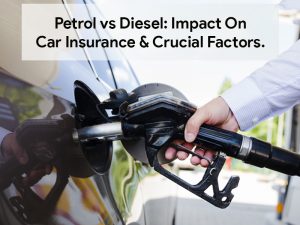
Petrol versus Diesel Car : How Car Fuel Affects your Car Insurance Premium?

The car fuel plays a significant role in determining the price of the car – price is one of the major factors that makes buyers prefer one car type over the other. While the diesel variant was targeted at commercial users like trucks and minivans till about a few years back, today, automobile makers come out with both variants of the car except for a few low-end models like Alto and Kwid because there is rising interest in diesel passenger cars. There are obvious pros and cons with each type, which one needs to evaluate well before making a purchase.

However, the big question here is whether the fuel type also influences the premium of your car insurance or not. 

The answer is a definite yes. The fuel, whether your car is petrol-driven or diesel-driven, is an important determinant in estimating the price of the car insurance premium. What does this mean? It means that when you and your friend buy the same car model – say, for example, the Suzuki Baleno – where you buy the diesel variant and your friend gets the petrol type, not only will you pay a higher amount for the car, but you will also pay a higher insurance premium. Why? Let us find out the answers in detail.

Importance of car insurance

Before we get started on the topic, it is vital to note that it is illegal to drive a car in India without valid car insurance. The consequences of doing so can be a monetary fine or even imprisonment.

Why is the car insurance premium of a diesel car is higher compared to that of a petrol car?

There are different reasons for this.

1. Price

Diesel cars cost more than petrol cars. In India, cars that cost less than INR 10 lakh have a price difference between the diesel and the petrol variant of up to INR 1.5 lakh in showrooms. The on-road price difference is even higher. When insurance companies price the premium, they take into consideration the price of the vehicle. Since the price is higher, the insurance premium of the diesel car is also accordingly priced high.

2. Repair Cost

The cost of repairing a diesel car is much more than a diesel car. This is an aspect that the insurance car company will consider when pricing the premium. Similarly, if your car is high-end, its premium will also be appropriately priced high.

3. Millennials now love diesel cars

The modern generation loves new-age diesel cars that automobile manufacturers are launching in recent times. This is because, with the help of advanced technology, modern diesel cars come with attractive and up-to-date features. The diesel variant is more refined and comes with enhanced cubic capacity. One area of refinement that has worked well for diesel cars is the decrease in the noise, vibration and harshness levels. For the outside engine clatter noise, the petrol car is still better, but for the inside noise, diesel cars are as good as petrol cars. Diesel cars have better torque figures vis-à-vis a petrol alternative; plus, the mileage is better in the diesel variant. Most of all, diesel cars emit less carbon dioxide and other greenhouse gases. This makes it a sustainable choice, as more and more eco-conscious customers prefer to buy the diesel variants.

From the perspective of car insurance premiums, this sudden surge of interest in diesel cars has not gone unnoticed by insurance companies. These companies look at selling their motor insurance policies for diesel cars at higher prices to the new-age customer.

Generic factors affecting the price of an insurance premium

1. Place

This is common all across the automobile segment and is not specific to diesel or petrol cars. If you live in a metro city in India and the car is meant to be driven in this city, you will be charged a higher insurance premium. And if you are settled in a smaller city or town, your insurance premium will be lower. This is true irrespective of whether you buy a petrol or a diesel car.

2. Comprehensive plan versus basic plan

If you were to buy comprehensive insurance that is valid for three years, you will need to pay up more; while if you go in for the basic insurance policy, the price will be less. Similarly, if you choose add-ons or extra facilities, your insurance premium will automatically increase.

3. Installation of certified devices to prevent theft

There are certain ARAI-certified (Automotive Research Association of India) companies that help install anti-theft devices. The aim is to safeguard your vehicle and prevent theft. When you install such devices, the insurance company will charge you a lesser premium.

4. The value of the insured declared value (IDV)

If your IDV is less, the insurance company will charge a lower premium, while if the IDV is higher, the premium will accordingly be high.

How much is the difference in the insurance premium of a diesel and a petrol variant of a car model?

The difference is usually not more than 15%. It could be as little as 10% also.

Summary

Choosing a car is a question of your personal choice. It is not only about the model or the brand but also about the fuel variant. Yes, there are certain points that you need to consider well before making a choice and purchasing a car. For example, the cost of diesel cars is high, but the cost of fuel in most places in India is lower than petrol. Similarly, the cost of repairing a diesel car is high, as is the insurance premium that you need to pay to the insurance company. However, diesel cars are eco-friendlier than petrol cars with less emission of carbon gases.

On the point of insurance premiums, diesel cars come with higher premiums. However, if you compare based on the model of the car, it could be a difference of a few thousand rupees only. So, if you have decided to get home a diesel car, do not simply make a decision based on the higher insurance premium. Consider all factors well.

5 years ago · by · 0 comments
Covid 19 for Senior Citizen

Health Insurance for Senior Citizen during the Coronavirus Pandemic

Health is one of the most vital factors that needs to be taken care of, irrespective of whether we are young or old. However, as one grows older, health does come to occupy the primary focus, which is why it is so important to have health insurance to keep you protected during medical emergencies.

The essence of a medical health insurance policy during COVID-19 has been realised like never before, especially for aged people. Let us see why it has become essential, like never before, for senior citizens to get themselves medically insured.

Corona’s worst targets are senior people

The news on this front is definitely alarming but in no way meant to cause a commotion! As per a piece of news reported on 3rd June 2020 in the Times of India, more than 50% of deaths due to COVID are of people aged 60 years and above. It is important to remember here that the population percentage of people older than 60 years in India is only a mere 10%. So, the figure directly points to the fact that Covid’s worst targets are people who are more than 60 years old. Of all the deaths reported till June 2020, 73% were in people with comorbidities.

In several announcements by the Ministry of Health & Welfare, it has been mentioned throughout that the aged people are high-risk people and therefore need to ensure that they follow the requisite preventive actions.

Coronavirus is a contagious disease caused by a virus that affects the respiratory organs of the human body. It can also eventually lead to multi-organ failure. Senior citizens are most vulnerable to catching the infection since many of them have a weaker immune system as compared to the younger lot; also, things can get complicated if the virus enters their respiratory organs.

So, firstly, aged people should practise social distancing and not move outdoors frequently. However, once the symptoms start to show, they should be taken to a COVID hospital for checkups and tests. Once it is confirmed that they are patients of COVID, the person should be admitted to the hospital for further treatment. The treatment, be it in a government or private hospital, can be an expensive affair because the treatment is long-drawn with expensive medication; often the person needs to be in intensive care on ventilation, and so on. This can all lead to high hospital bills.

As you can very well understand, to deal with COVID, you need to be well prepared. Having a medical insurance policy will help you sail through difficult times – at least you do not have to worry about the financial implications. Remember that insurance will help you pay for your hospital and medical bills, ICU charges, ambulance, and so on. And, today, most insurance companies offer cashless policies, which are a big help for the senior people.

What do you need to know about the medical insurance policy to be stress-free during COVID?

If you are buying a new policy, you must choose a reputable insurance company to buy the mediclaim policy. If you have an existing medical policy, it has been confirmed that the treatment for coronavirus will be covered under the policy.

And the medical insurance policies that are now being designed specifically for the aged also include other elements of holistic treatment, like offering diet tips, fitness regimes, and nutritional information. So, the purpose of taking a well-deserved insurance policy is to get end-to-end benefits from the insurance company.

As a senior citizen, your health insurance policy also comes with certain value add-ons, like:

Covering not only the medical expenses during hospitalisation but also pre-hospitalisation charges for at least the previous 2 months and post-hospitalisation for up to 6 months. Some insurance companies also provide the option to recharge your policy if your current plan is exhausted. This add-on feature can prove to be a big help in case there is any further treatment required.

There is another benefit associated with taking health insurance for aged people. You can avail of alternative treatments that fall under the Ministry of AYUSH.

Factors to consider when choosing a health insurance policy for COVID

  1. The first focus should be on the insured amount. Since treatment of Corona is costly and there is still no official medication to combat the disease, it is always best to go in for a higher assured sum. Also, your age and demographics will play an important role in determining the amount. One important aspect is also the place where you stay. If you reside in a metro city, the insurance amount will be higher than in a city or town or a village that is non-metro. It is highly recommended that all the terms and conditions are read carefully before buying a policy.
  2. The treatment covered also needs to be assessed. It is good to go with an insurance company that offers pre-hospitalisation and post-hospitalisation cost coverage. Some offer OPD charges too. Look in-depth before making a choice. Also, check if the policy offers homecare coverage or not. For many corona patients, especially old people, it is not easy to keep going to the hospital for the treatment. In such cases, if the care is being done at home, your insurance policy should offer coverage for the same.
  3. You should also be evaluating the waiting period. In India, the waiting period is usually about a month from buying the policy. This means that the company will pay for all treatment costs only after a month of buying the insurance.
  4. Lastly, after considering all these factors, you need to look at the price of buying the insurance policy. It should be as per your budget at your age. With many seniors surviving on their pension amount or funds transferred by their children, the budget needs to be worked out first so that it does not pinch your pocket.

Summary

Nothing is more important than your health. Thus, an insurance policy to cover your health is vital, especially during Corona. But, consider all factors well before making a choice.


5 years ago · by · 0 comments
Health Calculator

Health Calculator: Decide the health insurance needs based on various factors

The urban lifestyle has led to changes in food and sleep habits, reduced physical activity, and other unhealthy practices. This unhealthy lifestyle has increased the possibility of suffering from different health issues like diabetes, heart diseases, blood pressure problems, etc. Regular check-ups, medications, treatments, and surgeries for such diseases can definitely burn a hole in your pocket. The only way to manage hospital expenses is by getting covered under an adequate health insurance plan. A health insurance plan offers coverage against the ambulance, medication, regular check-up, and pre- and post-hospitalisation expenses up to the amount of the sum assured.

We at Safetree offer need-based insurance policies to meet the discerning requirements of the people. We believe “One for all” does not hold good in the case of insurance policies, as the requirements and budget differ from person to person. To help our customers choose their ideal health insurance plan, we offer expert advice and a health calculator that helps to calculate the minimum amount of sum assured to be selected as per the requirements.

If you are planning to purchase a health insurance plan for you and your family, visit our online website or download the application from the Play Store. To know the minimum sum assured required to fulfil your needs, you can click on the health calculator option, fill in the details, and submit. The health calculator will consider the following factors to calculate the sum assured:

  1. Eldest Age of Insurance: If you are purchasing the health insurance plan for the entire family, you should enter the age of the eldest member in this field. This helps in analysing the health requirements and risks associated.
  2. No. of Insured: Here, you need to enter the number of members you wish to include in the health insurance plan. If the coverage is required for a greater number of people, the sum assured will definitely increase.
  3. Location: Your location plays a very important role in calculating the sum assured or the premium amount. The cost of medical care is high in metro cities when compared to the cost in rural or two-tier cities. Hence, depending on the location, the sum assured increases or decreases.
  4. Medical History: If your family has a medical history of severe diseases, surgeries, or treatments, it is likely to continue with other members of the family. Hence, the details of your family’s medical history are considered.
  5. Risk Category: The health risks associated with your family are very important. The risk levels are categorised into Averse, Neutral, and Gambler. You have to choose one amongst these depending on the risk associated with the health of your family.
  6. Annual Income: This is to know your budget. Depending upon your annual income and the above details, the calculator will suggest the appropriate amount of sum assured required for your health insurance plan.

Once you know the minimum amount of sum assured you should select, you will be able to plan your policy inclusions and, in turn, select an ideal plan as per your requirements and budget.

Various insurance aggregator platforms also provide a facility to calculate the insurance premium for particular plans offered by various insurance providers in the country. The health premium calculators work the same as our health calculator, but health premium calculators provide the approximate amount of premium you will be paying for a certain plan. The health insurance premium calculator considers factors such as your age, your family medical history, risks associated with your family insurance, and the mortality rate of your family.

Benefits of Using a Health Calculator

You must be wondering why one should use this health calculator when you can easily talk to an insurance agent or purchase a plan online. Here are a few major benefits of using a health calculator:

  • By using a health calculator you will have an estimation of the sum assured required to meet your requirements
  • This helps you to select your ideal plan within your budget
  • Once you know the estimation of sum assured, you can plan to add or delete additional riders accordingly
  • The health calculator allows you to pick your plan of interest available within the range of minimum sum assured required
  • There will be no influence on insurance agents. Most of the time, customers tend to pick less beneficial or higher than the required sum assured plans due to the influence of insurance brokers. This can be avoided by using a health calculator on your own.

Visit the Safetree online website, explore a wide range of affordable and need-based insurance plans, calculate the minimum sum assured required to fulfil your needs, and then purchase an ideal health insurance plan for you and your family.

5 years ago · by · 0 comments
How Safetree Helps Financially during a World Pandemic Situation

How SafeTree Helps Financially during a World Pandemic Situation

The outbreak of the coronavirus pandemic has resulted in a world economic crisis, a rise in unemployment, exhaustion of medical resources, etc. The pandemic has taken its toll on people all over the world. With a 25% reduction in the overall GDP, the industrial sector is down by 54%.  The severe impact of coronavirus has put people in financial and emotional stress. Lack of income and the increasing threat of coronavirus have made lives difficult. In such a situation, finding an alternate source of income has become obligatory.

While millions of people all over the world have lost their jobs in this critical situation, we at Safetree are offering opportunities to be a part of our insurance family. At Safetree we aim at securing the citizens of the country from the financial crisis and delivering innovative insurance solutions to mitigate the risks. To help people get financially secured and find an alternate career, we, under the Saksham Bharat scheme, offer employment for POS agents to eligible candidates. Through this scheme, we aim to train and upskill Indians so that they can lead a financially secure life, become digital entrepreneurs, live a life of purpose, and increase awareness of risk protection products. If you too are looking for an extra source of income or an alternate career, this is a great opportunity to stabilise your financial status and fulfil your needs.

To become a part of our insurance family as a POS agent, all you need to do is receive the necessary training and get certified. As per the rules of the Insurance Regulatory and Development Authority of India, all the insurance companies of India can hire Point of Sales (POS) agents only after he/she gets certified.

As a POS agent, you will be authorised to sell our insurance plans by building a strong customer base. Depending upon the number of insurance plans sold, you will receive a commission in the form of income. In addition to the commissions, you will receive exciting incentives for extraordinary performance.

Here are the benefits of becoming the Safetree POS agent:

  1. You can boost your income: you do not have to visit the office every day or spend money on travelling. You can easily work from home at your convenience and gain money for every insurance plan sold. This way you can easily boost your income.
  2. This is the best alternate career: On becoming a POS agent and financial and risk expert, you will receive masterclass training and learn to build a huge customer base and sell out a large number of insurance plans easily.
  3. You can empower society: you can advise and help people by spreading awareness on how to stay prepared and mitigate financial risks.
  4. You will have a digital workplace: as mentioned above, you do not have to visit the office every day. You can work from anywhere and at any time, as you will be able to access the transactions and quotes digitally.

How to become a POS agent?

Here are some simple and convenient steps to enrol yourself for the POS agent job role:

  1. Download our Safetree mobile application from the Play Store. This application contains the training modules, conducts examinations for POS agents, and provides a mechanism to file insurance proposals with insurance companies and associated information. Alternatively, you can also visit the online website of Safetree and enrol yourself.
  2. Click on the “Register as Risk Expert” and sign up
  3. You can now receive online training from our experts. Once the training is complete, you will have to take up the certification exam. After clearing the exam, you will become the certified POS agent.
  4. You can now sell our basic insurance plans, such as motor insurance, personal accident insurance, and travel insurance, to different customers and earn commissions.

Currently, the penetration in our country is very low; hence, to achieve our vision and mission, we want more people to join us and build a financially secure country. In this current pandemic situation, an extra source of income is nothing less than a boon. A POS agent is an IRDAI-approved job role that allows you to work at your convenience, save money on transportation, and earn extra incentives along with the income for excelling in your work. Fight this pandemic and financial crisis by earning generously.

If you are facing financial issues and suffering from unemployment or lack of income, without further delay, grab this amazing opportunity today! You can get in touch with us through our application or online website and enrol yourself for the POS agent training. Hurry up!