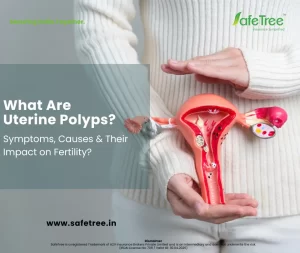
Uterine polyps are tiny, soft growths that bulge out from the innermost layer of the uterus. The word “growth” might sound scary, but almost all of these polyps are definitely not cancerous. However, their location means they can act as a major disruptor to your reproductive system – leading to irregular periods, unpredictable spotting, and difficulty conceiving. Because they often do not cause any physical pain, many women only find out about these through their fertility assessment or when they are looking into abnormal bleeding.
It is important to be aware of how these growths affect the implantation of the embryo and pregnancy if you are planning a family. In this article, we have presented all the necessary information on uterine polyp symptoms, causes, diagnosis, and treatment options in order to preserve your fertility.
What are uterine polyps?
Uterine polyps (also known as endometrial polyps) are tiny, soft lumps of tissue that grow from the inner lining of the uterus (endometrium) and stick out into the uterine cavity. They result from the excessive growth of endometrial cells, which is quite dependent on local estrogen.
Single or multiple polyps may be present, and their sizes vary from a few millimetres (not bigger than a sesame seed) to several centimetres (the size of a golf ball). They may be anatomically attached to the uterine wall in one of two ways:
- Sessile: Having a wide, flat, and broad base.
- Pedunculated: Attached by a thin, elongated stalk, which occasionally allows the polyp to slip through the cervix into the vagina.
Classification and Types of Uterine Polyps
Uterine polyps vary from one to another. Gynaecologists divide them according to their attachment to the uterine wall, their amount, and their cellular composition. Identifying the particular features of a polyp is vital since it can determine the surgery method for the removal and what can be expected of the polyp’s influence on a woman’s fertility.
Structural Classification
- Pedunculated Polyps: These polyps also have a small, distinct stalk (pedicle) which lets them hang freely inside the uterine cavity. This stalk makes them easier for any surgeon to grasp and remove at a hysteroscopy. Sometimes, the long, pedunculated polyp may even extend into the cervical canal.
- Sessile Polyps: They are polyps with a flat and broad base which projects directly to the wall of the uterus without a stalk. They are located close to the surrounding endometrial tissue, making them more delicate to remove and ensuring that the base is completely removed without damaging the healthy endometrial tissue necessary for implantation.
Numerical Classification (Single vs. Multiple)
- Single or Isolated Polyps: A lot of women have only one polyp that is developed or isolated. Its effect on fertility might be low if it is small and not close to the fallopian tubes.
- Multiple Polyps (Polyposis): When multiple polyps grow, they cause a significant distortion of the uterine cavity. A higher number of polyps means more surface area of the inflamed, bleeding tissue, resulting in severe menorrhagia (heavy periods) and a very hostile microenvironment that drastically decreases the chance of embryo implantation.
Pathological Classification (Cellular Nature)
- Benign Polyps: As many as 95% of uterine polyps are found to be completely non-cancerous. Even though physically they can disrupt menstruation and pregnancy, they do not pose a malignant threat to long-term health.
- Precancerous or Malignant Polyps: These are polyps that, in less than 5% of cases, change cells, becoming endometrial hyperplasia (atypical precancer) or endometrial carcinoma (cancer). This risk is significantly higher among postmenopausal women, people with a high BMI, or those on medication such as tamoxifen.
In fact, it is impossible, by ultrasound alone, to definitively differentiate a benign polyp from a malignant one. Therefore, by standard medical protocol, all polyps removed by surgery must be subjected to histopathological biopsy to exclude the presence of abnormal cells.
What causes uterine polyps?
While the particular cellular mechanism which leads to the development of uterine polyps is still debated, the major cause is the excessive sensitivity to estrogen.The endometrium is a very active tissue, and it normally becomes thicker each month in response to estrogen. But if there is an imbalance, especially if there is too much estrogen and very little progesterone (which counteracts the action of estrogen), the uterine lining may grow more than usual in certain spots, and that is how polyps are formed.
Hormonal, metabolic, and lifestyle-related factors can lead to a state of unopposed estrogen or increased uterine sensitivity that drastically raises a woman’s risk:
1. Endocrine & Hormonal Imbalances
- Anovulatory cycles & PCOS/PMOS: One of the long-term effects of Polycystic Ovary Syndrome (PCOS) is irregular cycles. Nots are extended periods without ovulation. Since ovulation is responsible for the release of progesterone (which counteracts estrogen by thinning the lining of the uterus). Not ovulating means that the endometrium will be continuously exposed to unopposed estrogen.
- The Perimenopausal Transition: Hormones start to become very unstable during those years just before menopause. Because of this, many times estrogen levels often end up being dominant, which is one of the reasons why older women at this time usually form new polyps quite easily.
2. Metabolic Impacts:
- Obesity (High BMI): The adipose (fat) tissue contains an enzyme, aromatase. This enzyme converts other hormones into active estrogen. Hence, overweight females will naturally have elevated levels of estrogen in the blood, continuously providing the raw material for the growth of the endometrial tissue.
- Chronic Hypertension: Statistically, people with high blood pressure tend to have a higher rate of endometrial polyps. Although it is not very clear how these two factors are related biologically, it has been hypothesised that it may be through changes to one or more growth factors and blood flow within the uterine wall that have been altered in some cases.
3. Pharmacological Factors:
- Tamoxifen Therapy: If you have been given tamoxifen for treatment or prophylaxis of breast cancer, the drug, in addition to basically shutting out estrogen from breast tissue, is responsible for mimicking estrogen activity in the uterus – an agonistic effect driving the synthesis of the uterine lining and the development of polyps.
Symptoms of Uterine Polyps: Signs & Subtle Warnings
Uterine polyps are mainly known for being silent. Due to their softness and small size, women do not usually experience any physical discomfort; hence, many of them live with polyps for years without knowing. They end up finding them at a regular pelvic ultrasound or during a fertility exam.
Clearly, there are two types of symptoms:
1. Abnormal Uterine Bleeding (AUB)
Because polyps are made of a delicate tissue which is supplied by a lot of blood vessels, they can easily bleed even when it is not the normal menstrual cycle time. This can present as:
- Intermenstrual Spotting: Only light bleeding or brown discharge between menstrual cycles. Clinically, this is the most obvious indication.
- Menorrhagia (Heavy Periods): Either significantly heavy or long-lasting menstrual bleeding, sometimes with lots of blood clots. Polyps physically interfere with the uterine muscle’s ability to contract effectively, thus stopping the bleeding.
- Irregular Cycle Lengths: Inability to predict periods accurately as cycles become either very short or vary widely month to month.
- Postmenopausal Bleeding: Any occurrence of spotting or bleeding after the woman has already been through menopause.
2. Reproductive & Fertility Complications:
Women without symptoms of bleeding who are trying to get pregnant may find that polyps are quite a barrier, although invisible.
- Subfertility & Difficulty Conceiving: Like an IUD, cervical polyps work as a contraceptive device. If they are placed in such a way that they block the fallopian tube (no fertilisation), or they are altering the surface of the endometrium such that the embryo cannot attach, this can happen.
- Recurrent Early Miscarriage: An embryo that implants in or around a polyp may not develop properly. Often, a polyp creates an inflamed environment and lacks a good blood supply, which is needed to keep a pregnancy at an early stage. This may yield chemical pregnancies or early losses.
When to Seek Medical Help?
Get a specialized gynecological evaluation if the following happen:
- Spotting that happens regularly and between your normal periods.
- Heavy or highly irregular menstrual cycles without explanation appear suddenly.
- Failure to conceive after 6 to 12 months of properly timed, unprotected intercourse.
Locating and extracting these little bumps is pretty simple, and with quite a limited intervention, you can even stop the irregularity of your period and prepare your uterus for a possible pregnancy.
Who is Most Likely to Develop Uterine Polyps?
Every woman has the potential to develop uterine polyps, but they don’t just show up randomly. Given that these growths are extremely responsive to changes at the cellular as well as chemical levels, their formation will almost always be a consequence of hyperestrogenism (a condition in which the body has high levels of circulating estrogen) or the lack of progesterone to counterbalance estrogen.
Based on clinical evidence, the individuals who are at the utmost risk for uterine polyps can be divided into three main categories:
1. Demographic and Life Stage Risk Factors
- Perimenopausal Women (Ages 40–50): This age group records the maximum number of diagnoses. The irregular hormonal surges, along with the depletion of progesterone, which are the hallmarks of the menopause transition phase, lead to the formation of an environment conducive to the excessive growth of the endometrium.
- Postmenopausal Women: Nevertheless, polyps form after menopause, though fewer in number, and the level of concern with them is high. Such a phenomenon is the case since the risk of cancerous transformation of polyps in this age group is slightly higher.
2. Metabolic and Systemic Conditions
- Obesity (High BMI): Fat cells act like endocrine glands and can even initiate the formation of estrogen through an enzyme called aromatase, thus resulting in a constant supply of estrogen that is of low intensity but sufficient to sustain polyp growth.
- Polycystic Ovary Syndrome (PCOS/PMOS): One of the main reasons why women suffering from PCOS/PMOS tend to get repeat polyps could be that their cycle is dominated by the follicular phase with no luteal phase (anovulatory cycle). As a consequence, estrogen levels will be high while progesterone levels will be very low to exert their effect on the endometrium for shedding.
- Chronic Hypertension: The association between high blood pressure and endometrial polyps is well known. While the exact link is not fully understood yet, scientists believe it has something to do with both sharing metabolic pathways and the presence of a change in the vascular endothelial growth factors in the fundus of the uterus.
3. Pharmacological and Medical History Triggers
- Tamoxifen Therapy: The agent is a life-saving treatment for those who have had breast cancer and also those who are at risk of developing breast cancer. However, while the drug acts as an anti-estrogen in the breast tissue, it instead behaves like an estrogen mimic or mimetic in the uterus. Hence, it greatly promotes the overgrowth of the endometrial tissue.
- Unopposed Estrogen Therapy: Using hormone replacement therapy (HRT) that consists of only estrogen and without the addition of the progestin, which does the balancing act, increases the risk of both polyps and endometrial hyperplasia substantially.
- A History of Endometrial Hyperplasia: Such individuals have a cellular baseline which is more susceptible to localised overgrowths such as polyps.
Can Uterine Polyps Affect Fertility?
Yes, uterine polyps can be a factor in fertility issues. It really depends on their size, number, and where they are located. It is possible that small polyps are not hindering fertility at all. On the other hand, large or well-placed polyps could cause difficulties in conception or maintaining a pregnancy.
Uterine polyps could cause fertility issues in the following ways:
- Sperm or embryo transport blockage: A polyp located near the fallopian tube or the cervix could be a hindrance to sperm reaching the egg, as well as to an embryo entering the womb.
- Decreased chances of embryo implantation: The polyps can interfere with the endometrium, or the lining of the uterus, thereby hampering the successful implantation of the fertilised egg.
- Irregular contractions of the uterus: Polyps might alter the uterine movements; thus, the conditions for embryo implantation might turn out to be less favourable.
- Higher chances of miscarriage: Blood flow alterations caused by polyps in the uterus may be a factor in a higher number of miscarriages, at least in some cases.
Impact on IVF (Assisted Reproductive Technology)
Besides, polyps in the uterus are associated with lowering the success rate of IVF and ICSI. Fertility doctors normally advise getting the polyps cut out by a hysteroscopic polypectomy before the embryo transfer to enhance the pregnancy success rate.
How are uterine polyps diagnosed?
Uterine polyps are small and soft and cannot be felt during a routine check-up. Instead, doctors perform fast imaging tests to obtain a detailed, inside view of the uterus. When a woman has irregular periods or difficulty conceiving, one of the following methods is typically recommended:
- Transvaginal Ultrasound: This is almost always the first test. A small ultrasound wand is put into the vagina to make an image of your uterus. It is fast and easy, but sometimes very small polyps can be present and not be noticed.
- Saline Ultrasound (SIS): If a normal ultrasound fails to be clear enough, doctors use this trick. For one, they put a bit of sterile saline water into the uterus gradually. The fluid causes the uterine walls to look almost like a balloon, and any uterine polyps that are present will become easily visible on the screen.
- Hysteroscopy (The Gold Standard): This is the most accurate one. Distinguished by a correctly sized light and a magic lens, a small camera is inserted into the cervix to search directly into the uterus. The biggest perk? When a polyp is seen, it may be possible for the doctor to simply remove it immediately, which means you don’t have to make a second appointment.
Quick Tip for Readers: If you still experience a period, try these tests as soon as your period has ended. This is the time when your uterine lining is at its thinnest, and your doctor will be able to find polyps much more easily!
Also if you want to check your fertility score, check here –
Does Removing Uterine Polyps Improve Fertility?
The answer is yes. Uterine polyp removal has truly changed the lives of many women. It is like raking leaves and stones from a garden before seeding it with new plants – removing these growths creates room for a healthy pregnancy. Though the growth is small and silent, extracting larger or oddly shaped polyps can improve your chances of conceiving.
Clearing up polyps helps in the following ways:
- Provides a perfect place for implantation: The lining of the uterus must be smooth and healthy for a fertilised egg to implant. However, the removal of polyps restores the shape of the uterus and eliminates local inflammation, leaving an embryo the optimum environment for bundling and growth.
- Improves Natural Pregnancy: Research indicates that women who undergo having polyps removed experience significantly higher pregnancy rates naturally than those who do not, particularly if there are no additional fertility issues.
- In Vitro Fertilisation (IVF) Fertility Specialist: If you are investing in In Vitro Fertilisation, then fertilisation specialists almost invariably state that there is a swift, clean-out strategy of the major polyps prior to embryo transfer. This simple manoeuvre helps to avoid the loss of a precious embryo on an irregular lining of the uterine wall.
- Decreases Risks of Miscarriage: Polyps can cause abnormal blood flow to a newly implanted embryo. Their removal allows for a consistent and stable supply of nutrients to the early pregnancy, potentially reducing the risk of early pregnancy loss.
Fertility Planning: Why Being Proactive Matters
The majority of us do not consider our fertility until the very moment we are prepared to start a family. However, our reproductive health is set from a much earlier stage than that, where lifestyle, age and silent issues such as uterine polyps, PCOS or fibroids come into play. The idea of catching these early is not one to be worried about, but rather one to be lived with, choices. Although uterine polyps are not always a direct blockage to becoming pregnant, they can present as a hidden obstacle that leads to unnecessary delays in pregnancy or miscarriage. The good news? Polyps are easily treatable. Keeping an eye on the changes in your period and keeping up to date with regular check-ups can solve these problems before they can get in the way of your schedule.
Protecting Your Future Options with a “Fertility SIP”
Whether you’re working towards your career or financial goals or dealing with a health issue like PMOS, knowing about your physical health gives you control. It lets you tackle small problems immediately, instead of costly and stressful medical shocks later on. Given how complex reproductive treatment can be, smart couples are now making plans for their medicine much like they plan their investments. With innovative solutions like SafeTree’s Fertility SIP (Future Fertility Plan), you can build a financial safety net starting at just ₹999/month.
This smart planning tool quietly builds your coverage over a 3-year window, ensuring that when you are ready to expand your family, you have up to ₹2.5 lakhs in comprehensive coverage. It even covers essential preparatory procedures like a hysteroscopy (the very procedure used to remove uterine polyps) alongside IVF and IUI treatments at India’s top fertility clinics. Even if babies aren’t on your immediate radar, taking a small step to secure your reproductive health today is the ultimate act of self-care. It ensures that whenever you are ready to take that next big step, both your body and your finances are fully prepared.
Conclusion
Uterine polyps are prevalent amongst women and usually noncancerous; however, in some cases, they may disrupt menstrual functions, fertility, and pregnancy results. Even though some women could remain symptom-free, others might experience irregular bleeding, failure to conceive, or recurrent miscarriages. The positive aspect is that through early detection and proper treatment, a considerable number of women can control uterine polyps and enhance their reproductive health.
At SafeTree, we believe fertility planning should begin before fertility challenges arise. Through our Future Fertility Planning solution, not only do we help you prepare for parenthood, but we can also take care of your reproductive health as well as provide financial support for fertility treatment when necessary.
FAQs
Are uterine polyps cancerous?
With most uterine polyps being non-cancerous, a small fraction may harbor pre-cancerous or malignant cells, especially in women who are post-menopausal or suffer from uterine bleeding abnormalities.
Is it common to have uterine polyps after pregnancy?
The answer is no. Uterine polyps are not among the post-pregnancy complications and are typically associated with hormonal imbalances. After childbirth, a uterine polyp can be discovered if the woman’s bleeding is abnormal or other symptoms are prompting medical examination.
Disclaimer:
This blog is for general informational and educational purposes only. The information provided here should not be considered a substitute for professional medical advice, diagnosis, or treatment. Before making any decisions related to health conditions, symptoms, or treatments, readers are advised to consult a qualified healthcare professional.
The information related to insurance is provided for general guidance only. Before choosing any insurance policy, readers should consult our insurance experts to receive detailed advice based on their individual needs and requirements.