IVF Archives - Safetree

We will contact you as soon as possible, please fill in your details!

Blogs & Resources

5 months ago · by · 0 comments

Why 600+ IVF & Surrogacy Clinics Trust SafeTree

Real Impact. Real Confidence.

Securing India. Together.

Listening to Our Partners: How SafeTree is Making a Difference in Donor Insurance

At SafeTree, we recently conducted a detailed customer survey to understand the real-world impact of our donor insurance and services — and the results speak for themselves.

Here’s what we learnt:


✅ Over 95% of IVF clinics & ART banks rated our claims support as excellent or very good
✅ Our Staff Expertise & Support scored an impressive 4.75 out of 5

These results reflect our strong and growing connection with 600+ IVF clinics and ART banks across the country.

In a highly sensitive and regulated field like assisted reproduction, we are proud to be India’s most trusted partner for oocyte donor and surrogate mother insurance — delivering peace of mind to clinics, donors, and intended parents alike.

A heartfelt thank you to all our partners who took part in the survey and continue to place their trust in us.

Our Clinics Spoke — Here’s What They Said

We asked our partner clinics across India to rate their experience with SafeTree’s Donor Protection Insurance.
The results? Clear, consistent trust — and top marks across every parameter!

Overall Experience

95% of clinics rated us as excellent or very good for overall experience.
This reflects our commitment to seamless service, compassionate support, and trusted relationships.

Why Clinics Choose SafeTree?

  • Dedicated Claims Support – Most claims settled without delays

  • Unmatched Staff Expertise – Rated 4.85/5

  • Transparent & Clear Communication

  • Simple & Clinic-Friendly Processes

  • Trusted by 600+ IVF Clinics across

 India  How Our Clinics Rated Us

Our focus: fast, clear, clinic-friendly support — every step of the way.

Clinic Testimonials

“Excellent service and quick turnaround — SafeTree is our preferred partner for all donor & surrogate insurance needs.”
Dr. Hitesh Patel, Merryl and Hospital

“Staff is knowledgeable, and claims are settled on time!”
Dr. Suresh Verma, Jindal IVF

“SafeTree has made it extremely easy to insure our surrogates and donors. Very helpful support team!”
Mr. Natesh, Fertineed Pvt. Ltd.

Partner with India’s Most Trusted Donor Protection Specialist

Visit www.safetree.in or contact us today.

Shiva Vikas Kumar
Head, IVF Products
📞 +91-9210044039
✉️ vikas.kumar@safetree.in

Akash Kumar
Manager, IVF Products
📞 +91-8630851519
✉️ akash.kumar@safetree.in

5 months ago · by · 0 comments

From Cradles to Crisis – India’s Fertility Rate Falls Below the Line

India’s Fertility Crossroads: Turning Challenge into Opportunity

India has quietly crossed a crucial demographic threshold. The latest UNFPA State of World Population report puts our Total Fertility Rate (TFR) at 1.9, which is below the replacement level of 2.1.
This shift could, over time, impact our workforce, put pressure on social security systems, and slow economic momentum.

Yet, this is not a story of decline; it’s a call to collective action.

Assisted reproduction, particularly IVF, can give millions of couples the opportunity to build the families they dream of. But success requires a strong and supportive ecosystem:

🔹 Clinics that deliver world-class, ethical care
🔹 Insurers who cushion financial risk and widen access
🔹 Policymakers who streamline regulation and encourage innovation
🔹 A society that normalizes conversations around fertility and parenthood

At SafeTree, we’re committed to playing our part in designing affordable insurance solutions that make IVF financially feasible for both patients and providers.

Let’s work together so that the choice to become parents is guided by possibility, not affordability.

Population Momentum vs. Fertility Decline: India’s Demographic Shift

UN Report

According to the latest UNFPA report, India’s Total Fertility Rate (TFR) has declined to 1.9, below the replacement level of 2.1.
In 1960, Indian women had nearly 5 children on average — today it’s just 1.9.

What Makes India’s Fertility Journey So Uniquely Complex?

Even though India has the largest population today, its fertility rate is now lower than the U.S. and far below many developing nations.

fertility rates

Why India’s Fertility Journey is Uniquely Complex?

Factor India Other Countries
Internal TFR Variation High (1.4–2.9 across states) Low or uniform
Age Structure Young (median ~28 yrs) Older (Japan: ~48 yrs)
Fertility Challenges Social + medical (infertility) Mostly social/economic
Marriage Trends Mix of early & delayed Largely delayed (urbanized)

From metro restraints to rural rise, India’s fertility doesn’t drop; it divides

  • Delhi, Kerala, Tamil Nadu – TFR: 1.4 to 1.6 (similar to European countries)

  • Bihar & Uttar Pradesh – TFR: 2.8 and 2.4, respectively

This overall decline in the Total Fertility Rate (TFR) is accompanied by increasing urbanisation and a rise in per capita GDP—a global pattern also evident across Indian states. Metropolitan cities like Delhi exhibit significantly lower TFRs. This trend can be attributed to the following seven factors.

  1. Financial Insecurity

  2. Career Priorities

  3. High Cost of Raising Children

  4. Lack of Childcare Support

  5. Lifestyle Changes

  6. Late Marriages

  7. Housing Constraints

Reduced fertility rates can tip the delicate balance of demographics. Urban vs Rural Reality

1. Ageing Population

Why it matters: Fewer working-age individuals must support a growing elderly population, increasing economic pressure on both public pensions and households.

2. Economic Slowdown

As the workforce shrinks, economic growth can stagnate or even contract if productivity doesn’t keep pace.

3. Labor Shortages

Fewer young people entering the job market can lead to shortages in key sectors. In India, this could reverse rapid economic gains that originated from labour-rich demographics.

4. Pressure on Social Systems & Healthcare

An ageing population raises demand for elderly care, while fewer births mean lower investments in schools and childcare.

Call or email our expert to Know more –

📞 Shiva Vikas Kumar+91 9210044039
✉️ vikas.kumar@safetree.in
🌐 www.safetree.in

12 months ago · by · 0 comments
Impact of ART Act 2021 on Oocyte Donors

Survey Report – Impact of the Assisted Reproductive Technology (Regulations) Act 2021 on Oocyte Donors.

Oocyte (egg) donation in India is a key aspect of Assisted Reproductive Technologies (ART) and is regulated under the Assisted Reproductive Technology (Regulation) Act, 2021.

Oocyte donors play a critical role in helping individuals and couples facing infertility challenges.

SafeTree, a leading provider of donor insurance, conducted a survey to evaluate the impact of the Assisted Reproductive Technology (Regulations) Act 2021 on the usage of oocyte donors in India.

The aim was to gather insights from IVF specialists and ART banks with respect to changes in donor availability, client confidence, and the overall process post-implementation of the new regulations.

The survey reveals a mixed impact of the new ART regulations on the usage of oocyte donors. The respondents noticed a substantial increase in donor confidence and protection. A few respondents raised some concerns regarding the availability of donors.

Most IVF specialists are optimistic about the future of donor participation, provided certain regulatory adjustments and process improvements are made. Initiatives to increase awareness in the society regarding the process of oocyte stimulation and retrieval can be explored across the country.

We would like to thank all respondents who took part in our survey by sharing valuable insights, and it is our belief that if all stakeholders in the fertility ecosystem work cohesively, there will be increased transparency and accountability, which in effect will be a boon for millions of couples facing fertility challenges in the country.

Every donor’s life is precious, and it is our responsibility to provide adequate protection to each donor.

The potential for oocyte donors in India is significant due to a combination of demographic and socio-economic factors. The following is an overview of the Oocyte donor market in India –

Growing Demand for Oocyte Donation

Infertility rates are on the rise due to

  • Lifestyle changes, delayed pregnancies, and health conditions have contributed to increased infertility rates in India.
  • According to estimates, around 15% – 20% of couples in India face infertility issues, fuelling demand for advanced fertility solutions like egg donation.
  • The gross fertility rate in India has decreased by almost 20% in the last decade in India.
  • The human sperm count has fallen by over 50% over the last 50 years, as per a study published in the Human Reproductive Update journal.

Boom in Assisted Reproductive Technology (ART)

  • India has a thriving fertility industry, with over 2,000 ART clinics.
  • The rising use of in vitro fertilisation (IVF) has expanded the need for donor eggs, particularly for women with poor egg quality or early ovarian failure.

Large, Diverse Population Pool for Oocyte Donors

  • Young Population – India has a vast pool of women in the reproductive age group (23y-35y), which aligns with the eligibility criteria for egg donation.
  • Diverse Genetic Profiles – India’s diversity in ethnic and genetic backgrounds is a unique advantage for couples seeking donors that match specific characteristics.
  • Awareness and Education – Education initiatives within society to increase awareness regarding the process of oocyte stimulation and retrieval can be explored.

Awareness Gaps and Addressable Market

  • Low Awareness Levels – Many women remain unaware of the opportunity to become egg donors or the medical safety measures involved.
  • Addressable Market – Raising awareness among urban and semi-urban populations could unlock a substantial potential donor base.

Policy and Ethical Safeguards

  • Regulated Industry – The ART Regulation Act, 2021, ensures ethical practices and protects the health and rights of donors, making the process safer and more transparent.
  • Insurance Opportunities – Oocyte donor insurance has enhanced confidence among donors, assuring them of financial and medical coverage.

Challenges to Overcome

  • Social Stigma – Cultural and societal perceptions about fertility and reproduction can deter some women from participating.
  • Medical Concerns – Ensuring proper care and minimising risks like Ovarian Hyperstimulation Syndrome (OHSS) is critical to encouraging donor participation.
  • Accessibility – Clinics and organisations need to make egg donation accessible in Tier 2 and Tier 3 cities, where awareness and penetration remain low.

Market Potential

It is estimated that India has 300-500 lakh couples with fertility challenges and 2-3 lakh IVF cycles conducted annually. Given the rising infertility rates and growing ART adoption, the market for oocyte donors is expected to grow substantially.

The following are key findings of the survey conducted to understand the impact of the Assisted Reproductive Technology (Regulations) Act 2021 on the usage of Oocyte donors in India –

Client Confidence

Increased Confidence – A significant majority (57%) of respondents indicated that client confidence in the system has increased post-implementation of the new ART regulations.

Donor Availability

Decreased Availability – Many respondents noted that donor availability has gone down since the implementation of new regulations.

Donor Protection

Better Protection – A common piece of positive feedback was that donors now have better protection due to the new regulations.

Usage of Oocyte Donors

Mixed Experiences – 

  • 37% of respondents reported a decrease in the usage of oocyte donors.
  • The remaining 63% reported an increase or no significant change in usage of oocyte donors.

Future Donor Participation

  • Will Increase – The majority (66%) of respondents believe that oocyte donor participation will increase in the coming times.
  • Will Decrease – A smaller percentage (29%) of respondents believe oocyte donor participation will decrease.

Insurance Coverage

  • Health and Life Insurance – Over 60% of respondents ensure both health and life insurance for their oocyte donors.
  • Health Insurance Only – A few specialists provide only health insurance.

Sourcing of Oocyte Donors

  • ART Banks – The majority source their oocyte donors from ART banks.
  • Direct Sourcing – Some specialists source donors directly.


Survey Recommendations

  • Enhance Donor Availability – Explore opportunities to increase donor availability.
  • Implement Verification Tools – Develop tools for verifying donor identity to prevent multiple donations.
  • Regulatory Adjustments – To review the current regulatory framework to ensure a balance between donor protection and availability.
  • Mandatory Insurance for Donors – To ensure compliance of health and life insurance for oocyte donors, awareness sessions should be conducted.


Q – What percentage of couples consider an Oocyte Donor

Key Takeaways

As per 50% of the respondents, nearly 1 in 5 couples consider an Oocyte donor


Q – What has been your experience regarding utilization of Oocyte Donors post ART regulations

Key Takeaways

Nearly 40% of the respondents have experienced an increase in Oocyte donors post implementation of ART regulations. This is expected given the drop in fertility rates.


Q – I believe Oocyte Donor participation in coming times will

Key Takeaways

Nearly 2/3 of the respondents believe there will be increased participation of Oocyte donors in the years to come.


Q – We ensure following insurance cover for our Oocyte Donors

Key Takeaways

Regulations require that Ooctye donors to have Health and Life insurance coverage.

However, 40% of donors are not provided with life insurance. Need to increase awareness regarding compliance requirements.


Q – We source Oocyte Donors from

Key Takeaways

86% of respondents rely on ART Banks for Oocyte donors.


Q – From your perspective what is your assessment post implementation of new ART regulations (Multiple options selected)

Key Takeaways

2/3 for respondents believe Oocyte donors have better insurance protection now.

57% have increased confidence in the system post new guidelines.

50% respondents have experienced a drop in donor availability.


12 months ago · by · 0 comments
Safetree Surrogate Mother Insurance

Safetree launches Exclusive Insurance Products for Surrogate Mother

Surrogacy insurance in India has become an essential component of the surrogacy journey, ensuring financial security and compliance with legal requirements under the Surrogacy (Regulations) Act, 2021. This insurance provides comprehensive coverage to address medical and other risks associated with the surrogacy process, safeguarding the interests of both the surrogate mother and the intended parents.

These tailored surrogacy insurance plans are offered by Safetree Insurance, a leading insurance provider for oocyte donors and surrogate mothers, and are underwritten by leading health and life insurance companies.

Safetree has insured over 50,000 oocyte donors and 650 surrogate mothers.

These insurance products are included in the list approved for surrogate mothers as per IRDAI and the National ART & Surrogacy Board.

Key Features of Surrogacy Insurance

  1. Mandatory Coverage:

    As per the Surrogacy (Regulation) Act, it is mandatory for intended parents to secure insurance coverage for the surrogate mother for the period of 36 months (3 years). This ensures her well-being throughout the surrogacy process and provides financial protection against medical complications.

  2. Insurance Products:

a) Surrogate Mother Health Insurance for Medical Expenses:

Covers hospitalisation for complications to the surrogate mother for 36 months. Further this product covers

  1. Emergency Situations:  Addresses unforeseen medical emergencies or hospitalisations.
  2. Postpartum Delivery Complications: Ensures the surrogate mother receives adequate support even after childbirth.
  3. Optional Maternity Cover: Covers the cost of delivery (both normal & C-section).

b)

Surrogate Mother Life Insurance

  1. Coverage Period: The insurance is required to cover a minimum of 36 months, starting from the date the surrogacy agreement is signed.
  2. Both products are competitively priced. We understand surrogacy can be expensive, and our Health and Life Insurance for surrogate mothers are competitively priced.
  3. Protection for Surrogate Mothers: This insurance acts as a safety net, ensuring that surrogate mothers are not financially burdened in case of medical complications.
  4. Compliance and Peace of Mind: By adhering to the legal mandate, intended parents can focus on their journey without concerns about regulatory penalties or unforeseen financial liabilities.

How to Avail Surrogacy Insurance?

You can visit our website or call our experts.

Intended parents can contact Mr Shiva Vikas at 9210044039
or vikas.kumar@safetree.in or Mr Gaurav Pandey at 9811699204
or gaurav.pandey@safetree.in

Surrogacy insurance not only fulfils a legal obligation but also demonstrates a commitment to the welfare of surrogate mothers, fostering a positive and secure environment for all stakeholders.

1 year ago · by · 0 comments
IVF Maternity Insurance

Exclusive Maternity Insurance for Couple undergoing IVF treatment

Safetree has co-developed a number of cutting-edge insurance products in the travel, healthcare, and auto insurance sectors that were first offered in the Indian market.

Working directly with a variety of infertility market participants, we at Safetree are aware of the difficulties that might arise on the road to parenthood, particularly for couples undergoing IVF procedures. We have therefore developed a customised maternity insurance plan that is suited to the particular requirements of IVF patients. Our objective is to offer these couples a cost-effective insurance option while also giving them financial stability and peace of mind during this unique stage of their lives.

Important aspects of the IVF maternity product

1. Normal and C-section Maternity Coverage: This product covers the expense of delivery. This covers everything up to the insured amount, including hotel rent, medical bills, and procedure costs.

2. Waiting Period: There is a six-month waiting period for this exclusive promotion.

3. Medically Necessary Complications: This plan covers medical treatment in the event of an untimely termination.

4. Oocyte Retrieval Complications: The plan will pay for hospitalisation expenses if there are complications during oocyte retrieval.

5. Cost-Effective Solution: Since infertility treatments are exceedingly costly, this strategy helps a couple control the costs associated with bringing a new family member into the world.

6. Limited Hospitalisation Benefits: Up to the sum covered, it does offer limited coverage for hospital stays during pregnancy.

7. Benefits under Section 80D: The Income Act’s Section 80D provides benefits under this scheme.

8. Options: There are two maternity coverage options available under this plan: Rs 50,000 and Rs 75,000.

The Safetree IVF Maternity Plan: Why Choose It?

1. Experts in Infertility Insurance: Safetree leads the market for a range of insurance products for the infertility sector and works with the majority of the top companies in the sector. We are aware of the market and provide the best products to meet the couple’s needs.

2. Committed Support Staff: Our staff of professionals is on hand to help you with the insurance procedure, respond to your enquiries, and offer tailored support.

3. Nationwide Network: The top IVF maternity insurance provider in India, who underwrites the product, has a large network of medical professionals, making it simple to locate the appropriate care nearby.

Don’t delay! Start the process of giving your expanding family a better, worry-free future. For more information, please visit the following website.

2 years ago · by · 0 comments

Impact of infertility on the emotional well-being of the couple

“It’s not you or me; It’s us.”  Infertility significantly impacts emotional well-being, often leading to a complex display of emotions for both individuals and couples.

The journey of infertility can be full of difficult feelings, like feelings of loss, frustration, and a sense of inadequacy. The societal pressure to conceive can worsen these feelings, leading to a profound sense of isolation and distress.

The emotional toll of infertility often manifests as anxiety and depression. The uncertainty and repetitive nature of fertility treatments can contribute to ongoing stress. Each unsuccessful attempt at conception can lead to despair and hopelessness, affecting mental health and relationships.

Couples may experience strain in their relationship as they navigate the emotional, financial, and physical demands of infertility treatments. The struggle with infertility can lead to altered self-identity and self-esteem issues. Men and women may experience these emotional challenges differently, often influenced by societal expectations and personal coping mechanisms.

Some ways to manage and navigate in these difficult emotions in such sensitive time could be

  • Communicating the feelings with each other and keeping the channel as transparent as possible to help each other through this journey.
  • Engaging in enhancing the relationship and building a balance. Taking out time to do activities together to instil resilience and reduce stress
  • Building a healthy lifestyle and maintaining a proper diet to get proper enrichment.
  • Spending time outdoors and taking time off for yourself, together as a couple as well as individually.
  • Joining support groups and seeking counselling to build a safe space to help you figure out and deal with these complex emotions.
  • Lastly, do not rush, take time to check out all the possible options while also maintaining a positive and realistic outlook on life

It was noted that nearly 2 out of 3 couples undergoing/exploring infertility treatment found infertility affected them emotionally.

Many health professionals emphasise the importance of psychological support alongside medical treatment for infertility to address the comprehensive needs of affected individuals and couples.

Safetree has introduced India’s first holistic and comprehensive health insurance product, which provide coverage for infertility treatment This exclusive IVF insurance plan provides guidance from experts who can support couples during difficult times before the IVF insurance coverage kicks off in the policy.


3 years ago · by · 0 comments
Eggsurance: IVF Donor Insurance

Eggsurance: The Importance of Insurance For Female Donors In IVF

Insurance providers may offer coverage for female donors in ART procedures, such as IVF, for several reasons. The egg donation process can be invasive, requiring medical treatment and monitoring, which can be expensive. Furthermore, there are risks associated with egg donation, such as ovarian hyperstimulation syndrome (OHSS), which can also be costly to treat.

Providing coverage for female donors can reduce the financial burden and make the process more accessible. Insurance providers consider egg donation as a medical expense and an important aspect of the IVF process, which helps couples and individuals struggling with infertility have a biological child. Hence, insurance providers may cover egg donation to make the process more accessible and financially manageable.

Providing insurance coverage for female donors in ART procedures can ensure their safety in several ways.

It covers the cost of medical treatment or monitoring required during the egg donation process, such as blood tests, ultrasound, and necessary medications, ensuring appropriate care and treatment. Insurance coverage also includes potential complications during the egg donation process, such as OHSS, to ensure donors receive necessary medical treatment and minimise complications’ impact on the donor’s health.

       1. Insurance coverage reduces financial burden and stress for egg donors         in ART procedures:

  • The egg donation process can be invasive and expensive, requiring medical treatment and monitoring.
  • Insurance coverage for female donors can make the process more accessible by reducing the financial burden.
  • This enables donors to focus on the medical aspects of the process and reduce stress and anxiety.

    2.  Coverage may include psychological counselling to help donors cope with emotional and psychological aspects:

  • Egg donation can have emotional and psychological impacts on donors.
  • Insurance coverage may provide psychological counselling before, during, and after the donation process to help donors cope with these aspects.
  • This can improve the overall experience for donors and potentially lead to better outcomes.

    3. Insurance coverage improves accessibility, protects donors, and identifies potential risks or complications:

  • Providing insurance coverage for female donors in ART procedures makes the process more accessible and financially manageable.
  • Insurance coverage ensures appropriate medical treatment or monitoring during the egg donation process, minimising risks and complications like OHSS.
  • This protects and takes care of the donor throughout the process and identifies potential risks or complications in a timely manner, leading to better outcomes.
3 years ago · by · 0 comments
Rules for ART clinics and banks

Protecting The Health And Safety Of The Donors With The Donor Protection Act

The fertility service sector in India is booming with an estimated 27 million infertile couples. The sector is worth thousands of crores. News reports have raised legal concerns over custody of children born to couples from abroad. Deaths of egg donors and ethical issues have also emerged. Parliament passed the Assisted Reproductive Technology (Regulation) Bill 2021 and the Surrogacy (Regulation) Bill 2020.


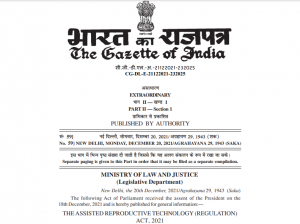
Assisted Reproductive Technology (ART) Act

The Parliament passed the ART Act and Surrogacy Act in December 2021, and the law came into force in January 2022.

What is ART?

ART techniques involve manipulating sperm or egg cells outside the human body and transferring the resulting embryo into a woman’s reproductive tract. These techniques include in vitro fertilisation (IVF), sperm donation, and gestational surrogacy, where a surrogate carries a child not biologically related to her.

Rules for ART clinics & banks

Every ART clinic and bank must register and maintain their details in a central database, as required by the National ART & Surrogacy Department of India. The registration is valid for five years, renewable for another five years, and can be cancelled or suspended if the institution violates the Act’s provisions. ART clinics are also prohibited from providing a child of predetermined sex, and they must conduct genetic disease checks before implanting an embryo into a woman’s reproductive tract.

Conditions for sperm donation & ART services

According to the Act, a registered ART bank can collect, screen, and store sperm from men aged 21-55 years and store eggs from women aged 23-35 years. However, there are limitations, such as the Act only permits a woman to donate seven eggs once in her life, and the bank cannot supply the semen of one donor to more than one couple. In addition, both the donor and the couple seeking the ART procedures must provide written informed consent. The couple must also provide health and life insurance coverage for the female donor.

  • The prohibition of advertising or offering a sex-selective ART procedure carries a punishment of imprisonment ranging from 5 to 10 years or a fine of Rs 10 to Rs 25 lakhs.
  • The child born through ART is considered the biological child of the couple and is entitled to all rights.
  • The donor is not entitled to any parental rights over the child.

Regulation of ART processes

The Surrogacy Act expects the National and State Boards to regulate Assisted Reproductive Technology (ART) services. These boards are responsible for advising the government on policy, reviewing and monitoring the implementation of the law, and formulating a code of conduct for all ART clinics and banks.

Offences

The Act considers abandoning or exploiting children born through the ART process, the sale, purchase, or trade of the embryos, and exploiting the couple or donor in any form as offences. The first-time offenders may attract a fine of Rs 5 to 10 lakhs. Subsequent offences are punishable with imprisonment for 8 to 12 years and a fine of Rs 10 to 20 lakhs. These regulations will enhance and regulate the delivery of infertility services in India.