
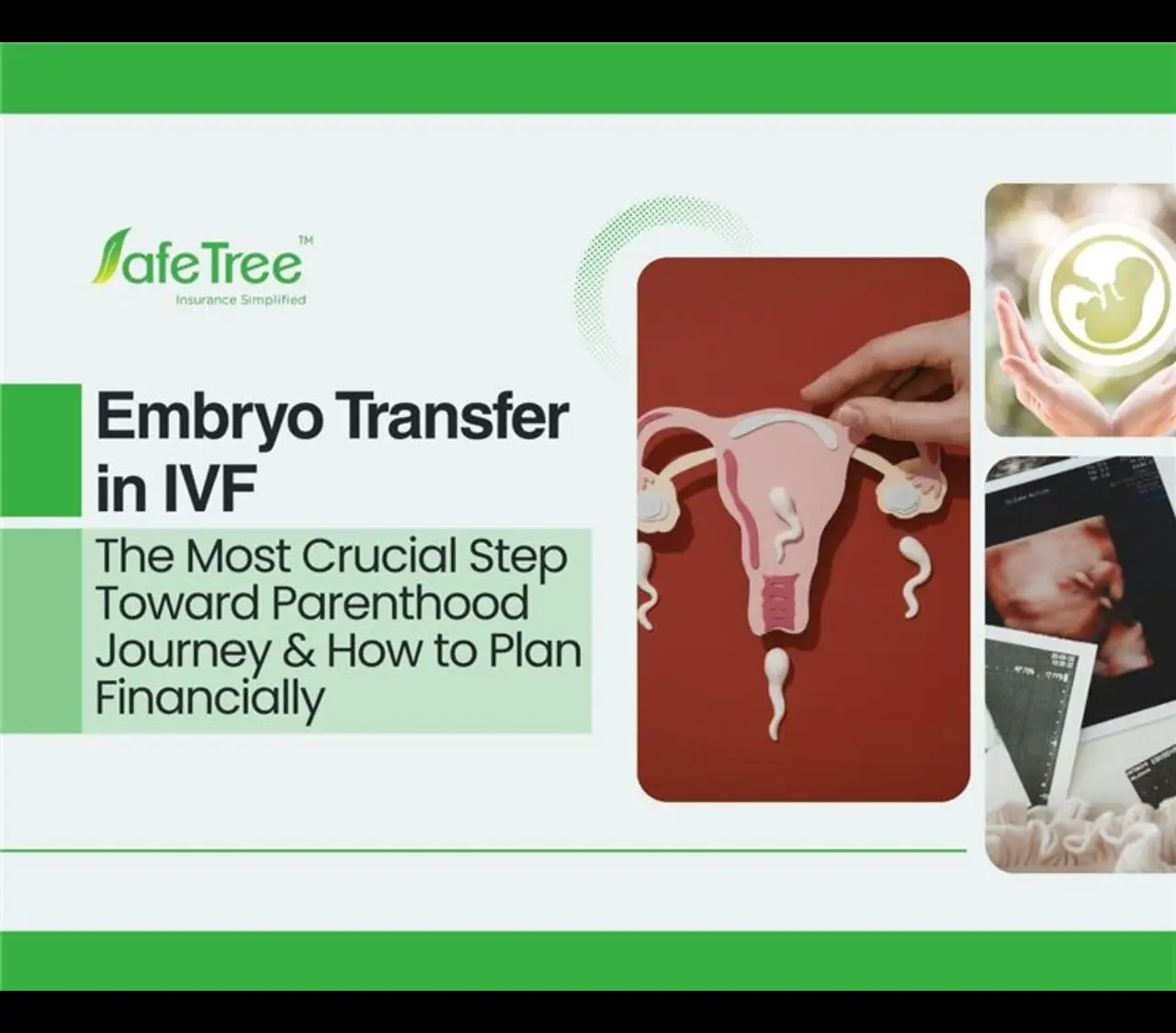
Embryo Transfer in IVF: The Most Crucial Step Toward Parenthood Journey & How to Plan Financially
If you are considering IVF as a part of your family planning, it would be highly likely that the embryo transfer day is highlighted on your calendar app. It’s the moment when all the appointments, injections, and waiting finally lead you one step closer to the possibility of holding your baby.
But between the complexity of medical complications, financial stress, and the emotional weight of it all, it’s easy to feel lost. No more worry, because in this guide, we will walk you through the entire procedure of embryo transfer and what your potential options are and will help you to think stress-free about the financial side of IVF.
What is embryo transfer in IVF?
Consider embryo transfer as the final step in bringing everything together. After your eggs have been retrieved and fertilised in the lab, they grow for a few days under the supervision of embryologists. Once they’ve developed enough, your doctor selects the healthiest embryo and gently places it into the uterus using a thin, soft catheter.
It’s not a surgery. It’s more like a carefully guided delivery, giving that tiny embryo the best chance to nestle into your uterine lining and begin growing into the baby you’ve been dreaming of.
Embryo Transfer Procedure
The whole procedure of embryo transfer is surprisingly quick and straightforward. Most transfer procedures take about 15 to 30 minutes. The entire process is as long as watching a couple of episodes of a Netflix show.
Your doctor will use a speculum to access your cervix. With the help of ultrasound imaging, they’ll guide a thin catheter through the cervix and directly into the uterus. The embryo travels through that catheter and is placed exactly where it needs to be.
Afterwards, you’ll rest for about an hour. Some clinics are more laid-back about this than others, but the good news is you don’t need days of bed rest. Because of the gentle nature of this procedure, most people can resume normal activities very quickly.
From the very beginning to the finish, you will need about 2 to 4 hours at the clinic. Create a playlist of your favourites. This is your moment.
Types of Embryo Transfer
Not all embryo transfers are the same! Your doctor will recommend the most appropriate approach according to your body and your treatment plan. Here’s a breakdown of different kinds of embryo transfers:
1. Fresh Embryo Transfer
This is when the embryo is transferred during the same cycle it was fertilised. If your body is ready and your uterine lining looks good, your doctor may go ahead with a fresh transfer. It prevents delay in the overall procedure.
2. Frozen Embryo Transfer (FET)
Sometimes it’s wiser to hit pause. With FET, embryos are frozen from the previous cycle of IVF and transferred in a later cycle, often after your body has had time to recover or after additional preparation to optimise your uterine lining. Studies show FET can actually improve success rates in many cases, which is why it’s becoming more common nowadays.
3. Day 3 Embryo Transfer
At three days old, embryos are still in an earlier stage of development. Transferring at this point can be helpful if your medical team wants to monitor progress more closely or if waiting longer isn’t ideal in your case.
4. Blastocyst Transfer (Day 5 Transfer)
By day five or six, embryos have reached the blastocyst stage, a more advanced form that’s closer to what would naturally implant in the uterus. Blastocyst transfers tend to have higher success rates because only the strongest embryos make it this far, and they’re comparatively more prepared to attach and grow.
Role of IVF Maternity Insurance in Securing Your IVF Journey Financially
This is something that doesn’t get enough attention or thought: the financial burden!
IVF is already an expensive process. Between medications, procedures, monitoring, and everything in between, the bills add up rapidly. And while you’re focused on your body and your treatment, financial stress can quietly pile on and become one major hit on your stress levels.
That’s where plans like SafeTree’s IVF maternity insurance can be useful. These plans are designed specifically for couples going through fertility treatments, not as an afterthought, but as their primary solution to cover their cost of delivery. Unlike regular health insurance, which might offer limited or unclear coverage for maternity, such plans are not built around what you actually need at the time of delivery.
It’s like a financial safety net that lets you make health-based decisions, not just cheap ones. It won’t eliminate all the doubts, but it can ease some of the “what ifs” that keep you awake most nights.
Recovery and Care After Embryo Transfer
Once the transfer is done, the waiting begins, and so does the second-guessing.
Here’s what actually helps during the days following your transfer:
- Take it easy, but don’t overdo the rest. You don’t need to be on strict bed rest, but taking care of yourself is necessary. Avoid intense workouts, heavy lifting, or anything that feels like too much stress for your body right now. Do what’s essential; that’s your mantra!
- Stick to your medication schedule. Your doctor will likely prescribe progesterone or other hormonal support. These medications help prepare your uterine lining and support early pregnancy, so consistency is essential.
- Eat well and stay hydrated. Your body is doing something incredible. Give it the fuel it needs, a proper diet, plenty of water and everyday essentials.
- Be gentle with yourself emotionally. This waiting period is hard. It’s okay to feel anxious, hopeful, scared, or all of the above. Seek joy, find what helps you cope, whether that’s talking to a friend, watching comfort shows, meditation, etc.
- Follow your clinic’s instructions. Every clinic has slightly different protocols. Trust your team and ask questions if something feels unclear.
Conclusion
Embryo transfer is more than just a medical procedure; understanding what happens during the transfer, knowing your options, and taking care of yourself afterwards can help boost your confidence in a process that often feels out of your control. And when it’s about the financial burden during the journey, having the right support system in place can make an impactful difference.
If you’re exploring maternity insurance options, look for plans that are tailored to maternity care for IVF couples and not just some generic policies with half-baked coverage. Companies like SafeTree offer solutions critically designed to cater to the realities of IVF deliveries, so you can focus more on your health and family planning and less on the bills.
This is one of your most beautiful journeys, and you’re not alone in this. Talk to your fertility team, connect with others who’ve been through it, and don’t hesitate to ask for help, whether that’s medical, emotional, or financial. Your magical journey deserves all the support you can get.
Frequently Asked Questions
What is the success rate for embryo transfer?
Success rates vary hugely depending on factors like your age, the quality of the embryo, and your overall reproductive health. Generally, patients who are 35 years or below tend to have higher success rates. Frozen embryo transfers have also shown really encouraging results, thanks to better preparation of the uterine lining and advances in freezing techniques. Your clinic can give you a clearer picture based on your specific situation.
Is Embryo Transfer Painful?
It’s mostly uncomfortable rather than painful. The sensation is similar to a routine pelvic exam. You might feel some mild cramping or pressure, but it usually passes quickly. This entire procedure doesn’t require anaesthesia, and your doctor will use ultrasound guidance to make the process as smooth and gentle as possible.
What is a good progesterone level for frozen embryo transfer?
Progesterone is crucial for preparing your uterus to receive an embryo. While the exact “ideal” level can vary based on your treatment plan, your doctor will monitor your levels closely to make sure your uterine lining is in the best possible shape for implantation. If your levels aren’t where they need to be, your clinic will adjust your medication to get things on track. It’s all about creating the right environment for that embryo to settle in and grow.
Disclaimer: This content is for informational purposes only and should not be considered medical or financial advice. Please consult a qualified healthcare professional and your insurance provider for personalised guidance.
Published by: A2V Insurance Brokers Pvt. Ltd. (SafeTree)





Share this post:
Facebook Twitter LinkedIn WhatsApp