
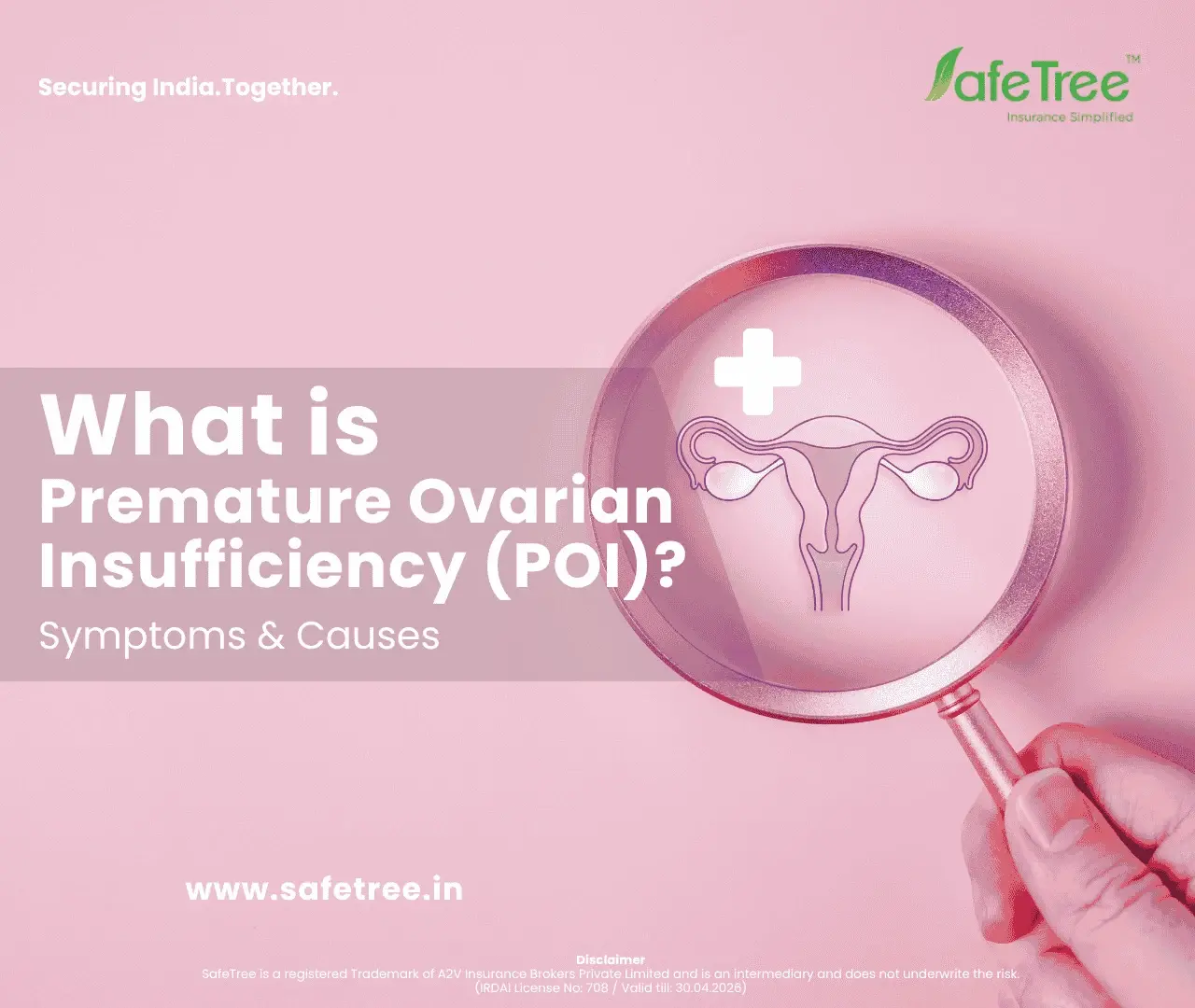
What is Premature Ovarian Insufficiency (POI)? Symptoms & Causes
Hot flashes coming out of nowhere, experiencing irregular periods, and being just 30 years old? It is because something is changing in your body which you can’t understand. In some women, these symptoms are signs of an unusual condition known as premature ovarian insufficiency (POI). People often learn of POI when symptoms occur without a clear cause or when they have fertility problems. Symptoms can be progressive, and the disease may be undiagnosed initially.
What is Premature Ovarian Failure?
Premature ovarian failure (POI) is defined as abnormal activity of the ovaries before the age of 40. Ovulations may become irregular, and the body may release less oestrogen. Even though people still use the term “ovarian failure”, doctors prefer to use “premature ovarian insufficiency” because your ovaries may still work sometimes. Some women still get their periods from time to time. They can still ovulate naturally in some cases. POI is not menopause. Menopause typically starts between the ages of 45 and 55, but POI may happen much sooner, as early as the early 20s or early 30s.
Premature Ovarian Failure Symptoms
Usually, symptoms are not immediately apparent. In some, changes occur slowly, similar to many changes in hormones. Others experience irregularity in their cycle, fertility or general health. The signs and symptoms of premature ovarian failure are:
1. Twisted or Absent periods
The first symptom is abnormal menstruation. Menstrual cycles can become irregular or become lighter or absent for months on end.
2. Difficulty in Getting Pregnant
Fertility may also be decreased earlier than usual because ovulation starts to occur less frequently, so it will be normal to have difficulty conceiving.
3. Hot Flashes and Night Sweats
The drop in oestrogen in women can trigger various menopause symptoms and signs, including hot flashes and night sweats.
4. Vaginal Dryness
Dryness, discomfort or pain during intimacy are issues for some women due to the decrease in estrogen production.
5. Mood Changes
Anxiety, emotional changes, moodiness or low mood may be due to hormonal fluctuations.
6. Reduced Sexual Desire
Some women also may experience a drop in libido due to a decrease in the level of hormones.
7. Fatigue and difficulty with concentration
When estrogen levels are low, you may experience fatigue, “brain fog”, or problems concentrating.
Premature Ovarian Failure: What are the Causes?
Premature ovarian insufficiency causes are not always clear. In many women, the cause is not clearly known. However, certain medical and genetic factors may increase the risk.
1. Genetic Conditions
A few inheritable diseases may disrupt ovarian activity and the production of eggs.
2. Autoimmune Disorders
In some instances, the immune system can also target the ovarian tissues, impairing how much hormones are produced and how often ovulation happens.
3. Medical Treatments
Radiation or chemotherapy used in cancer treatment may affect the ovaries and lower the amount of ovarian function.
4. Family History
Women with a family history of early menopause or POI may have a higher risk of developing the condition.
5. Chromosomal Abnormalities
Some chromosomal abnormalities can affect the proper functioning and development of the ovary.
6. Infections or Metabolic Disorders
In rare cases, damage to the ovary may also be due to a viral infection or a metabolic disorder.
Why is Future Fertility Planning Important?
When you have a POI diagnosed, it can be a heart-wrenching experience, particularly when you don’t have kids but wish to have them in the future. The feelings of loss, shock and confusion are natural. However, keep in mind that a diagnosis today is not an end to parenthood.
POI is not permanent infertility, especially when there is still some chance of spontaneous ovulation. It is essential to take action right away and get a Future Fertility Plan in place. A well-designed fertility plan helps couples prepare financially and medically for parenthood.
Conclusion
Lastly, coping with a POI diagnosis can be confusing and emotionally stressful, especially at a young age. Recognising early signs of the condition can really help. By becoming aware of symptoms, getting timely medical advice and ‘fertility planning’, women are better equipped and informed to manage their reproductive health journey. Women with POI can take control of their reproductive health with the right support, awareness and future fertility planning from Safetree
Frequently Asked Questions
1. Can Premature Ovarian Failure be Reversed?
Unfortunately, in most instances, there is no cure for POI, but treatment can help reduce the symptoms of POI and hormonal imbalances.
2. What is worse, PMOS or POI?
Polyendocrine Metabolic Ovarian Syndrome (PMOS) is a different condition from POI. POI can more directly be related to your fertility concern, with a reduced ovarian function level much earlier.
3. Can I still ovulate with POI?
Yes, occasional periods may still occur in some women with POI, although periods may become irregular.
Disclaimer:
This blog is for general informational and educational purposes only. The information provided here should not be considered a substitute for professional medical advice, diagnosis, or treatment. Before making any decisions related to health conditions, symptoms, or treatments, readers are advised to consult a qualified healthcare professional.
The information related to insurance is provided for general guidance only. Before choosing any insurance policy, readers should consult our insurance experts to receive detailed advice based on their individual needs and requirements.
Published by: A2V Insurance Brokers Pvt. Ltd. (SafeTree)
Share this post:
Facebook Twitter LinkedIn WhatsApp