GMC Archives - Safetree

We will contact you as soon as possible, please fill in your details!

Note: We will only use your details to contact you regarding your insurance query.

Blogs & Resources

2 weeks ago · by Ajay Sharma · 0 comments
choose gmc policy for employees

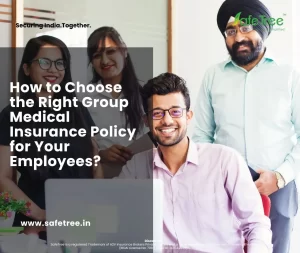
How to Choose the Right Group Medical Insurance Policy for Your Employees?

Employee healthcare has become an important part of the benefits package offered by modern businesses. A proper group medical insurance policy for employees helps control the costs of unexpected health care needs while giving employers a way to support their employees. But choosing the right plan isn’t just about getting the most affordable premium.

A good group mediclaim plan needs to suit your staff’s age, family status, healthcare needs, and budget. A good group mediclaim plan must also offer enough coverage, a strong hospital network, easy claim assistance, and beneficial coverages like maternity and dependent cover. This article highlights the key aspects to consider before buying a group medical insurance plan.

Key Factors to Consider When Choosing a Group Medical Insurance Policy

Selecting a suitable medical insurance plan for employees shouldn’t be based solely on premiums. Below is what businesses need to keep in mind when selecting a proper plan for their employees.

1. Understand Your Employees’ Healthcare Needs

The first step is identifying who you are purchasing the insurance for. A policy that suits a group of young entrepreneurs may not suit employees who have aged, have family members, or are located in multiple regions. You can begin with the demographic composition of the company’s workforce. Consider aspects like age range, total number of employees, number of dependants, and geographical spread, among others. It would also be advisable to consult your employees about the benefits they want, without intruding into their personal matters.

For instance, younger employees may go for increased hospitalisation cover, outpatient services and wellness programmes. Employees with families may focus more on maternity, newborn and dependant coverages. Group Mediclaim insurance can usually be customised to meet an organisation’s requirements. The insurer could provide cover only for employees or for both employees and their families. The idea is to select the benefits employees will really use and avoid paying for facilities they will not use.

2. Evaluate Coverage, Sum Insured & Policy Limits

The sum insured forms an essential part of a medical group insurance scheme. The sum insured reflects the maximum limit under which you can receive benefits from the insurer for medical costs. Do not choose the sum insured just because it seems economical. Healthcare costs are high, especially for operations, hospitalisation, and serious diseases. On the other hand, taking an unnecessarily high sum insured for all your employees might lead to increasing the company’s premium.

It is also essential to consider sub-limits, deductibles, and copays. Sometimes, even if a policy seems to cover everything, there might be certain treatments whose limits might be higher than what you expect.

3. Check the Cashless Hospital Network List

Cashless treatment may make a big impact during an emergency situation. With cashless treatment, employees can access care at eligible network hospitals without having to pay the full bill in advance, subject to insurer approval and the terms and conditions of their policies. This is why it is crucial to consider the hospital network when choosing group healthcare insurance plans.

Remember, do not base your choice on the total number of hospitals covered under the insurance plan. One must check for good hospitals near employees’ residences and workplaces. It would also help to see if the hospitals you want are on the current list of cashless hospitals. This may change because hospitals could tie up with other insurance firms, and employers would need to know about that.

4. Consider Maternity and Family Benefits

Employees need health insurance that covers not only them but also their families. This is why employers must consider including spouses and children in the health insurance plan. Maternity coverage needs special consideration. The maternity sum insured, waiting period, normal delivery and C-section, and newborn baby coverage need to be known. Family coverage makes a group health insurance plan even more attractive to employees, especially those with children. At the same time, family coverage will increase the policy’s total premium.

Do not believe that everything will be covered by these policies automatically. Get a copy of the coverage details and the schedule of benefits before making any decision.

5. Evaluate the Insurer and Claims Support

A good policy may feel ineffective if employees face issues during the claims process. This means claims facilitation must be examined alongside the cover and premium. Ask about ways through which employees can raise claims, availability of claims support throughout 24 hours, documentation required and the process of cashless pre-authorisation. It will also be beneficial to ask how employees can be assisted in case of any delays or rejection of cashless requests.

Digital claims facilities make the claiming process more convenient. Check whether insurers offer apps, claims tracking systems, and special corporate support services. The track record of insurers in providing services for corporate insurance plans must also be assessed. Avoid judging the insurers based on advertisements and the number of claims settled by them.

6. Compare Premiums, Coverage and Policy Limits

Price does play an important role, but the lowest-priced policy is not always the best choice. While evaluating the various group medical insurance policy choices available, prepare a simple comparison of the premium, sum assured, room rent limit, maternity coverage, dependents, pre-existing diseases, exclusions, co-payment, deductibles, and cashless hospitals.

For example, Policy A may have a lower premium but with a stricter room-rent limit and lower maternity coverage. Policy B may be more expensive, but it offers wider coverage and a larger hospital network. However, focusing only on the premium makes Policy A look like a better deal, even though employees would benefit less.

It is necessary to know whether the employer pays the entire premium or whether the employee contributes toward the premium for dependents or optional coverages. The premium structure of a group mediclaim insurance policy can vary and needs to be known in advance.

7. Review the Policy Every Year

Employee needs and the cost of medical care can vary from year to year. This is why a yearly review is necessary for an employee group medical insurance policy. During this evaluation, you need to consider claims, employee feedback, premium changes, the hospital network, and areas with no coverage. You may find that your employees have greater needs for maternity coverage, a larger number of dependents, or access to more hospitals.

Your workforce will also keep changing, and additions such as new employees, workplaces, dependents and changes in salary structures may necessitate a revision. It is important for you to know how you can cover new employees, infants and spouses in the policy period.

Conclusion

In conclusion, selecting the right group medical insurance policy is about balancing employee needs, coverage, and cost. Employers should consider factors beyond the premium to assess the sum insured, coverage limits, cashless hospital network, maternity and family benefits, exclusions, and claims support. An appropriately designed group health insurance plan provides employees with an adequate financial cushion during medical emergencies and adds value to the overall employee benefit package. Research by insurance companies indicates that corporate health insurance benefits can include family coverage, cashless treatment, customisation, and an easy claims process.

SafeTree “Group Medical Cover” provides a corporate group medical cover solution for businesses looking for a practical way to offer employees health protection. Employers should first analyse the various benefits, cover limits, exclusions, services offered, and cost before choosing the appropriate cover.

5 months ago · by Ajay Sharma · 0 comments

Insurance is your impact player

Every season of the Indian Premier League introduces us to a fascinating strategic twist: the Impact Player. A single substitution that can change the trajectory of a match in a matter of overs. Businesses, much like cricket teams, operate in high-stakes environments where one unforeseen moment can redefine outcomes. The question is not whether disruption will happen but whether you have your Impact Player ready.

In the B2B world, that Impact Player is insurance

Consider this: India loses an estimated ₹20,000+ crore annually to fire-related incidents across industries. For SMEs, a single fire event can wipe out years of growth. Yet, a significant percentage of businesses remain underinsured or uninsured against fire and burglary risks. It is not negligence but often a misplaced confidence that “it won’t happen to us.” Much like a team that delays bringing in its impact player until it is too late.

Now shift focus to cyber risk. With India ranking among the top targets for cyberattacks globally, businesses face an average cost of a breach running into lakhs, sometimes crores, depending on scale. Data loss, ransomware, operational downtime, reputational damage, and legal liabilities all arrive unannounced. Cyber insurance is no longer a niche product. It is a strategic necessity. In cricketing terms, this is your death-over specialist. You may not need them every match, but when you do, there is no substitute.

Employee benefits tell a different but equally critical story. Group medical cover and structured employee insurance are no longer just HR hygiene factors. They directly influence retention, productivity, and employer branding. Studies consistently show that employees are more likely to stay with organisations that offer comprehensive health coverage. In a competitive talent market, this is your middle-order stability. Quietly ensuring that the innings does not collapse.

And then comes GMC. Healthcare inflation in India is rising at nearly 12–14 percent annually. A single hospitalisation can disrupt not just personal finances, but also workplace continuity. Businesses that proactively invest in GMC are not just covering risk; they are ensuring operational resilience. They are protecting their most valuable asset: people.
What makes insurance truly powerful in the B2B context is not just risk transfer but business continuity. It allows companies to take calculated risks, expand confidently, and recover faster when setbacks occur. It is the difference between a temporary setback and a permanent shutdown.

Yet, insurance is often treated as a cost centre rather than a strategic lever. This mindset needs to evolve. Because in reality, insurance is not about pessimism. It is about preparedness. It is about ensuring that when the unexpected strikes, your business does not just survive; it continues to play.

The best teams in the IPL do not wait for a crisis to deploy their Impact Player. They plan for it. They anticipate scenarios. They build depth into their strategy.

Businesses must do the same. Because in the game of growth, resilience is not optional. And your impact player should never be sitting on the bench.


6 months ago · by Ajay Sharma · 0 comments
group mediclaim policy

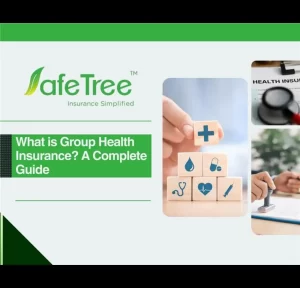
What is Group Health Insurance? A Complete Guide

Introduction

Medical expenditures go up every year, so having health insurance is no longer a luxury; it’s a must. Group health insurance is one of the best methods for businesses to help their workers. A group of people, usually employees of a company, can have medical coverage under a single policy.

A group medical claim policy lets employees get good medical treatment without having to worry about exorbitant fees. It’s a crucial perk for employers since it makes employees happier and keeps them on the job. We’ll talk about what group health insurance is, how it operates, and the benefits it gives to both employees and employers in this tutorial.

How does a group health insurance policy work?

A group medical claim plan is a single insurance that a business buys for all of its employees. The employer buys a group medical claim policy from an insurance carrier for all qualified employees instead of having each person buy their own coverage.

Here’s how it typically works:

The employer purchases the policy. The employer chooses a group health plan from an insurance company and sets the level of coverage (sum insured) for its workers.

Employees are enrolled in the plan. The policy automatically covers all qualifying employees, and in some situations, it also covers their family members.

Premium payment. Most of the time, the employer pays the premium; however, employees may also pay part of it.

Medical claims. If an employee needs to go to the hospital or get medical care, they can file a claim under the coverage. You can do this by getting care at a network hospital without paying cash or getting reimbursed.

Annual renewal. The policy is usually renewed every year, and the business can change the coverage, add employees, or change the benefits.

Group plans are often more affordable and easier to get than individual health insurance plans since the risk is spread across many people.

Key Benefits of Group Mediclaim Policy for Employees

1. Affordable Health Coverage

One of the best things about a group medical insurance policy is that employees get health insurance without having to pay the full payment themselves. Most of the time, the employer pays for everything.

2. Coverage from Day One

Most workplace health insurance plans cover numerous treatments right away, unlike individual plans, which have waiting periods.

3. Family Coverage Options

Employees may be able to add their spouse, children, or parents to the same insurance, which would protect the whole family financially.

4. Cashless Hospitalization

Group health insurance frequently gives employees access to a vast network of hospitals where they can get treatment without having to pay out of pocket. This lowers the cost of care in emergencies.

5. Coverage for Pre-existing Conditions

Another big benefit of company health insurance is that many plans cover pre-existing conditions from the start. This is not frequently the case with individual health insurance plans.

6. Financial Security During Medical Emergencies

With healthcare expenses going up, a group mediclaim policy makes sure that employees don’t have to use their own money when they go to the hospital.

Key Benefits of Group Mediclaim policy for Employers

1. Improved Employee Satisfaction

Offering group health insurance indicates that a business cares about its employees’ health, which promotes trust and morale.

2. Better Talent Attraction and Retention

Health insurance is one of the best advantages that companies can offer their employees. A full group medical insurance policy might help you hire and keep qualified workers.

3. Increased Productivity

Employees who are healthy do more work. Employees get better faster and can go back to work sooner if they have access to good health care.

4. Tax Benefits for Businesses

Under the right tax legislation, employers can typically deduct the cost of group health insurance premiums from their taxes.

5. Strengthened Employer Brand

Companies that offer good health care benefits are seen as good places to work by employees.

Who is eligible?

The organisation and the insurance company that offers the policy decide who can get group health insurance. In most cases, the following categories can be covered:

Full-time employees, contract or temporary employees (depending on company policy), family members (like a spouse, children, or sometimes parents), members of professional associations or societies, and employees of startups, small and medium-sized businesses, and major companies.

Conclusion

Group health insurance is a type of medical coverage plan that covers a group of people, usually employees of a company. It provides access to healthcare that won’t break the bank, offers financial protection when the unexpected happens, and includes helpful features like cashless hospital stays and coverage for existing health issues. Employees have the option to sign up for a group mediclaim policy, providing coverage for their whole family. This simplifies access to healthcare and alleviates some of the financial burden. For employers, providing group health insurance can lead to happier employees, better retention rates, and a more efficient workplace.

With healthcare expenses climbing, a group mediclaim plan is a smart move for your business’s long-term health. SafeTree is dedicated to creating tailored health plans that offer robust coverage without breaking the bank. We’re here to help you protect your team’s health and secure a more prosperous future.