Ajay Sharma, Author at Safetree - Page 2 of 2

We will contact you as soon as possible, please fill in your details!

Note: We will only use your details to contact you regarding your insurance query.

Blogs & Resources

2 months ago · by · 0 comments
fire insurance for business

Why Should Every Business Have Fire Insurance?

As a businessman, you have to handle risks every day. Yes, you may have plans in place for sales, staff, machinery, customers, and expansion. But an incident like a fire can change all that in an instant. Fires can damage business property, destroy stock and machinery, and disrupt normal business activities, leading to financial trouble.

This is why fire insurance may be a valuable tool for business risk management. It helps a business recover from covered fire losses and return to normal operations. For both small and large businesses, such as a manufacturing unit, it may provide financial assistance in case of a major loss. In this article, we will learn about the relationship between fire and insurance and why business fire insurance deserves attention.

What is fire insurance?

Fire insurance is a form of property insurance that protects a business from any financial loss due to fire and other risks covered under the policy. It means that if your property is damaged by fire, this policy will cover some repair or replacement costs under the policy’s provisions.

Many elements in a business may be exposed to risk at the same time. These include the building, stock, and machinery/equipment, among others. Some policies also include coverage for business interruption. For this reason, purchasing such a policy does not simply involve covering the building. It involves covering the money and assets behind the business.

Why are businesses at risk of fire?

Fire incidents can occur in any work environment. The risk is not restricted to those industries that manufacture and use hazardous substances. Faulty wiring, overloaded sockets, malfunctioning machinery, cooking facilities, improper wiring, and human error are some of the factors that pose a fire hazard.

Sometimes, fire hazards arise due to ignorance of safety practices in business places. For instance, let us assume a clothes store experiences an electrical fault that causes a fire after business hours. The extent of damage to electrical equipment, shelves, furniture, and stock may not be known until the issue is reported. Apart from internal factors, businesses can be at risk due to events beyond their control. A fire can arise in an adjacent building and spread to yours. Follow proper fire safety practices, but prevention alone does not eliminate risk. An adequate fire insurance policy provides additional cover.

What can a business lose in a fire?

Fire can cause damage beyond the structure itself. Even for a small business, losing just one vital machine or a stock of inventory can create a serious financial issue.

Property damage may include:

  • Structures and interior fittings
  • Furniture and fittings
  • Machinery and equipment
  • Computers and electronic machines
  • Raw material
  • Finished goods
  • Inventory
  • Documents and other properties of the business

There are also costs involved in cleaning up the premises, repairing the damage, and replacing the equipment needed. Thus, fire can turn a manageable cost into a major financial burden. Fire insurance coverage can help ease such a burden when the losses come under the cover of the policy.

How can a fire affect business operations?

A fire doesn’t have to completely burn down a building to negatively affect a business.

  • For instance, assume a fire occurs in a restaurant’s kitchen. The dining room may remain unaffected, but the restaurant may not be able to operate until the kitchen is repaired and all safety precautions are met.
  • In a factory, damage to just one critical piece of machinery can shut down operations even if nothing else has been affected.
  • This can result in lost business, delays, dissatisfied customers, and other related complications for the business. It is also possible that employees cannot operate under normal conditions because of the damage.
  • Small businesses may find it particularly difficult to cope with operational disruption because of limited cash flow.

Some fire insurance policies offer cover for business interruption or loss of profit in certain situations.

How does fire insurance protect a business?

The primary advantage that one gets from having business fire insurance is financial assistance after a covered loss. If a fire affects the property and is covered by the insurance policy, the company can file a claim. Once the claim is filed and approved, the insurance company can make an award based on the losses incurred, subject to the limits in the policy.

The proceeds from this award can then be used for repair and replacement purposes rather than for direct payment of such expenses. For example, consider a small retail store with costly inventory. If the fire affects most of it, the owner would have to find money in order to replace it all, which might be quite challenging. Business insurance could help address the problem. One can also add optional coverage for additional risk factors, depending on the type of policy chosen.

What can fire insurance cover?

Specific coverage depends on the insurance firm, policy, and options selected. Businesses should always review their policy documents rather than assuming all fire-related losses are covered.

Coverage under a fire insurance policy may include, among others:

1. Building and Properties

The policy may cover damage to a business building and certain permanent structures after a fire.

2. Stock and Inventory

A fire incident could cause significant financial losses for businesses holding any kind of inventory, such as products or raw materials. Suitable insurance can help compensate for damage to or loss of insured stock.

3. Machinery and Equipment

Manufacturing businesses, along with other organisations that rely on machinery and equipment, may opt for coverage of eligible machinery and equipment.

4. Furniture & Fixtures

Fire may affect a business’s office furniture, shelving, fittings, and other movable property.

5. Business Interruption

In some cases, business interruption insurance may cover financial losses resulting from interruption of business due to insured physical loss. Such coverage can be very useful for businesses which require time to get back to normal after repairs have been made.

Which businesses should consider fire insurance?

Most businesses that have assets are required to consider fire insurance. Different businesses face different risks, but a fire can damage property and stock and disrupt daily operations.

1. Industrial Sectors

Various industrial sectors are susceptible to fire risks based on their operations and the materials they use. Construction, manufacturing, hospitality, retailing, food processing, and logistics are examples of businesses which may have machinery or inventory that is highly valued and which could be destroyed by fire. With business fire insurance, various businesses could be compensated for fire-related losses.

2. Manufacturing Units

A manufacturing unit may contain machinery, raw materials, final products, and electrical equipment. A major fire may affect several of the above and lead to a shutdown of operations. Business fire insurance may help businesses manage fire losses and the costs of resuming operations.

3. Shop and Retail Units

Fire insurance for shops is one which is ideal for shops, supermarkets, chemists, clothing stores, and other retailing businesses which contain their stock. Fire can quickly destroy products, furniture, electrical appliances, and more, and with this insurance, the owner is not left to cover all the costs alone.

4. Warehouses & Storage Spaces

The warehouse may contain substantial amounts of merchandise, materials, and inventory. In case of fire damage, losses can be huge, especially if a lot of inventory is located in one place. A sufficient fire insurance coverage policy can protect eligible property and inventory from fire damage.

5. Office Premises & Commercial Premises

Offices may not be as susceptible as factories and warehouses. However, they also contain valuable assets. Computers, servers, furniture, documents, electrical equipment, and fittings can also be damaged due to fire. If your business uses the aforementioned assets, fire insurance provides an additional layer of financial protection.

6. Hotels, Restaurants & Hotels

Restaurants, hotels, cafes, and other hospitality businesses have kitchens, electrical equipment, furniture, and inventory. They are also subject to the risk of fire damage. Fire can cause temporary closure of your business, and you should consider business interruption insurance when purchasing fire insurance

7. Small Businesses

Small companies typically have fewer funds available compared to large corporations. One major fire alone can create difficulties in repairing equipment, rebuilding structures, and restocking inventory. This is the reason why small firms must purchase fire insurance for their businesses.

The straightforward question that needs to be asked is, “If there were a fire in my business today, would I be able to repair the property, replace the property, and keep running?”

How to Choose the Right Fire Insurance Policy for Your Business?

You cannot base your choice of insurance policy solely on the premium. The cheapest policy may not be suitable for protecting your business.

Step 1: Calculate the Value of Your Assets

First of all, estimate the total value of your property, equipment, stocks, and other valuables. Ensure that your sum insured matches the real risk, and adjust it as necessary.

Step 2: Understand What the Policy Covers

Next, carefully review what your policy covers and what it does not. Give exclusions, deductibles, policy limits, policy conditions, etc. due consideration.

Step 3: Check if You Need Additional Coverage

You should also consider whether your business needs additional coverage. For instance, a shop with valuable stock will require something different from a factory with expensive machinery. Restaurant owners have to pay special attention to equipment and operational interruption.

Step 4: Understand the Claims Process

It’s also helpful to understand the claims process before purchasing a policy. Have the relevant documentation kept in order. This can be very helpful when proving the amount of a loss.

Step 5: Choose Coverage Based on Your Business

However, the most important thing is to buy a policy that fits your needs, not a standardised policy chosen without much thought.

Conclusion

Fire can strike at any time, while the cost implications can continue even after the fire is extinguished. Property damage is only a small part of the total cost implications a business faces after a fire. This is why fire insurance may be a crucial buffer for any business, whatever its size. A properly tailored fire insurance policy can help a business manage losses better and recover more securely than before.

A proper risk analysis and comparison of insurance options are necessary when deciding which policy to purchase. If your business requires fire insurance, SafeTree may be one company to consider.


Disclaimer-

This blog is for general informational and educational purposes only. The information related to insurance is provided for general guidance only. Before selecting any insurance policy, readers are advised to consult our insurance experts for detailed advice based on their individual needs.
2 months ago · by · 0 comments
cybersecurity vs cyberinsurance

Cybersecurity vs Cyber Insurance: What’s the Difference?

A cyberattack may take place in a matter of seconds, while it may require several months to overcome the consequences. A cyberattack in the form of a phishing attack, password hacking, ransomware attacks, or any kind of breach can destroy all business processes, put consumers’ data at stake, and lead to unexpected costs. This is where many businesses ask: What is cybersecurity, and more importantly, what is cyber insurance?

These two are closely linked, but their functions are quite distinct. One keeps threats away, and the other assists an organisation in recovering from losses in case anything happens. What are these two, then, and how do they differ? This article explains cybersecurity and cyber insurance and why an organisation needs both of these.

What is cybersecurity?

In simple terms, cybersecurity refers to a combination of hardware tools, software, policies, and people used to ensure the security of a company’s computer systems, networks, applications, and information against cyberattacks. It is more than just downloading antivirus software on your computer; cybersecurity includes measures aimed at protecting your organisation from attacks, detecting suspicious activity, and responding to it appropriately.

A company may use solutions such as MFA to secure its accounts, firewalls to filter unauthorised traffic, and access controls to give employees access only to necessary information. Training sessions for staff will allow them to detect phishing emails and scams. The main purpose here is straightforward: minimise the risk of an attack and its impact if it happens.

Common Cybersecurity Measures

The following measures can be implemented by any business to protect against cyberattacks:

  • Multi-factor authentication: An advanced step taken for security purposes when logging into the system.
  • Firewalls: Help control and monitor network traffic.
  • Antivirus and security software: Identifies and blocks malware.
  • Access controls: Ensure that only authorised personnel have access to confidential information.
  • Password management: Ensures that passwords are created and managed securely.
  • Backup services: Businesses can restore lost data.
  • Training for the employees: Helps them identify the most frequent types of scams, including phishing and social engineering scams.

All these measures will successfully reduce cyber risks, although it doesn’t mean that the organisation is safe from any cyberattack. This is because human mistakes and sophisticated social engineering attacks can create vulnerabilities.

What is cyber insurance?

Cyber insurance is a form of business insurance that aims to compensate for financial losses related to cyberattacks. Cybersecurity aims at prevention, whereas cyber insurance helps the business handle the consequences of such attacks. Indeed, the cost of such an attack goes far beyond just restoring a computer system. The business might need assistance from IT experts in investigating the incident, legal help, help in communicating with clients, and managing a business interruption.

With proper cyber insurance coverage, the business will receive the necessary help and compensation, depending on the policy terms, limits, and conditions.

What Can Cyber Insurance Potentially Cover?

Coverage will vary among different policies, so organisations need to review the policy terms to understand their coverage. The coverage under cyber insurance depends on the policy. Cyber insurance will provide coverage for:

  • Data breach response costs
  • IT investigation and forensic services
  • Business interruption losses
  • Legal expenses
  • Customer or third-party claims
  • Crisis management and public relations support
  • Cyber extortion or ransomware response
  • Costs linked to restoring affected systems or data
  • Certain cybercrime or social engineering losses, where specifically covered

Some types of policies might include both first-party protection relating to the organisation and third-party liability protection from claims by customers or other related parties. However, it is important to know that cyber insurance will not substitute for cybersecurity because it helps deal with the consequences of an attack, not its prevention.

Cybersecurity vs Cyber Insurance: Key Differences

To understand the differences between cybersecurity and cyber insurance, you need to see the main goals of these two security concepts.

Cybersecurity Cyber Insurance
Focused on preventing and detecting threats Can help minimise the consequences of an incident
Involves technology, process, and people Uses financial protection and specialist support
Can help to prevent an attack Can help mitigate the financial impact of the attack
Consists of MFA, firewalls, backup, and training May involve response, legal, forensic, and interruption costs
Operates mostly prior to and during the attack Gains significance once an event leads to loss

Neither one replaces the other. Good cybersecurity will help prevent and decrease the severity of an incident, while good cyber insurance will be helpful in case of failure to prevent an incident.

Why Do Businesses Need Both Cybersecurity and Cyber Insurance?

Cybersecurity is not enough to shield a company from all financial implications of an attack. Consider the scenario where an employee gets a convincing phishing email. He clicks on the link and exposes the company’s account to an attacker. With all the security measures in place, the attacker manages to enter the company. The business will then suffer downtime, the cost of data recovery, legal complications, and reputational risk. At this point, both layers come into play. While cybersecurity efforts might prevent, detect, and restrict access during an attack, cyber insurance might provide the financial means and expert services to respond and recover from such an incident.

This layering becomes even more critical, especially when considering small or medium-sized enterprises which do not have the resources to cope with a cyber attack. Further, insurance companies might require particular cybersecurity controls to grant cover; therefore, this becomes necessary in both cybersecurity and securing insurance coverage.

Conclusion

In conclusion, understanding cybersecurity vs cyber insurance does not have to be difficult. Cybersecurity is your primary line of defence. It offers you security from cyberattacks. On the other hand, cyber insurance helps business entities deal with some of the financial impacts after an incident. However, the best strategy is not to select one over the other. Businesses need to have preventive measures and a recovery plan.

For businesses seeking cyber insurance plans, SafeTree will help you identify the best cyber protection for your organisation. The ideal policy will give you some assurance that you have a strategy for tackling cyberattacks when they happen.

Disclaimer:

This blog is for general informational and educational purposes only. The information related to insurance is provided for general guidance only. Before selecting any insurance policy, readers are advised to consult our insurance experts for detailed advice based on their individual needs.

2 months ago · by · 0 comments
SME cyber insurance

Why Every SME Should Have Cyber Insurance?

Cyberattacks will continue to increase with advances in technology, and no business, regardless of its size, is safe from such attacks. These attacks may begin with something like a phishing email or a password attack. Such an attack can cause significant damage and dissatisfaction among clients. The impact of a cyberattack on small enterprises will be even more challenging because they do not have enough funds to cover possible losses.

Here is where cyber insurance may come into play. This insurance can assist with managing certain losses and recovery costs following a cyber breach. In this article, we discuss why cyber attackers target SMEs, the risks involved, how cyber insurance in India works, and its relevance.

Why Are SMEs Becoming Targets for Cyberattacks?

Small and medium enterprises usually think that hackers target major corporations, banks and government organisations. This belief is increasingly unsafe.

  • SMEs possess valuable information while lacking the necessary means to secure it. They tend to keep information about customers, staff, payments, finance, and company documentation on the internet. On the contrary, SMEs might not have cybersecurity specialists and funds to buy cybersecurity tools.
  • CERT-In announced an attack on MSMEs through methods such as ransomware, DDoS, website defacement, data breaches, and malware infections. CERT-In also released security measures for MSMEs to secure their networks.
  • The overall cyber threat environment in India also reveals why businesses must take the matter seriously. The current situation with cybersecurity threats in India also shows the necessity of taking care of the issue.

What Cyber Risks Can an SME Face?

The cyber threat goes far beyond one person hacking a computer system. There are different types of threats that an SME can face.

  • Phishing/social engineering: Employees can receive fake emails, calls, or messages to obtain passwords or make payments.
  • Ransomware: Hackers can encrypt business data and files and demand money for access. This results in the inability to perform any business operations.
  • Data breaches: Confidential customer, employee, or company data can be compromised or stolen without the owner’s permission.
  • Malware: It can cause harm to the systems, information theft, or unauthorised access to the systems.
  • Business email compromise: Hackers can hijack an email address or impersonate senior management to request payment.
  • Website/system attack: The company’s website, application or even internal systems can be attacked.
  • Third-party risks: The cyber risk faced by an SME may also extend to the risk experienced by its supplier, software provider, or any other business partner.

Such cyber risks have become even more important with increasing dependence by SMEs on cloud computing, digital payments, remote work, and e-services.

What happens to an SME after a cyberattack?

In most cases, the first thing that happens is panic. However, the actual economic implications may persist even after the attacks have been brought under control. For example, there is a small online company whose computer systems are hacked by a ransomware attack. This company may be unable to conduct operations such as order processing, accessing customer information, and contacting suppliers. Employees will be unable to perform tasks, while clients will become curious about the delays.

Afterwards, the costs follow. In addition to the costs for the security team investigation and system repair, the company will have to pay for legal counsel and PR management. This is why the financial consequences of a cyberattack may far exceed the cost of restoring the computer and retrieving a single file. This is where cyber insurance plays an important role since it enables companies to cover several of these costs depending on the coverage and policy of the company.

How Can Cyber Insurance Help an SME?

Cyber security insurance can be considered a financial cushion against cyber risks. It is not a substitute for good cybersecurity practices, nor does it guarantee that a breach will not happen. Rather, it helps the organisation deal with the situation if it arises.

Coverage may be helpful for things like:

  • Investigation and forensic expenses
  • Data and system recovery
  • Business interruption losses
  • Legal expenses
  • Customer notification costs
  • Crisis management and public relations
  • Cyber extortion-related expenses
  • Certain third-party claims
  • Certain regulatory or liability-related costs, where covered

The actual coverage depends on the specific policy, but companies should not always expect all kinds of cyber losses to be covered by all cyber policies. The major benefit of such a product is that the SME will not have to bear the entire bill itself. The appropriate coverage will also enable business people to get professional help when they do not really know what to do next. Business cyber insurance policies can go beyond just providing compensation to the affected company. They can form part of a general incident response strategy.

Which SMEs Should Consider Cyber Insurance?

Any business that uses computers, digital storage of data, electronic payments, or internet-based operations may suffer from cyber exposure. However, some may have a greater need for cyber insurance for small businesses. Such businesses are:

  • E-commerce companies
  • IT and software businesses
  • Digital marketing agencies
  • Healthcare businesses
  • Financial and professional service firms
  • Educational companies
  • Manufacturers using connected systems
  • Businesses handling large amounts of customer data
  • Companies heavily dependent on cloud software
  • Businesses that make or receive digital payments

Startups and small businesses may also find it beneficial because they usually have limited financial capabilities to cope with such a huge unexpected loss. But the question is not about how large the company is. The right question is about “how much the business will suffer from the loss of the data and system.”

How Much Cyber Insurance Coverage Does an SME Need?

There is no exact coverage amount that applies to every SME. A small business that manages only a little information and can operate without relying on automation will be very different from an online company managing thousands of customer transactions monthly.

When determining how much commercial cyber insurance coverage you need, you should take into account:

  1. Loss of revenue: What potential losses would the company suffer if the operation were to come to a halt for several days or weeks?
  2. Information assets: What kind of information – related to customers, employees and finances – is owned by the business?
  3. Dependency on technology: How dependent is the company on its website, software, cloud and online payments?
  4. Cost of recovery: How much money would it take to investigate an attack and restore and recover information?
  5. Liabilities: Can customers or partners be expected to make a claim following a cyberattack?
  6. Security in place: Which cybersecurity controls have been set up already?
  7. Contractual requirements: Are there important clients or partners who mandate cyber insurance?

The small business owner should not choose the policy with the lowest premium but should study the limitations, deductibles, exclusions, sub-limits and terms of the policy.

Is Cyber Insurance Worth It for an SME?

In many cases, the answer is yes, especially where the SME uses a lot of technology or handles sensitive data. The cost of the cyber security insurance policy has to be compared against the cost of the actual event. The cost of the actual event may include losses due to downtime, recovery costs, legal suits, lost revenue, and loss of reputation. This means that in a small firm which does not have much money, even a minor incident would put a lot of pressure on the business.

For SMEs looking for cyber insurance in India, it is important to compare before deciding to purchase the cheaper coverage available. Prior to buying any policy, firms have to make sure about the coverage, what is excluded from the cover, the claims process, and the necessary security measures.

Conclusion

In conclusion, even small organisations can experience cyber attacks with similar impacts in terms of financial loss, time loss, and reputational damage. Cyber insurance can play a vital role in managing costs that could arise due to a cyberattack for such an organisation. However, insurance must go hand in hand with good cybersecurity practices and cannot be used as a substitute for it. SafeTree provides a number of good options when it comes to cyber insurance for businesses in India. All that needs to be done is to identify the risks involved and choose the best coverage options.


Disclaimer:

This blog is for general informational and educational purposes only. The information related to insurance is provided for general guidance only. Before selecting any insurance policy, readers are advised to consult our insurance experts for detailed advice based on their individual needs.
4 months ago · by · 0 comments
property insurance

Difference between Fire Insurance and Property Insurance

If you own a home, retail shop, or manufacturing factory, safeguarding your physical assets is non-negotiable. But many owners confuse the terms “property insurance” and “fire insurance”. Actually, one is a complete shield, and the other is a special weapon used for defence. Knowing this structural difference is essential in preventing your business from an uncovered catastrophic loss.

What is Fire insurance?

Fire insurance is a special type of insurance that protects against financial losses due to fire-related disasters. It’s like a laser-beamed shield, which can be purchased as a standalone policy, combined with add-ons, such as burglary coverage, or even integrated into a larger property policy.

When accidental fires occur, this policy comes into effect for the owner of a home, office, or factory. It typically covers damages triggered by:

  • Electrical short circuits
  • Explosions or gas leaks
  • Faulty machinery or equipment
  • Other accidental, unforeseen fire outbreaks

Key Benefits of Fire Insurance

  • High Coverage, Low Premium: Fire insurance is an insurance policy that provides extensive coverage at an extremely low rate because it provides coverage of a specific type of risk and not comprehensive general coverage.
  • Full insurance coverage for fire: It is not only about flames but also about the substantial monetary losses resulting from electrical short circuits, gas cylinder explosions, and faulty machinery.
  • Rapid Recovery & Rebuilding: The policy allows for a quick recovery of structures, replacement of stock, and rapid rebuilding without exhausting life savings or business capital after a disaster.
  • Flexible Security: It can be customised. Whether you’re looking after a small retail outlet or a large manufacturing plant, you can protect it for as little or as much as you want, with ways to simply add-on extra features, such as burglary cover.
  • Business Continuity & Peace of Mind: A significant fire may shutter a business forever. This policy will give you the assurance that one bad incident will not destroy years of effort and allow you to work without worrying about it every day.

What is Property Insurance?

Fire insurance covers one risk, while property insurance encompasses multiple risks. It is an all-encompassing policy that protects your building’s physical framework and the valuable contents within it from numerous unpredictable dangers.

A solid property insurance policy will protect your investment against several types of risks, such as:

  • Natural Disasters: Flood, earthquake, storm, and cyclone protection.
  • Crimes & Malicious Acts: This covers theft, burglary, housebreaking, riots, or vandalism.
  • Accidental Damage: Damage caused by vehicle or aircraft impact or a water pipe bursting.
  • Fire & Explosions: Fully covers all major protection provided in a basic fire policy.

Broadly speaking, fire insurance is a shield against one enemy, while property insurance is a complete suit of armour to shield against most.

Key Benefits of Property Insurance

  1. One Policy, One Protection: With separate policies for storms, theft, and accidents, one property policy is a complete safety net, and that’s a benefit for saving you administrative headaches and coverage gaps.
  2. Total Asset Protection: It is not only about rebuilding the walls, but it’s also about replacing what’s inside. It protects your costly equipment, office tools, and furniture and your essential retail stock from damage and theft.
  3. Financial Resilience: A catastrophic event, such as a major flood or earthquake, may be the end of a business or family. This policy absorbs the massive capital shock, reducing your out-of-pocket expenses to a fraction of the total damage cost.
  4. Seamless Business Continuity: Commercial owners know property damage equals downtime and downtime equals lost revenue. Property insurance provides the financial muscle to repair disruptions quickly, fulfil client commitments, and stay afloat during crisis.
  5. Lender Compliance & Value Protection: If you have a commercial loan or home mortgage, comprehensive property insurance is always a strict requirement. It keeps you legally compliant while actively preserving the market value of your real estate investment.

Fire Insurance vs. Property Insurance: The Head-to-Head Comparison

Feature Fire Insurance Property Insurance
Scope of Coverage Covers damage from fire, lightning, short-circuits, and gas explosions. Covers fire plus theft, burglary, floods, earthquakes, vandalism, and structural collapse.
Premium Cost Lower premiums because the insurer is only underwriting one specific risk. Higher premiums because it shields you against a massive array of perils.
What It Protects Primarily, the physical structure and specific assets are explicitly named in the policy. Both the building’s structure and its complete contents (machinery, stock, electronics, furniture).
Third-Party Liability Generally not included unless added as a specific, separate rider. Frequently built-in, protecting you if a visitor is injured or their assets are damaged on your property.
Best Suited For Small shops, warehouses, or businesses where fire is the absolute primary threat, or those on a tight budget. Offices, factories, large residential properties, and businesses want absolute, zero-gap protection.

Conclusion

Your home is a valuable asset, and it is important to safeguard it against unexpected risks to protect your financial future. Whether you decide to invest in fire insurance to protect you from damages caused by fire or property insurance for coverage for all kinds of damages, the right insurance policy can serve as a safety measure and help to reduce your loss potential and keep you more protected when things go wrong unexpectedly.

Knowing the difference between fire and property insurance will help you make an informed choice with regard to the insurance needs of your property and its risk exposure. SafeTree helps people and companies choose the right insurance to protect their valuable possessions and keep them financially secure, no matter what challenges arise.


Disclaimer:

This blog is for general information and educational purposes only. The information related to insurance is provided for general guidance only. Before selecting any insurance policy, readers are advised to consult our insurance experts for detailed advice based on their individual needs.
6 months ago · by · 0 comments

Insurance is your impact player

Every season of the Indian Premier League introduces us to a fascinating strategic twist: the Impact Player. A single substitution that can change the trajectory of a match in a matter of overs. Businesses, much like cricket teams, operate in high-stakes environments where one unforeseen moment can redefine outcomes. The question is not whether disruption will happen but whether you have your Impact Player ready.

In the B2B world, that Impact Player is insurance

Consider this: India loses an estimated ₹20,000+ crore annually to fire-related incidents across industries. For SMEs, a single fire event can wipe out years of growth. Yet, a significant percentage of businesses remain underinsured or uninsured against fire and burglary risks. It is not negligence but often a misplaced confidence that “it won’t happen to us.” Much like a team that delays bringing in its impact player until it is too late.

Now shift focus to cyber risk. With India ranking among the top targets for cyberattacks globally, businesses face an average cost of a breach running into lakhs, sometimes crores, depending on scale. Data loss, ransomware, operational downtime, reputational damage, and legal liabilities all arrive unannounced. Cyber insurance is no longer a niche product. It is a strategic necessity. In cricketing terms, this is your death-over specialist. You may not need them every match, but when you do, there is no substitute.

Employee benefits tell a different but equally critical story. Group medical cover and structured employee insurance are no longer just HR hygiene factors. They directly influence retention, productivity, and employer branding. Studies consistently show that employees are more likely to stay with organisations that offer comprehensive health coverage. In a competitive talent market, this is your middle-order stability. Quietly ensuring that the innings does not collapse.

And then comes GMC. Healthcare inflation in India is rising at nearly 12–14 percent annually. A single hospitalisation can disrupt not just personal finances, but also workplace continuity. Businesses that proactively invest in GMC are not just covering risk; they are ensuring operational resilience. They are protecting their most valuable asset: people.
What makes insurance truly powerful in the B2B context is not just risk transfer but business continuity. It allows companies to take calculated risks, expand confidently, and recover faster when setbacks occur. It is the difference between a temporary setback and a permanent shutdown.

Yet, insurance is often treated as a cost centre rather than a strategic lever. This mindset needs to evolve. Because in reality, insurance is not about pessimism. It is about preparedness. It is about ensuring that when the unexpected strikes, your business does not just survive; it continues to play.

The best teams in the IPL do not wait for a crisis to deploy their Impact Player. They plan for it. They anticipate scenarios. They build depth into their strategy.

Businesses must do the same. Because in the game of growth, resilience is not optional. And your impact player should never be sitting on the bench.


7 months ago · by · 0 comments
difference between life and general insurance

Difference Between Life Insurance and General Insurance

Insurance is a very significant way to safeguard people and families from money problems. There are two primary types of insurance policies: life insurance and general insurance. Even while both want to make sure you have enough money, they do completely different things. To make a balanced insurance portfolio, you need to know the main distinctions between these two. We’ll go over the main differences between life and general insurance in this blog so you can make an informed choice that will improve your finances.

What is Life Insurance?

A life insurance policy is a legal agreement between an insurance company and a person (the policyholder). The insurer promises to pay a certain amount of money (the Sum Assured) to the policyholder’s chosen dependents or nominees when the policyholder dies in exchange for recurring premium payments. The main purpose of life insurance is to protect your dependents financially, but many current plans also work as long-term investments that can help you save for specific goals, like retirement or your child’s schooling.

Common Types of Life Insurance

Life insurance is not something that works for everyone. You can choose from many sorts based on your financial goals:

  1. Term Life Insurance: This is the easiest and cheapest type. It gives you a lot of coverage for a set amount of time, like 20 or 30 years. The nominee gets the death benefit if the insured dies during this time. It usually doesn’t have a value when it matures.
  2. Whole Life Insurance: This type of insurance protects you for the rest of your life, usually until you turn 99 or 100. It has both a death benefit and a cash value part that grows over time.
  3. Endowment Plans: These plans are for “savings + protection”. The policyholder gets a maturity benefit if they live through the term. The nominee gets the death benefit if they die during the term.
  4. Unit Linked Insurance Plans (ULIPs): This is a mix of two products. Part of your premium goes toward life insurance, while the remainder is invested in stocks or bonds. It has the potential to make more money, but it also has market risk.
  5. Money-Back Policies: This is a sort of endowment plan in which the policyholder gets a percentage of the sum assured at regular intervals during the policy term as “survival benefits”.

Common Types of General Insurance

Almost everything is covered by general insurance, except for the danger of death. The most popular kinds are:

  1. Health Insurance: This helps in paying for your medical bills that come up because of accidents, diseases, or procedures. It makes sure that a medical emergency doesn’t wipe out all of your savings.
  2. Motor Insurance: This is required by law in many places and covers damage to your car or bike as well as any liabilities you may have to other people.
  3. Home Insurance: protects your house and everything in it from risks like fire, theft, earthquakes, and floods.
  4. Travel Insurance: protects you when you’re on a journey, whether it’s in your own country or another one. It covers lost luggage, cancelled excursions, and emergency medical expenditures overseas.
  5. Commercial/Fire Insurance: This type of insurance is meant to safeguard businesses’ offices, warehouses, and machinery from fire and other risks.

Key Differences Between Life Insurance and General Insurance

Basis of Comparison Life Insurance General Insurance
Meaning Insurance that covers the life risk of a person and provides financial support to beneficiaries after death. Insurance that covers non-life risks such as health issues, property damage, accidents, or losses.
Purpose Provides long-term financial security to family members. Protects assets and finances from unexpected losses.
Coverage Covers the life of the insured person. Covers assets like health, car, home, travel, and property.
Policy Duration Usually long-term (10–30 years or lifetime). Generally short-term, often renewed annually.
Claim Payment Paid to the nominee in case of death or maturity. Paid based on actual loss or damage to the insured asset.
Savings/Investment Component Some policies offer savings or investment benefits. Purely protection-based; no investment component.
Examples Term insurance, whole life insurance, ULIPs. Health insurance, motor insurance, travel insurance, home insurance.

The Key Benefits of Life Insurance

Life insurance isn’t only a death benefit; it’s an important part of long-term financial planning. The main benefits of it are:

  1. Guaranteed Financial Security: The best thing about this is that you can be sure your family will be safe financially. You can use the guaranteed amount to pay off debts, pay for your kids’ school, or meet your daily expenses.
  2. Replacing Lost Income: If the main breadwinner dies, the insurance payout works as a replacement for their salary, making sure that the dependants may keep living the way they want to.
  3. Making money and saving: Many life insurance policies, such as endowment plans or ULIPs, help people save money in a disciplined way. They offer a maturity benefit, which lets you save money for retirement or other big life events.
  4. Big tax savings: Life insurance is one of the best ways to save money on taxes. Local tax rules generally allow you to deduct or exclude the premiums you pay and the benefits you get when you die or reach maturity.

The Key Benefits of General Insurance

The purpose of general insurance is to protect against the “risks of living”. It makes sure that one bad thing doesn’t cause a financial disaster.

  1. Mitigation of Unexpected Losses: General insurance pays for the high cost of repairs or replacements after an accident or fire, so you don’t have to pay a lot of money out of pocket.
  2. Comprehensive Health Protection: Health insurance is a must because medical prices are going up. It pays for hospital stays, nursery procedures and sometimes even outpatient treatments, so you may get the greatest medical care without worrying about the cost.
  3. Asset and Liability Protection: General insurance (like motor or professional indemnity) protects you from having to pay for harm you do to other people’s property or to yourself.
  4. Continuity of Lifestyle: General insurance makes sure that your life and work can get back on track as fast as possible following a setback, like a cancelled trip, a business interruption, or substantial property damage.

Conclusion

While life insurance and general insurance function differently, both are essential for securing a stable financial future. Life insurance is a promise, a way to ensure your family’s aspirations and well-being remain intact, even in your absence. General insurance, however, acts as a practical safeguard, shielding your health and finances from the unexpected expenses that life throws your way.

At Safetree, we simplify the process. Our website is designed to help you compare, select, and oversee the most suitable policies for your circumstances, whether you’re seeking life insurance to secure your family’s future or general insurance to protect your health and possessions.


Disclaimer – This content is for informational purposes only and should not be considered as financial advice. Please consult your insurance provider for personalised guidance.

7 months ago · by · 0 comments
what is travel insurance

What is Travel Insurance, and How does it work?

Introduction

Travelling is one of the most exciting things you can do in life, whether you’re going on a long-awaited family holiday, a high-stakes business trip, or moving abroad to go to school. But being in a new place, especially a foreign country, comes with its own set of problems. Sudden medical emergencies, lost luggage, cancelled flights, and even the dread of losing your passport can all rapidly transform a wonderful trip into a costly and emotional nightmare.

This is where travel insurance comes in as your most important safety net. It is a type of insurance that is made specifically to cover different risks that come with travelling. It makes sure that an unexpected cost doesn’t hurt your wallet or your peace of mind. In this post, we’ll explain what travel insurance is, how it works in real life, and why it’s now a “must-have” for every tourist.

What is Travel Insurance?

Travel insurance is a unique agreement between a traveller and an insurance company that protects them financially against unexpected hazards that may come up during their journey. It is a full safety net that pays you back for money lost due to travel-related situations, whether you are travelling within India or going abroad.

In basic terms, you pay a little fee before your trip starts to shift the risk of expensive accidents, like medical emergencies or last-minute trip cancellations, to the insurance company. It makes sure that you don’t have to pay for anything that goes wrong out of your own wallet, so you can travel with total peace of mind.

Common Types of Travel Insurance

Travel insurance is not a one-size-fits-all product. Depending on where you are going, how often you travel, and the purpose of your visit, you can choose from various specialised plans:

  1. Domestic Travel Insurance: This policy is for trips within India and covers things like urgent medical emergencies, train or aircraft delays, and lost luggage. It’s a cheap method to make sure your vacations at home are stress-free.
  2. International Travel Insurance: A must-have for trips overseas, especially to places where medical care is expensive. It covers things like needing to go to the hospital in another country, losing your passport, and having to cancel your trip abroad. This is even a required document for getting a visa in certain countries.
  3. Single-Trip Travel Insurance: This is the most frequent option. It covers a specific trip from the time you leave until you get back home. It is perfect for families or people who only travel on vacation once in a while.
  4. Multi-Trip (Annual) Travel Insurance: This coverage is for people who fly a lot or work in business. It covers any number of flights taken in a year. It saves you the trouble of getting a new policy every time you plan a flight, and it’s usually cheaper for people who travel a lot.
  5. Student Travel Insurance: Tailored for students going overseas to study. In addition to medical coverage, it offers student-specific benefits like “Study Interruption” (which pays for fees if the student can’t continue because of illness) and sponsor protection.

What exactly does travel insurance cover?

A good travel insurance policy is your financial safety net when you’re on the move. Though the details might differ, most policies provide some key protections:

  1. Medical Emergencies & Hospitalisation: This means the cost of seeing a doctor, undergoing surgery, or being admitted to a hospital if you get sick or hurt. For trips abroad, many insurers offer cashless hospitalisation, so you won’t have to worry about paying a large sum in a foreign currency right away. This makes it the most important part of a travel insurance policy.
  2. Trip Cancellation or Interruption: If you have to cancel or cut your vacation short because of an emergency, such as a family problem or a medical issue, the insurance company will pay for your non-refundable costs, like hotel and airfare.
  3. Loss or Delay of Checked-in Baggage: If the airline loses your luggage or it takes a long time to get to you, the coverage will pay for the things you need to buy until your bags are found.
  4. Flight Delays & Missed Connections: If your flight is delayed for more than a specified number of hours or if you miss a connecting flight because of an airline delay, the coverage will pay for your extra costs for food and lodging.
  5. Loss of Passport & Travel Documents: If you lose your passport while travelling abroad, it’s a big concern. Travel insurance helps pay for the cost of getting a new or emergency passport and other related costs.
  6. Emergency Medical Evacuation: In severe cases where local medical facilities are insufficient, the policy covers the massive cost of transporting you to the nearest specialised hospital or even back to India.

How does travel insurance work?

The steps are easy to follow, and the procedure is simple. Before you go, you buy a policy. The premium depends on things like your age, where you’re going, how long your vacation will be, and the amount of coverage you want. As soon as you leave, the policy kicks in, and from then on, you’re safe from all insured hazards.

If something goes wrong while you’re travelling, you should call the insurance company’s 24/7 international helpline right away to get aid. If you go to a network hospital, you may get cashless service or have to pay up front and then file for reimbursement later with the right paperwork and proof. After the insurance company checks your claim, they can pay the hospital immediately or put the money back into your account.

Why is travel insurance important?

Travelling without insurance is a big financial risk, and that’s why every traveller needs it.

1. It helps in bringing down the exorbitant cost of healthcare around the world. In places like the US, UK, or UAE, even small injuries can cost thousands of dollars to heal. Insurance means you won’t have to spend all of your cash on an unexpected hospital expense.

2. It protects you from losing money on reservations that can’t be changed. Flights and hotels for international travel cost a lot of money up ahead. Insurance lets you get your money back if you have to cancel because of an emergency, so you don’t have to pay for the whole thing.

3. It keeps you safe from travel problems. Travel insurance gives you the money you need to get your trip back on track without panicking or spending a lot of money on things like lost luggage, stolen passports, or missed flights.

Finally, having support from around the world 24/7 is priceless. In a crisis, a 24/7 helpline that can help you with legal or medical problems in a foreign nation, especially if you don’t know the language, can make all the difference.

Things to Consider Before Buying Travel Insurance

Not all plans for travel are the same. Check out these five things to see whether they are a good fit for your trip:

  • What is covered: Don’t only look at the price. If you plan to go trekking or scuba diving, be sure the policy covers things like cashless hospitalisation and “adventure sports”.
  • Needs that are specific to the destination: Some nations, notably those in the Schengen Area, require insurance with certain minimum coverage amounts. Be sure that your plan meets these legal requirements.
  • The “Right” Amount of Coverage: For journeys within the country, a smaller amount of coverage may be enough. But while travelling abroad, you must have a bigger sum covered to cover the cost of currency conversion and expensive medical care in other countries.
  • Carefully Read the Exclusions: Know what isn’t covered, like pre-existing conditions (unless specifically stated), injuries you caused yourself, or accidents that happen while you’re drunk.
  • Claim Settlement Ratio and Support: Look at how well the insurance company is known for paying claims. A 24/7 international help desk is important for getting help right away when you’re in a foreign time zone.

Conclusion

Travel insurance is far more than just a mandatory document for your visa; it is a critical financial safety net that ensures your hard-earned savings are protected. From sudden medical emergencies and lost baggage to the stress of flight delays or a missing passport, having the right coverage allows you to navigate the uncertainties of travel without the fear of heavy out-of-pocket expenses. Whether you are heading out for a well-deserved vacation, a crucial business meeting, or moving abroad for higher education, a robust policy ensures your journey remains secure and stress-free.

At Safetree, we simplify the complexities of travel insurance for you. Our platform helps you compare and choose the most comprehensive plans tailored to your specific destination and needs. By selecting the right protection before you fly, you can focus on making memories while we ensure you stay financially secure every step of the way.

Frequently Asked Questions

Is travel insurance mandatory?

Travel insurance isn’t always a must, though some destinations do insist on it. Take the Schengen Area, for instance; they often make it a condition of getting a visa. Even if it’s not a hard and fast requirement, it’s still a smart move. Think of it as a safety net, ready to catch you if something goes sideways. This will help you to cover things like medical bills, cancelled plans, lost luggage, or those annoying travel hiccups that seem to happen to everyone.

Is travel insurance worth it?

It often is, because it shields you from unanticipated financial setbacks while you’re away. It can help with costs stemming from medical emergencies, trip cancellations, travel delays, or missing luggage, making it easier for travellers to navigate unexpected problems.

How to buy travel insurance?

Selecting travel insurance involves picking a plan tailored to your destination, how long you’ll be away, and what kind of coverage you want. To get started, compare different policies, carefully read the fine print about what’s included and what’s not, then enter your travel information and pay to make the policy active before you leave. Safetree is another option; they offer a variety of plans to help you find the right fit for your specific travel needs.


Disclaimer –  This content is for informational purposes only.Please consult your insurance provider for personalized guidance.

7 months ago · by · 0 comments
what is pre existing disease

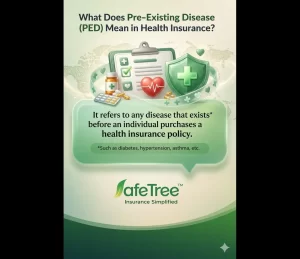
What does “pre-existing disease” (PED) means in health insurance?

Health insurance is a very important safety net that keeps your money protected from the exorbitant costs of medical problems that come up out of the blue. But the road to a seamless claim process starts long before you go to the hospital. It all starts with your health history. One of the most important terms you may come across during the application process is “pre-existing disease” (PED).

Knowing what PED is isn’t just a matter of technicalities; it’s what makes an insurance policy reliable. It has a direct effect on the range of your coverage, the time you have to wait, and whether or not you may make a claim. Knowing how insurance companies look at pre-existing conditions can help you read the fine print, pick a plan that really meets your health needs, and, most importantly, make sure that you can settle without any problems when you need to.

What is Pre-Existing Disease (PED)?

A pre-existing disease (PED) is any medical condition, illness, or injury that a person has been diagnosed with or has shown signs of before they buy health insurance. Most insurance rules say that any ailment for which you got medical advice or treatment within 48 months (4 years) of getting the coverage is a PED. These illnesses can be anything from long-term health problems like high blood pressure to past surgeries.

How do insurers evaluate PED?

Insurance companies rely on your medical history when underwriting, which is how they determine the risk of insuring you. Many people mistakenly believe that having a pre-existing condition (PED) automatically disqualifies them from coverage.

Here’s the truth:

1. Full disclosure is essential: Insurance Companies need a complete picture of your medical background. Not mentioning a PED could result in claims being denied down the line, permanently.

2. Risk assessment follows: If you have a PED, the insurer might impose a waiting period, add a loading (a small premium increase), or, in some instances, exclude that particular condition from coverage altogether.

3. The 48-Month Rule: Most insurers consider symptoms or treatments that occurred in the four years leading up to the policy as the primary window for PED classification.

Common Examples of PED:

  1. Chronic conditions like diabetes or hypertension.
  2. Respiratory issues such as asthma.
  3. Long-term ailments like thyroid disorders or arthritis.
  4. Any previous major surgeries or heart-related conditions.

Why do health insurance policies have a PED waiting period?

A waiting period is simply the set amount of time (usually between 2 and 4 years) that must pass before your policy will cover a pre-existing ailment. It may seem like a problem, but it exists for a number of important reasons that help keep the insurance system running and affordable:

1. Sustainable Risk Management

The idea behind insurance is to protect against risks that you can’t see coming. If a policyholder already has a medical problem, the chance of their making a claim is substantially higher. Insurance companies need waiting periods to make sure they can cover the costs of expensive long-term treatments without going broke. This way, they can pay claims for all policyholders.

2. Preventing “Adverse Selection” (Misuse of Insurance)

Insurance is designed to provide protection before a loss occurs. Without waiting periods, individuals might only purchase insurance when they know they need expensive medical procedures or ongoing care. This immediate claim filing would deplete the insurance pool, making it challenging for companies to cover genuine, unforeseen events.

3. Ensuring Premium Affordability

If insurance providers were obligated to cover all pre-existing conditions from day one, premiums would significantly increase for all policyholders. Waiting periods help keep the cost of health insurance low, which makes it possible for most people to get good health care coverage at a reasonable price.

4. Encouraging Early Enrollment

People are more likely to buy health insurance while they are young and healthy if there are waiting periods. By starting early, you can wait out your waiting periods even if you don’t need the coverage right away. This way, when you do need it, your pre-existing conditions will already be fully covered.

Important tips for buying health insurance if you have a PED

If you have a pre-existing ailment, it might be hard to find insurance in India. However, making the correct choices early on can help you avoid financial stress later. Here are some important things to remember:

  1. Transparency is Non-Negotiable (Full Disclosure): “Non-disclosure of material facts” is one of the main reasons why claims are turned down in India. Always be completely honest about your medical history, including any minor surgeries and any disorders that affect your lifestyle, such as diabetes or thyroid problems. It’s better to pay a little more now than to have a claim turned down during a crisis.
  2. Compare the Waiting Period (The ‘Waiting Game’): The waiting times for different Indian insurers are usually between 2 and 4 years. If you have a PED, seek policies that have a “PED Waiver” or a shorter waiting time (such as 2 years instead of 4) to make sure your coverage starts as soon as possible.
  3. Factor in Medical Inflation (Adequate Sum Insured): Since medical prices in India go up by 14–15% every year, a small cover of ₹3 Lakh or ₹5 Lakh may not be enough for long-term problems. To make sure you never run out of money, think about getting a policy with a “restoration benefit” or an amount insured of at least ₹10 lakh.
  4. Check the Network Hospital Strength: The “cashless” feature is a lifeline in India. Make sure your insurance company has a lot of hospitals in its network, especially the best multi-speciality hospitals in your location. This way, you won’t have to worry about getting a lot of cash in an emergency.
  5. Watch Out for Sub-limits and Co-payments: Some policies in India have “co-payment” conditions (where you pay a % of the bill) or “room rent sub-limits” for those with PEDs. We often tell people at Safetree to examine the fine print to make sure their policy doesn’t include hidden caps that could limit how much they can claim.

Conclusion

A pre-existing illness should never be an obstacle to receiving high-quality medical care. Modern health insurance plans are designed to be inclusive, ensuring that once the initial waiting period is served, you are fully protected. While existing health issues may influence your policy terms and the duration of the waiting period, they don’t have to limit your security. To ensure a stress-free experience, two things are essential: absolute transparency and informed decision-making. By being completely honest about your medical history and understanding the waiting period rules upfront, you can avoid claim rejections and ensure your financial safety net is rock-solid when you need it most.

FAQs

1. What is a buy-back period in health insurance?

A buy-back period is an optional add-on to your policy. It reduces the standard waiting period, which usually lasts two to four years, before pre-existing conditions like diabetes, thyroid problems, or asthma are covered. If you pay a higher premium when you first get the policy, you’ll get coverage for these conditions sooner. Depending on the policy, you may be able to get coverage after just one year or even from Day 1. This is a great feature for people who want quick financial help for health problems they already know about.

2. What is the maximum waiting period for health insurance?

In India, the maximum waiting period for pre-existing diseases (PED) is typically 4 years (48 months), as regulated by IRDAI. However, many modern plans now offer shorter waiting periods of 2 to 3 years. Once this period is served and the policy is continuously renewed, treatments for these conditions are covered as per the policy terms.

3. What if I don’t declare pre-existing diseases in medical insurance?

The most common reason for claim denial in India is not disclosing a pre-existing illness. Insurance is based on “utmost good faith”; therefore, not telling the truth about your medical history is a breach of trust. Even if the insurer finds out about a condition that wasn’t revealed throughout the claim procedure, they can still deny your claim. In many situations, they will also cancel your coverage without giving you a refund. Be completely honest about your health history from the start to make sure the settlement goes well.


Disclaimer:

This blog is for general informational and educational purposes only. The information related to insurance is provided for general guidance only. Before selecting any insurance policy, readers are advised to consult our insurance experts for detailed advice based on their individual needs.
8 months ago · by · 0 comments
group mediclaim policy

What is Group Health Insurance? A Complete Guide

Introduction

Medical expenditures go up every year, so having health insurance is no longer a luxury; it’s a must. Group health insurance is one of the best methods for businesses to help their workers. A group of people, usually employees of a company, can have medical coverage under a single policy.

A group medical claim policy lets employees get good medical treatment without having to worry about exorbitant fees. It’s a crucial perk for employers since it makes employees happier and keeps them on the job. We’ll talk about what group health insurance is, how it operates, and the benefits it gives to both employees and employers in this tutorial.

How does a group health insurance policy work?

A group medical claim plan is a single insurance that a business buys for all of its employees. The employer buys a group medical claim policy from an insurance carrier for all qualified employees instead of having each person buy their own coverage.

Here’s how it typically works:

The employer purchases the policy. The employer chooses a group health plan from an insurance company and sets the level of coverage (sum insured) for its workers.

Employees are enrolled in the plan. The policy automatically covers all qualifying employees, and in some situations, it also covers their family members.

Premium payment. Most of the time, the employer pays the premium; however, employees may also pay part of it.

Medical claims. If an employee needs to go to the hospital or get medical care, they can file a claim under the coverage. You can do this by getting care at a network hospital without paying cash or getting reimbursed.

Annual renewal. The policy is usually renewed every year, and the business can change the coverage, add employees, or change the benefits.

Group plans are often more affordable and easier to get than individual health insurance plans since the risk is spread across many people.

Key Benefits of Group Mediclaim Policy for Employees

1. Affordable Health Coverage

One of the best things about a group medical insurance policy is that employees get health insurance without having to pay the full payment themselves. Most of the time, the employer pays for everything.

2. Coverage from Day One

Most workplace health insurance plans cover numerous treatments right away, unlike individual plans, which have waiting periods.

3. Family Coverage Options

Employees may be able to add their spouse, children, or parents to the same insurance, which would protect the whole family financially.

4. Cashless Hospitalization

Group health insurance frequently gives employees access to a vast network of hospitals where they can get treatment without having to pay out of pocket. This lowers the cost of care in emergencies.

5. Coverage for Pre-existing Conditions

Another big benefit of company health insurance is that many plans cover pre-existing conditions from the start. This is not frequently the case with individual health insurance plans.

6. Financial Security During Medical Emergencies

With healthcare expenses going up, a group mediclaim policy makes sure that employees don’t have to use their own money when they go to the hospital.

Key Benefits of Group Mediclaim policy for Employers

1. Improved Employee Satisfaction

Offering group health insurance indicates that a business cares about its employees’ health, which promotes trust and morale.

2. Better Talent Attraction and Retention

Health insurance is one of the best advantages that companies can offer their employees. A full group medical insurance policy might help you hire and keep qualified workers.

3. Increased Productivity

Employees who are healthy do more work. Employees get better faster and can go back to work sooner if they have access to good health care.

4. Tax Benefits for Businesses

Under the right tax legislation, employers can typically deduct the cost of group health insurance premiums from their taxes.

5. Strengthened Employer Brand

Companies that offer good health care benefits are seen as good places to work by employees.

Who is eligible?

The organisation and the insurance company that offers the policy decide who can get group health insurance. In most cases, the following categories can be covered:

Full-time employees, contract or temporary employees (depending on company policy), family members (like a spouse, children, or sometimes parents), members of professional associations or societies, and employees of startups, small and medium-sized businesses, and major companies.

Conclusion

Group health insurance is a type of medical coverage plan that covers a group of people, usually employees of a company. It provides access to healthcare that won’t break the bank, offers financial protection when the unexpected happens, and includes helpful features like cashless hospital stays and coverage for existing health issues. Employees have the option to sign up for a group mediclaim policy, providing coverage for their whole family. This simplifies access to healthcare and alleviates some of the financial burden. For employers, providing group health insurance can lead to happier employees, better retention rates, and a more efficient workplace.

With healthcare expenses climbing, a group mediclaim plan is a smart move for your business’s long-term health. SafeTree is dedicated to creating tailored health plans that offer robust coverage without breaking the bank. We’re here to help you protect your team’s health and secure a more prosperous future.